1. When to Choose a Diesel Air Compressor: Five Real-World Scenarios
1.1 Diesel Air Compressor for Construction Sites
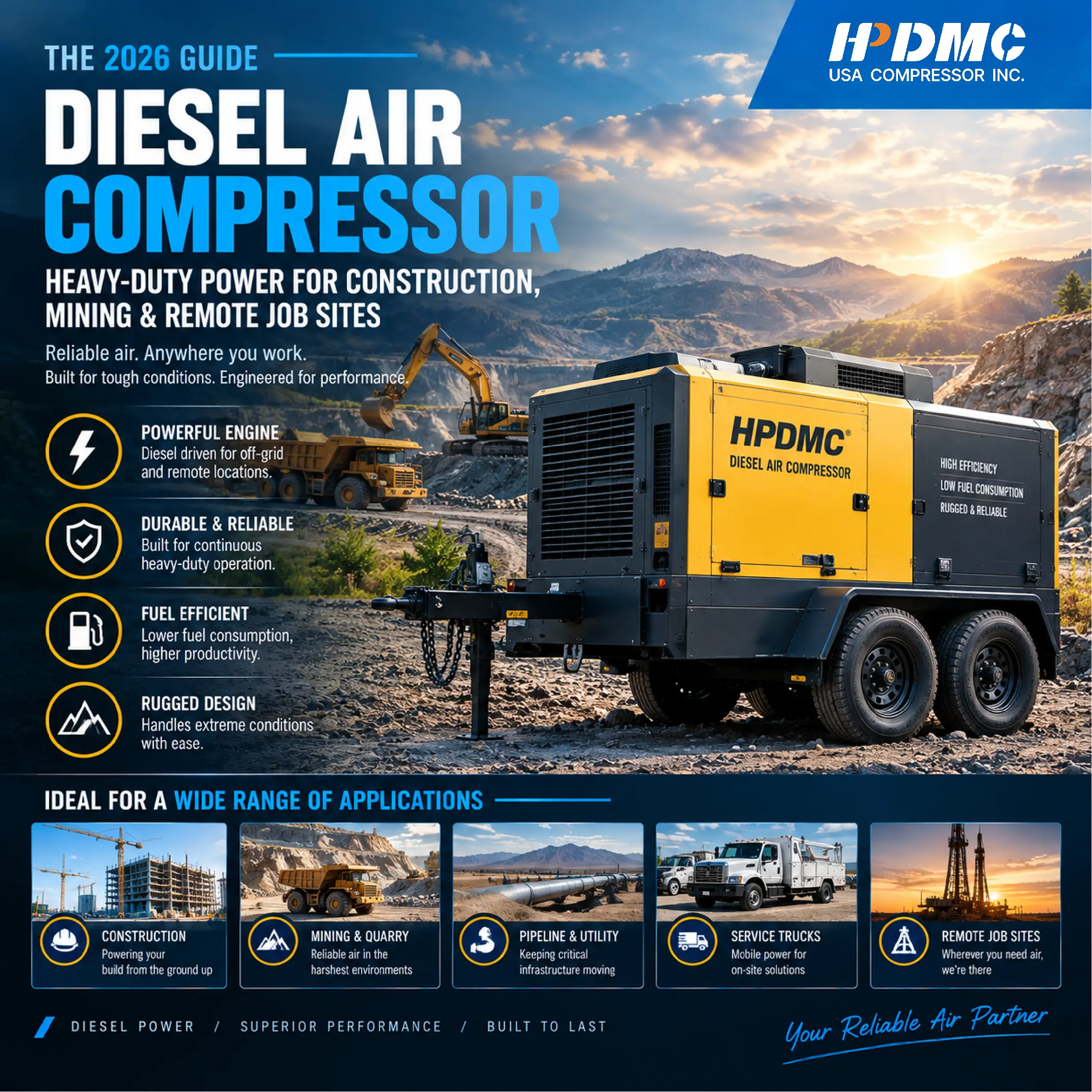
🏗️ A construction site runs jackhammers, chipping guns, sandblasters, and pneumatic nailers — often multiple tools at once, often 8–10 hours a day. A typical mid-size crew needs 100–200 CFM at 90–125 PSI sustained. A diesel screw compressor delivers this continuously without any electrical infrastructure. The HPDMC 185 CFM diesel screw compressor — with a Cummins diesel engine and 125 PSI output — is built exactly for this: skid-mounted for easy transport on a flatbed, and rated for 100% continuous duty across a full shift.
1.2 Diesel Air Compressor for Sandblasting and Abrasive Blasting
⛏️ Sandblasting is the most air-hungry application in industrial work. A 3/8-inch pressure-pot nozzle consumes 120–150 CFM at 90 PSI nonstop. A 185 CFM diesel compressor has just enough capacity to run one blaster continuously, plus a blow gun for cleanup. This is the classic use case: bridge painting, shipyard restoration, structural steel prep, and graffiti removal all run on diesel screw compressors. If you need two nozzles simultaneously, you need to step up to 300+ CFM or run two units in parallel.
1.3 Truck-Mounted Diesel Air Compressor for Service Trucks
🚛 A service truck mechanic or a mobile lube-and-tire operator needs air that goes wherever the truck goes. A truck-mounted diesel air compressor bolts to the truck bed or frame and runs off its own diesel engine — no PTO, no generator, no reliance on the truck engine. Skid-mounted units like the 185 CFM model are the most common truck-mount form factor: compact enough to fit on a 1-ton service truck, powerful enough to run impact wrenches, tire changers, and hydraulic tools. For a broader look at mobile compressor setups, read our article on mobile air compressors.
1.4 Diesel Air Compressor for Mining and Quarry Operations
⛰️ Mining and quarry operations run rock drills, jackhammers, and shotcrete equipment 12+ hours a day in remote locations with zero electrical infrastructure. A diesel screw compressor is the default power source. The key spec here is fuel efficiency and engine durability — a unit running 12 hours/day burns 3–5 gallons of diesel per hour, so a 10% efficiency difference adds up to hundreds of dollars per week. Cummins-powered units like the HPDMC 185 CFM model are preferred in mining because parts and service are available everywhere in the world.
1.5 Portable Diesel Air Compressor for Pipeline and Utility Work
🔧 Pipeline crews and utility companies move from site to site every few days, running pneumatic tools, testing pipe pressure, and operating fusion equipment. A portable diesel air compressor on a skid or trailer mount lets you load it onto a truck in the morning and have air on site by noon. The 185 CFM size is the sweet spot for utility work — enough air for a 2–3 person crew, compact enough to tow behind a pickup, and simple enough that any crew member can start and service it without a technician on hand. For a deeper dive into diesel compressor applications across heavy industry, see our diesel engine air compressor guide.
2. How to Size and Select a Diesel Air Compressor
Choosing the right diesel air compressor comes down to four numbers: CFM, PSI, engine horsepower, and fuel tank size. Get all four right and the unit will serve you for 10,000+ hours. Get any one wrong and you will be renting a backup unit on week two.
2.1 Match CFM to Your Tools (and Add 25%)
📏 Add up the CFM demand of every tool you plan to run simultaneously, then multiply by 1.25 for a safety margin. Common industrial tools:
● Jackhammer (60 lb): 60–80 CFM at 90 PSI
● Sandblaster (3/8" nozzle): 120–150 CFM at 90 PSI
● Pneumatic rock drill: 80–120 CFM at 100 PSI
● Impact wrench (1" drive): 8–12 CFM at 90 PSI
● Concrete vibrator: 5–10 CFM at 90 PSI
A one-person sandblasting crew needs 120–150 CFM continuous — a 185 CFM diesel compressor gives you the 25% safety margin with room to spare. A two-person construction crew running jackhammers needs 160 CFM total — again, 185 CFM fits perfectly. This is why the 185 CFM size is the most popular diesel compressor in the industry.
2.2 PSI: How Much Pressure Do You Actually Need?
⚙️ Most pneumatic tools run at 90–110 PSI. A compressor rated for 125 PSI gives you a comfortable buffer and accounts for pressure drop across long hoses. Higher PSI (150–185 PSI) is useful for specialized applications like pipeline testing or high-pressure sandblasting, but it comes at the cost of reduced CFM output. For 90% of construction, mining, and blasting work, 125 PSI is the sweet spot.
2.3 Diesel vs Gas vs Electric: When Diesel Wins
💡 Diesel, gas, and electric compressors each have their lane. Here is when to choose diesel:
✅ Choose diesel if: no grid power available, you need 100+ CFM continuous, you run 8+ hour shifts, or you work in remote/heavy-industrial environments. Diesel engines last 10,000–20,000 hours — 2–3x longer than gas engines under heavy load.
✅ Choose gas if: you need a smaller portable unit (30–60 CFM) for light-duty work, you prioritize lower upfront cost, or you are a mobile mechanic doing intermittent jobs. Gas units are cheaper but burn more fuel per CFM and have shorter engine life.
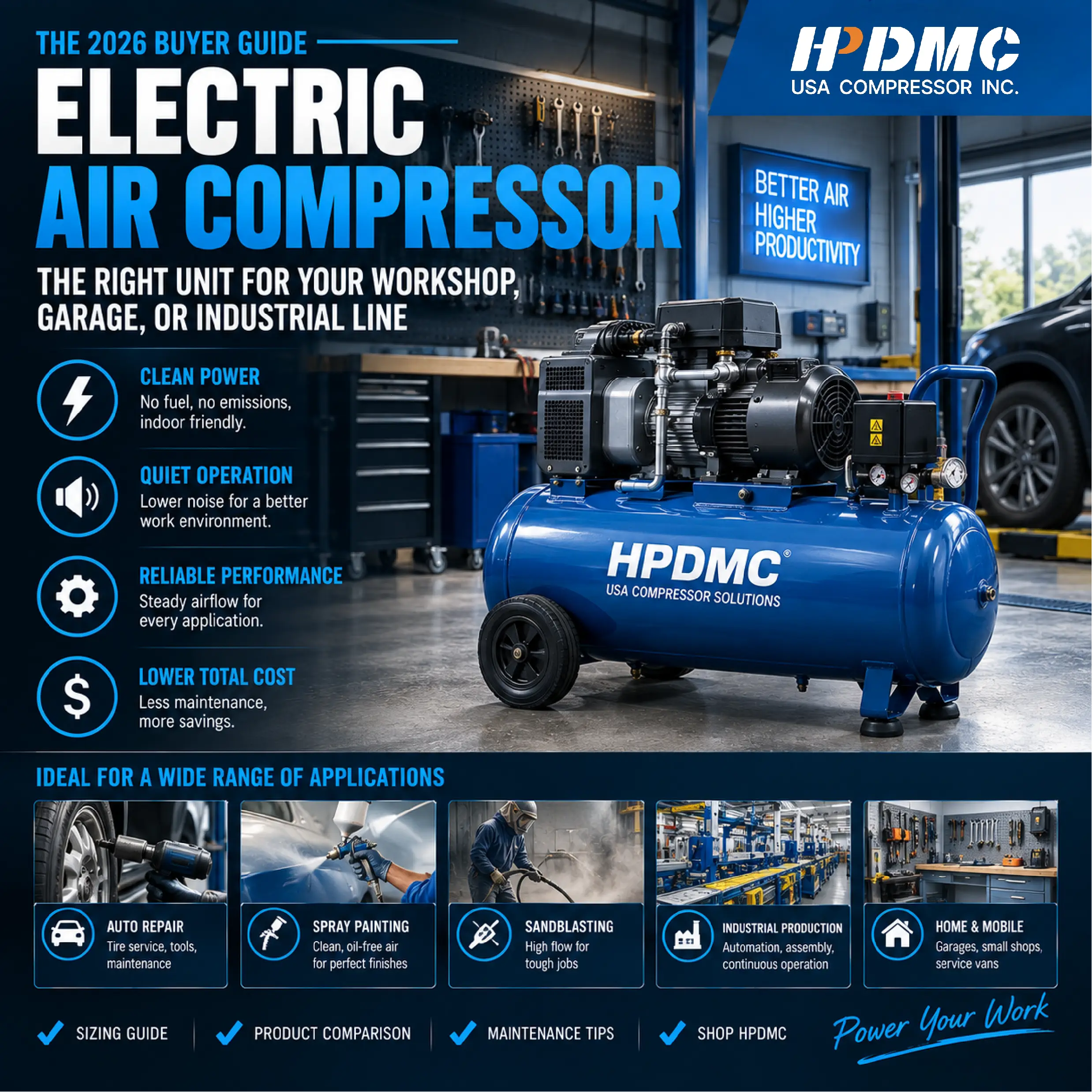
✅ Choose electric if: you have 460V three-phase power on site, you work indoors, or you need zero exhaust emissions. Electric screw compressors (like our PM VSD 50 HP unit) are quieter and cheaper to run per CFM — if you have the power for them.
3. Product Comparison: Diesel vs Gas vs Electric — Which Drive Fits Your Job?
📊 Here is how three HPDMC compressors — one diesel, one gas, one electric — compare across the key metrics that matter for industrial work.
| Model | Drive Type | CFM | Max PSI | Best Application |
|---|
| 185 CFM Diesel Screw | Diesel (Cummins) | 185 CFM | 125 PSI | Construction, mining, sandblasting — remote sites |
| HSJQY209008 Gas 30Gal | Gas (13 HP) | 24 CFM | 175 PSI | Mobile mechanic, tire service — light duty |
| PM VSD 50 HP Screw | Electric (460V) | 245 CFM | 115 PSI | Factory, shop — where grid power exists |
4. Product Recommendations: Which Diesel Air Compressor Fits Your Work?
4.1 For Construction and Sandblasting Crews
🏗️ 185 CFM Diesel Screw Air Compressor (Cummins) — 185 CFM at 125 PSI, Cummins diesel engine, skid-mounted. This is the workhorse for construction, sandblasting, and mining operations that need reliable high-volume air in remote locations. The rotary screw pump delivers 100% continuous duty — run it all shift, every day, no thermal shutdown. The Cummins engine means parts and service are available anywhere in the world. Skid mounting makes it easy to load onto a flatbed, service truck, or trailer.
4.2 For Mobile Mechanics and Light Field Service
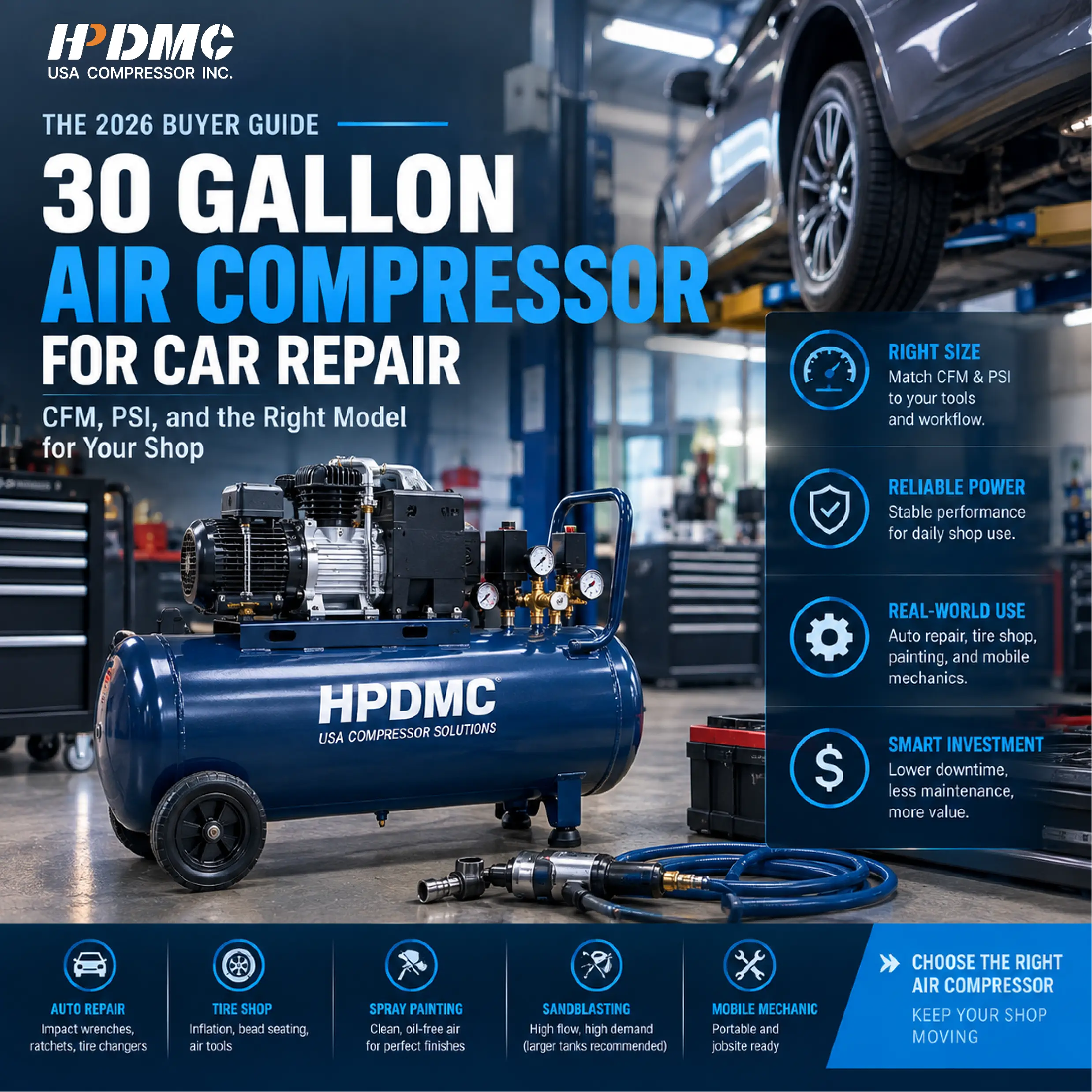
🚛 If you are a mobile mechanic or running a light field service operation where 24 CFM is enough, a gas-powered 30-gallon unit like the HSJQY209008 Two-Stage Gas Compressor is more practical — lower upfront cost, lighter weight, and easier to move in and out of a service truck. Diesel only makes sense when you need 100+ CFM or run full 8-hour shifts; below that threshold, gas is the better value.
4.3 For Fixed Industrial Sites With Grid Power
🏭 If your operation is in a fixed location with 460V three-phase power, an electric screw compressor like the PM VSD 50 HP Rotary Screw Compressor delivers 245 CFM at a lower operating cost than diesel — no fuel cost, no engine maintenance, no exhaust emissions. Electric only loses to diesel when portability and grid independence are required.
5. Frequently Asked Questions
How much diesel does a diesel air compressor use per hour?
Fuel consumption depends on load. A 185 CFM diesel screw compressor at full load burns approximately 3–5 gallons per hour (11–19 L/h). At half load, it drops to roughly 1.5–2.5 gallons per hour. Over an 8-hour shift, expect to burn 15–40 gallons total. Cummins-powered units like the HPDMC 185 CFM model are among the most fuel-efficient in their class — the electronic fuel injection adjusts delivery to match actual air demand.
How long do diesel air compressors last?
A well-maintained diesel screw compressor has an engine life of 10,000–20,000 hours, and the screw air end can last 30,000+ hours before overhaul. That is 2–3x longer than a gas engine compressor under the same load. The key is maintenance: regular oil changes (every 250–500 hours), air filter replacement, and belt tension checks. Stick to the schedule and a quality diesel screw unit will outlast two or three gas compressors.
Can a diesel air compressor be used indoors?
⚠️ No — never operate a diesel compressor indoors or in an enclosed space. Diesel exhaust contains carbon monoxide (CO), which is odorless and lethal. Always position a diesel compressor outdoors with the exhaust pointing away from work areas and personnel. If you need compressed air indoors, use an electric compressor. For indoor spaces where 460V power is available, an electric screw unit like the PM VSD 50 HP is the correct choice.
What size diesel air compressor do I need for sandblasting?
A single 3/8-inch pressure-pot sandblasting nozzle consumes 120–150 CFM at 90 PSI continuous. You need a compressor rated for at least 185 CFM to run one nozzle comfortably with a safety margin. The HPDMC 185 CFM diesel screw compressor is the standard one-nozzle unit. For two nozzles, you need 300+ CFM — either a larger diesel compressor or two 185 CFM units plumbed together.
Skid-mounted vs towable: which is better for a service truck?
Skid-mounted units bolt directly to the truck bed — they are lower profile, more secure, and always ready to go. Towable units (trailer-mounted) are easier to move between trucks and can be left on site while the truck goes for fuel or parts. For a single-service-truck operation, skid-mounted is usually the better choice — the unit is always with you, and you do not need a separate trailer registration. For a fleet with multiple trucks, a towable unit offers more flexibility.
Ready to Choose Your Diesel Air Compressor?
Tell us about your application — what tools you run, how many hours per shift, and whether you need skid or trailer mount. An HPDMC application engineer will match the right diesel air compressor to your actual job. Whether that is a 185 CFM diesel screw for a sandblasting crew or a smaller gas unit for mobile service, we will size it correctly the first time.
🛒 Get a Free Sizing Review · Browse Product Catalog
✔️ Free consultation · ✔️ Cummins-powered · ✔️ Skid & trailer options