1. Why Air Quality Matters: Five Spray Painting Scenarios
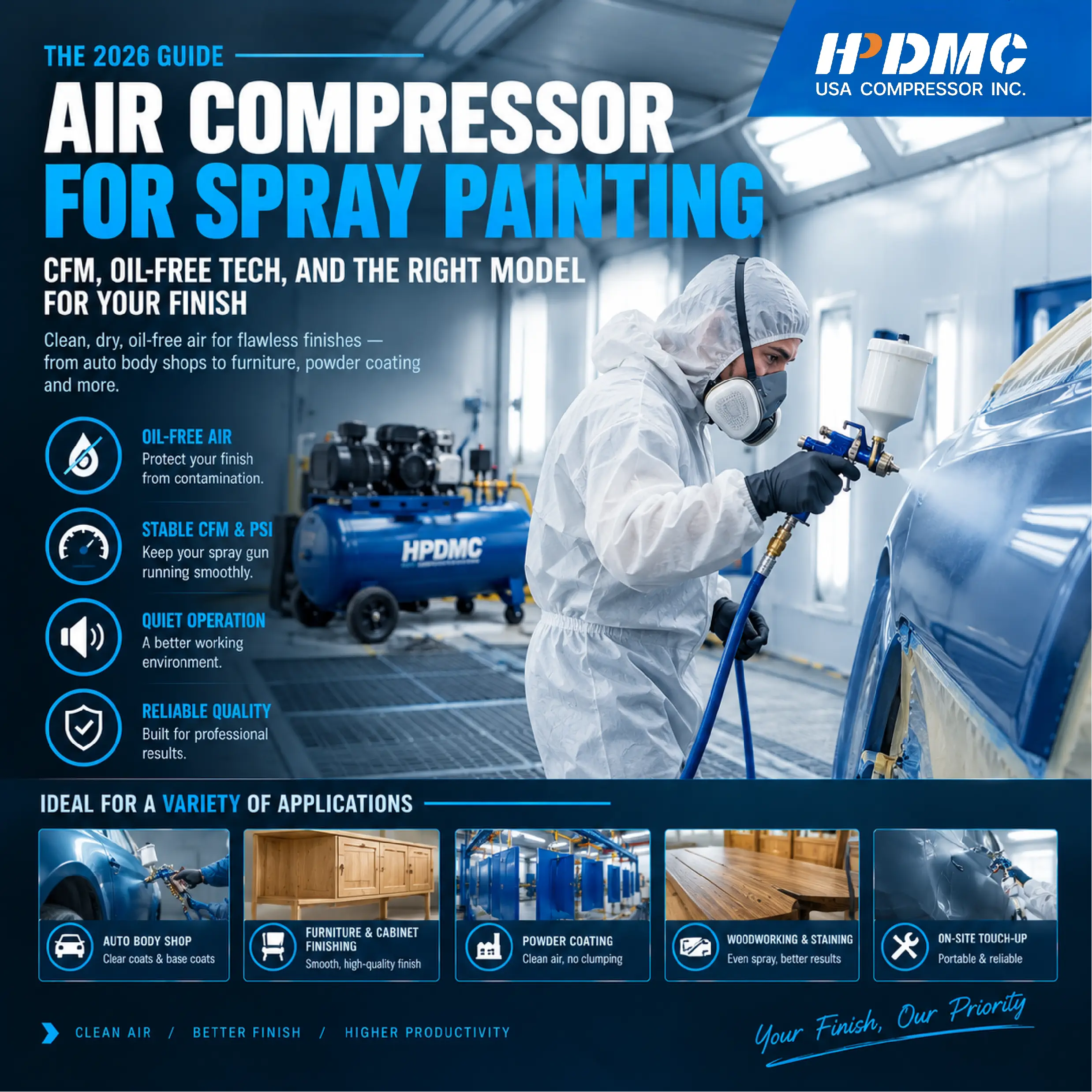
1.1 Air Compressor for Auto Body Shop Painting
🎨 An auto body shop runs HVLP spray guns for basecoat, color coat, and clearcoat applications. A typical HVLP gun needs 15–25 CFM at 90 PSI continuous — and every drop of oil in the air line means fisheyes in the clearcoat. A single fisheye ruins the panel and costs 2–4 hours of sanding and repainting. This is why every professional body shop uses an oil-free compressor with an inline water trap and coalescing filter. The HPDMC AWR2400-65L oil-free compressor — delivering 13 CFM at 115 PSI from a 17-gallon tank with a 100% oil-free pump — is purpose-built for this environment.
1.2 Air Compressor for Furniture and Cabinet Finishing
Furniture finishing demands the same air purity as auto painting but often in a smaller workshop setting. A cabinet shop running an HVLP turbine gun for lacquer or water-based finish needs 8–15 CFM at 40–90 PSI. The compressor must be oil-free (oil spots ruin lacquer finishes) and quiet enough to work alongside — typically 55–65 dB for a shop where the finisher is in the same room as the compressor. A portable oil-free unit like the AWR600-9L — at 65 dB and 49.5 lbs — is ideal for a furniture shop where space and noise are both constraints.
1.3 Air Compressor for Industrial Powder Coating
🏭 Powder coating uses compressed air to fluidize and propel dry powder through a spray gun onto a grounded metal part. The air must be oil-free and dry — any moisture or oil in the powder stream causes clumping, orange peel, or adhesion failure after curing. A powder coating operation needs a compressor rated for 10–20 CFM at 40–70 PSI continuous, plus a refrigerated air dryer. For production powder coating, a scroll compressor with ISO 8573-1 Class Zero certification is the professional standard — zero oil carryover, zero moisture, zero risk to the finish.
1.4 Air Compressor for Woodworking and Staining
Woodworking finishing — spraying stain, sealer, and topcoat on furniture, cabinetry, or millwork — needs steady, pulsation-free air. A conventional HVLP conversion gun for woodworking consumes 8–15 CFM at 90 PSI. The compressor must deliver this continuously without pressure fluctuation, which causes uneven spray patterns and runs. An oil-free scroll compressor delivers smooth, pulse-free air naturally — the scroll mechanism compresses air in a continuous orbital motion with no pulsation, unlike piston compressors which need a receiver tank to smooth out the delivery. Our oil-free technology guide explains how scroll compressors achieve this in detail.
1.5 Portable Air Compressor for On-Site Touch-Up Painting
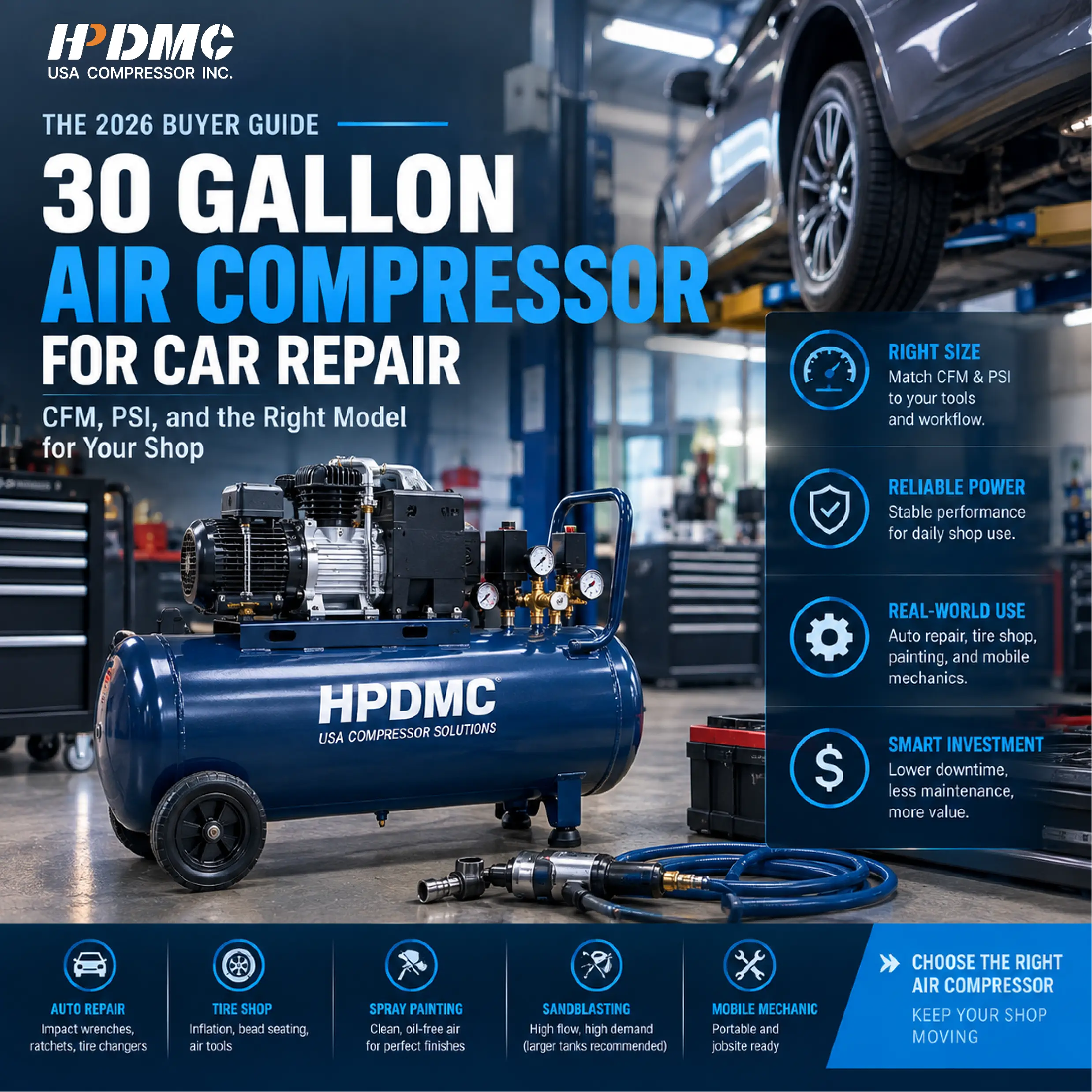
🚐 On-site touch-up painting — a mobile auto body technician doing driveway dent repair, a contractor touching up trim on a job site, or a boat yard doing gelcoat repair — needs a portable oil-free air compressor that can run a mini HVLP gun or an airbrush. These tools need only 2–5 CFM at 30–50 PSI, so a small portable unit suffices. The key requirements are oil-free air (no contamination on the repair), portability (under 50 lbs), and quiet operation (working in residential areas). For a broader look at spray painting compressor requirements across painting, woodworking, and automotive tasks, read our 30-gallon compressor application guide.
2. How to Size an Air Compressor for Spray Painting
Sizing a compressor for spray painting is different from sizing one for impact wrenches or nail guns. Here is what matters.
2.1 Match CFM to Your Spray Gun (and Add 50%)
📏 Different spray gun technologies have very different air demands. Find your gun, then multiply by 1.5 — spray painting needs more headroom than other tools because pressure drops ruin the spray pattern:
●HVLP conversion gun: 15–25 CFM at 90 PSI
●HVLP turbine gun: 8–15 CFM at 40 PSI
●LVLP gun: 6–10 CFM at 65 PSI
●Airbrush / touch-up gun: 1–5 CFM at 30 PSI
●Powder coating gun: 10–20 CFM at 40 PSI
For an HVLP conversion gun needing 20 CFM, you want a compressor rated for at least 30 CFM at 90 PSI. Most single-stage piston compressors top out at 13–15 CFM — they can run an HVLP gun but will cycle constantly. For continuous painting, a scroll or two-stage unit is the better choice.
2.2 Oil-Free Is Not Optional — It Is the Standard
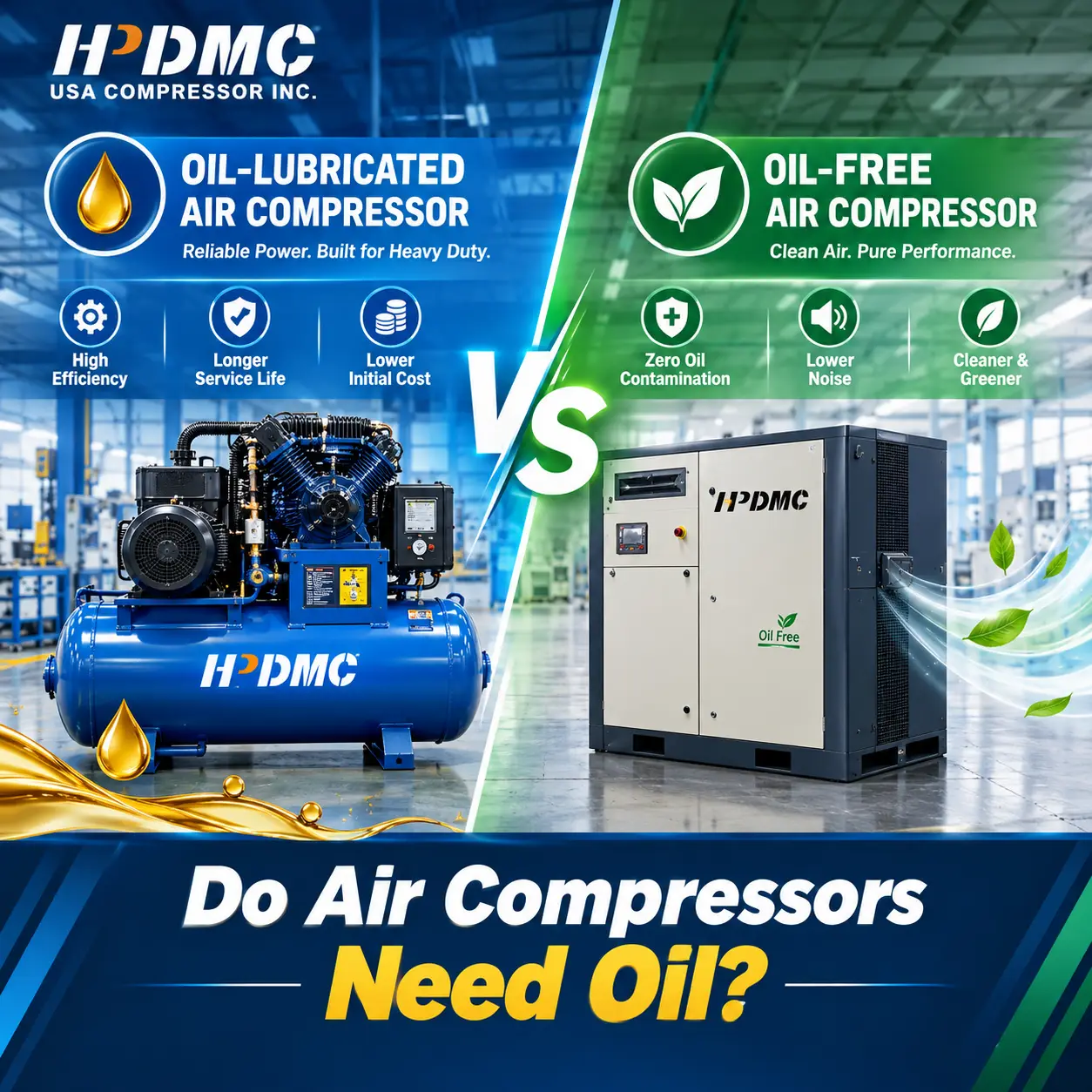
⚙️ If you are spray painting, oil-free is not a preference — it is a requirement. Oil-lubricated compressors inject fine oil mist into the air stream. Even with a coalescing filter, trace amounts pass through. In a clearcoat, that oil shows up as fisheyes — crater-like defects that require sanding and repainting. ISO 8573-1 Class Zero certification means zero oil content in the compressed air — this is the standard for professional painting operations. Oil-free piston compressors use PTFE-coated cylinders and self-lubricating rings; scroll compressors use two interleaving scrolls with no metal-to-metal contact. Both deliver Class Zero air.
2.3 Tank Size: Bigger Is Not Always Better
💡 For spray painting, the pump CFM matters more than tank size. A large tank stores air but does not produce it — if your pump delivers 13 CFM and your gun needs 20 CFM, the tank will deplete in about 30 seconds regardless of size. What matters is matching pump output to gun demand. A 17-gallon tank with a 13 CFM pump is adequate for intermittent HVLP use (touch-up, spot repairs). For continuous panel painting, you need a pump rated for 25+ CFM — and for that, a scroll compressor is the right architecture.
3. Product Comparison: Three Oil-Free Compressors for Spray Painting
📊 Here is how three HPDMC oil-free compressors compare across the metrics that matter for spray painting.
| Model | Type | CFM | Max PSI | Best For |
|---|
| AWR2400-65L | Oil-Free Piston | 13 CFM | 115 PSI | Body shop HVLP, intermittent use |
| WXJOSC3B000 | Oil-Free Scroll | 4–86 CFM | 115 PSI | Pro painting, powder coating, continuous |
| AWR600-9L | Oil-Free Portable | 3.5 CFM | 115 PSI | Touch-up, airbrush, on-site repair |
4. Which Air Compressor Fits Your Painting Work?
4.1 For a Body Shop Running HVLP Guns
🎨 Ultra Quiet Oil-Free Compressor — AWR2400-65L — 3 HP oil-free pump, 13 CFM at 115 PSI, 17-gallon tank, 70 dB. This is the workhorse for a body shop running HVLP spray guns. The oil-free pump eliminates fisheye risk, the 17-gallon tank provides enough reserve for spot repairs and single-panel painting, and at 70 dB it is quiet enough to work alongside. 13 CFM runs an HVLP conversion gun for intermittent use (spot repairs, blends, touch-ups). For full continuous-panel painting, pair it with a second unit or step up to the scroll.
4.2 For Professional Continuous Painting and Powder Coating
🏭 100% Oil-Free Scroll Air Compressor — WXJOSC3B000 — ISO 8573-1 Class Zero certified, 4–86.5 CFM range, 2–30 HP. This is the professional standard for continuous spray painting and powder coating. The scroll mechanism delivers smooth, pulse-free air with zero oil carryover — no pulsation means even spray patterns, no fisheyes means no rework. Class Zero certification guarantees air purity for the most demanding finishes: automotive clearcoat, powder coat, medical-device coating. Scroll compressors also run at 55–65 dB — conversation-level quiet for a shop environment.
4.3 For On-Site Touch-Up and Airbrush Work
🚐 Ultra Quiet Portable Oil-Free Compressor — AWR600-9L — 65 dB, 49.5 lbs, oil-free, 110-second recovery. For a mobile technician doing driveway touch-up painting, trim work, or airbrush detailing, this is the right tool. At 49.5 lbs, it goes in the trunk of a car. At 65 dB, you can paint in a residential driveway without disturbing the neighbors. The oil-free pump means zero contamination risk on every repair. It will not run a full-size HVLP gun — but for an airbrush or mini-HVLP, it is perfect.
5. Frequently Asked Questions
Do I really need an oil-free compressor for spray painting?
💡 Yes — if you care about finish quality. Oil-lubricated compressors produce oil mist that travels through air lines. Even with a coalescing filter, trace amounts pass through. In a clearcoat or lacquer finish, that oil creates fisheyes — crater defects that require sanding and repainting. ISO 8573-1 Class Zero (zero oil content) is the professional standard for spray painting. Oil-free piston compressors achieve this with PTFE-coated cylinders; scroll compressors achieve it with no metal-to-metal contact. The cost difference between oil-lubricated and oil-free is small compared to the cost of one ruined paint job.
What CFM do I need for an HVLP spray gun?
A standard HVLP conversion gun needs 15–25 CFM at 90 PSI continuous. Multiply by 1.5 for a safety margin: you want a compressor rated for at least 25–35 CFM. An LVLP gun is more efficient at 6–10 CFM. A mini-HVLP or airbrush needs only 1–5 CFM. Always check your spray gun specifications — the CFM requirement is printed in the manual or on the gun body.
Can I use a regular piston compressor for painting if I add a filter?
⚠️ You can, but you are taking a risk. A coalescing filter removes 95–99% of oil from the air stream — but not 100%. For primer or undercoat where appearance is less critical, a filtered oil-lubricated compressor may be acceptable. For basecoat, clearcoat, lacquer, or powder coat — where one defect means a full repaint — only an oil-free compressor gives you the certainty you need. The cost of one re-paint job (materials + labor) typically exceeds the price difference between an oil-lubricated and an oil-free compressor.
How do I prevent moisture in my spray painting air line?
Moisture in the air line causes water spots and blushing in the paint finish. Three defenses: (1) Use an oil-free compressor (eliminates oil-water emulsion). (2) Install a refrigerated air dryer on the compressor output — this cools the air to 35–40°F, condensing moisture before it reaches the line. (3) Add a desiccant or membrane dryer at the spray gun for a final moisture barrier. For professional body shops, all three layers are standard practice.
Is a scroll compressor worth the extra cost for spray painting?
For professional painting operations, yes. A scroll compressor costs more upfront than a piston compressor, but it delivers three advantages that matter for painting: (1) Class Zero air purity — guaranteed zero oil carryover, no filter maintenance. (2) Pulse-free air delivery — the scroll mechanism compresses continuously, giving you even spray patterns without tank pulsation. (3) 55–65 dB operation — conversation-level quiet for a shop where the finisher works alongside the compressor. For intermittent or hobby painting, an oil-free piston unit is sufficient. For production painting, the scroll pays for itself in reduced rework.
Ready to Choose Your Spray Painting Air Compressor?
Tell us about your painting operation — what spray gun you use, how many hours per day you paint, and whether you need oil-free or Class Zero certified air. An HPDMC application engineer will match the right air compressor for spray painting to your finish. Whether that is a 13 CFM oil-free piston for a body shop or a Class Zero scroll for a powder coating line, we will size it correctly the first time.
🛒 Get a Free Sizing Review · Browse Product Catalog
✔️ Free consultation · ✔️ ISO 8573-1 Class Zero · ✔️ Oil-free guarantee