Need Help Choosing the Right Compressor? Speak to an Expert
Need Help Choosing the Right Compressor? Speak to an Expert
Need Help Choosing the Right Compressor? Speak to an Expert

How Oil-Free Air Compressors Work: Types, Benefits & Uses
Oil-free compressors are revolutionizing industries where clean, contaminant-free air is non-negotiable. But how exactly do they operate without lubricating oil? In this guide, we’ll break down what oil-free compressors are, their types, key applications, and benefits—plus why HPDMC’s oil-free models stand out in the market.
What Are Oil-Free Compressors?
Oil-free compressors are air compression systems designed to function without lubricating oil in the compression chamber. Unlike oil-lubricated models, which use oil to reduce friction between moving parts, oil-free compressors rely on advanced engineering and self-lubricating materials (e.g., Teflon coatings, graphite-impregnated components) to prevent wear and tear. This design ensures the compressed air remains 100% oil-free, making them critical for industries where even trace oil contamination could ruin products or compromise safety.
How Do Oil-Free Compressors Work?
The core principle of oil-free compressors is friction reduction without oil. Here’s a step-by-step breakdown of their operation:
1. Air Intake: Ambient air is drawn into the compressor through a filter, removing dust and debris to protect internal parts.
2. Compression: Depending on the type (see below), air is compressed by pistons, screws, or scrolls. In oil-free models, these moving parts are made from or coated with self-lubricating materials (e.g., PTFE) to minimize friction.
3. Heat Dissipation: Compression generates heat, so oil-free compressors use aluminum heat sinks, cooling fans, or water jackets to dissipate heat—critical for preventing overheating during operation.
4. Air Delivery: The compressed air (now oil-free) is discharged into a storage tank or directly to tools/equipment, ready for use in sensitive applications.
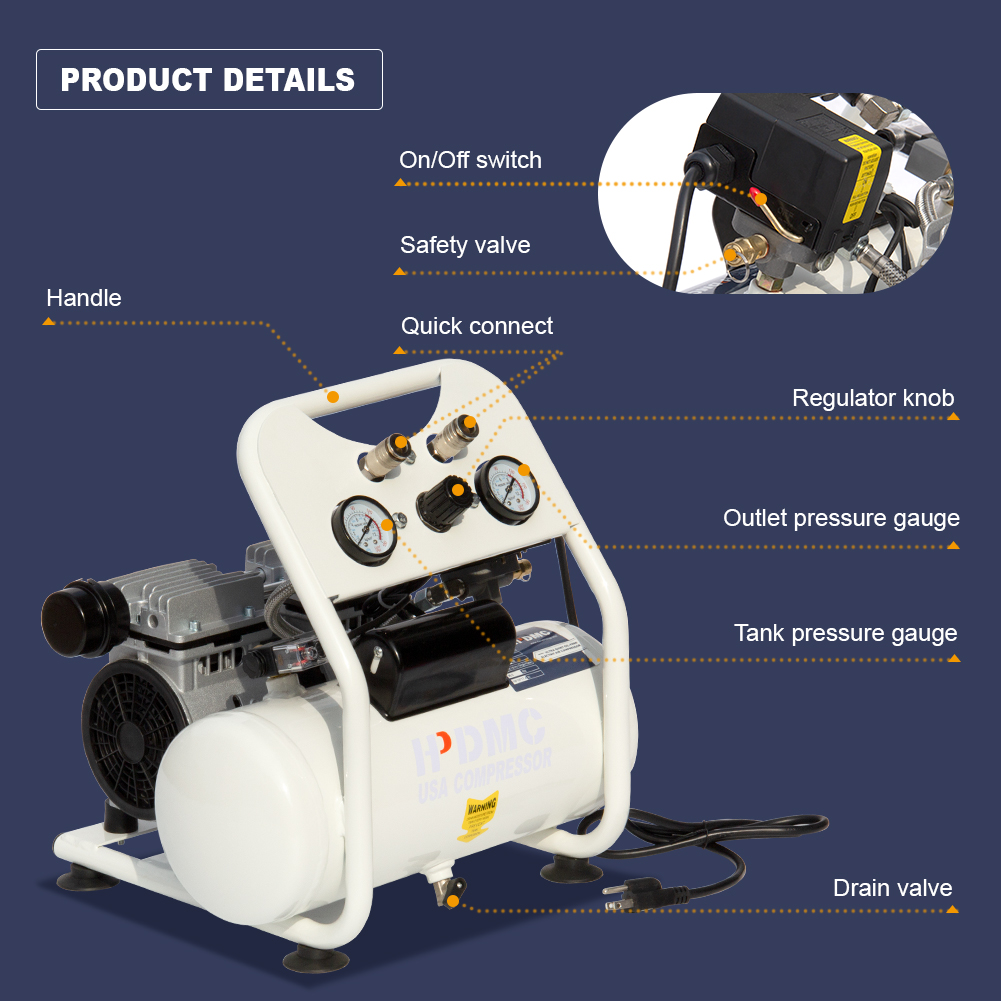
HPDMC’s oil-free compressors, such as the Portable Oil-Free Piston Compressor, enhance this process with precision-machined components to ensure consistent airflow and pressure, even in demanding conditions.
Types of Oil-Free Compressors
Oil-free compressors come in several designs, each tailored to specific needs:
1. Oil-Free Piston Compressors
· How they work: A piston moves up and down in a cylinder, compressing air. The piston and cylinder walls are coated with self-lubricating materials to avoid oil.
· Best for: Small-scale applications (e.g., home workshops, DIY projects) due to their compact size and lower airflow (5–20 CFM).
· HPDMC’s take: Our portable piston models, like the 6.5HP oil-free compressor, offer 11–17 CFM at 125 PSI—ideal for powering nail guns, paint sprayers, or small pneumatic tools.
2. Oil-Free Screw Compressors
· How they work: Two interlocking screws rotate to trap and compress air. The screws are coated with anti-friction materials to eliminate the need for oil.
· Best for: Medium to large industrial use (e.g., food processing, pharmaceuticals) with higher airflow (20–200 CFM).
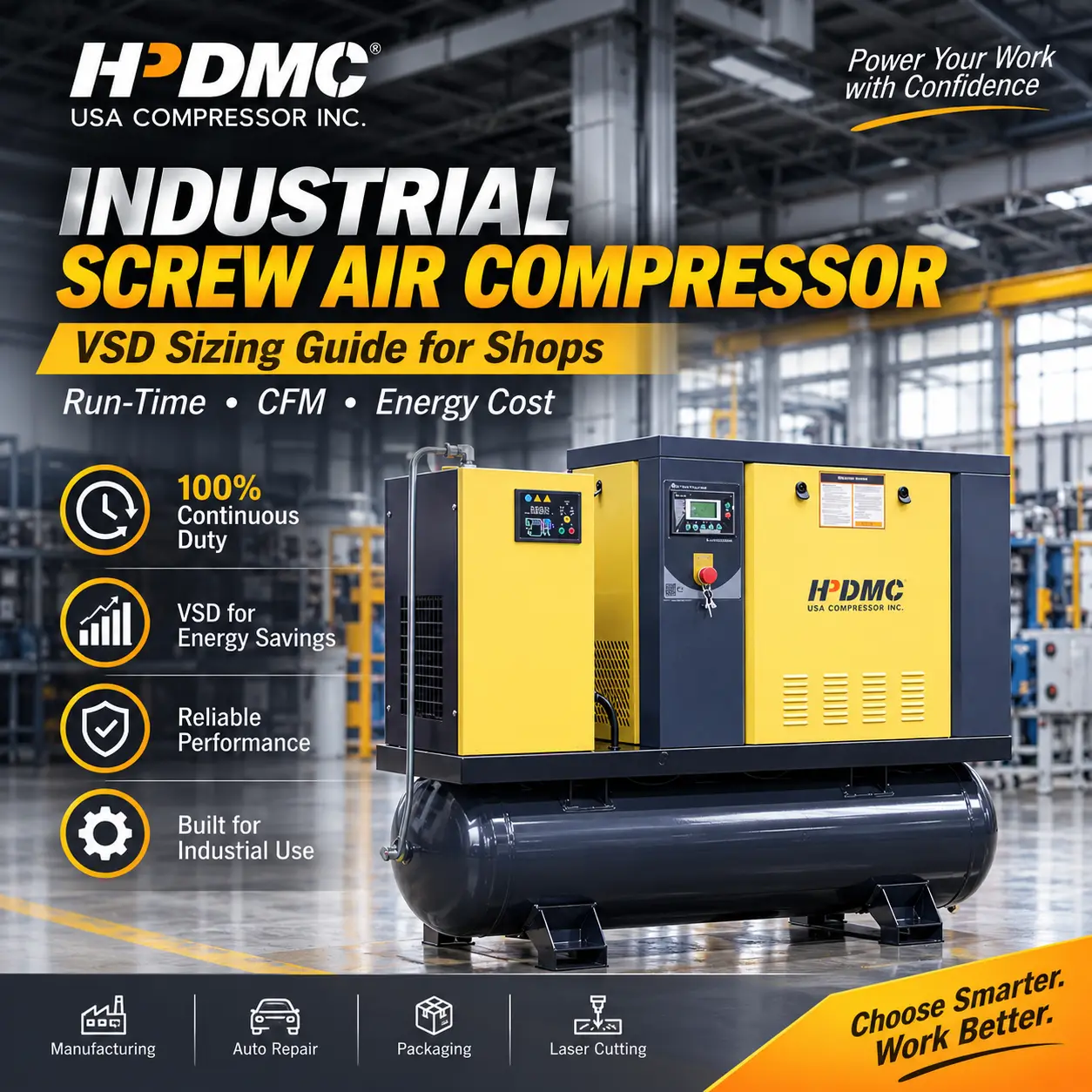
· HPDMC’s range: Our industrial screw models deliver steady, high-volume air for continuous operations, meeting strict clean air standards.
3. Oil-Free Scroll Compressors
· How they work: A fixed scroll and an orbiting scroll mesh together, compressing air in pockets that shrink as the scrolls move. No oil is needed due to tight tolerances and self-lubricating surfaces.
· Best for: Quiet, low-vibration applications (e.g., medical facilities, laboratories) with moderate airflow (10–50 CFM).
Applications of Oil-Free Compressors
Oil-free compressors are indispensable in industries where clean air is mandatory:
· Food & Beverage Processing: Used in packaging, bottling, and conveyor systems—FDA standards prohibit oil contact with edible products.
· Pharmaceuticals: Critical for manufacturing drugs, where air contamination could compromise product purity.
· Medical Facilities: Powers dental tools, ventilators, and surgical equipment, ensuring patient safety.
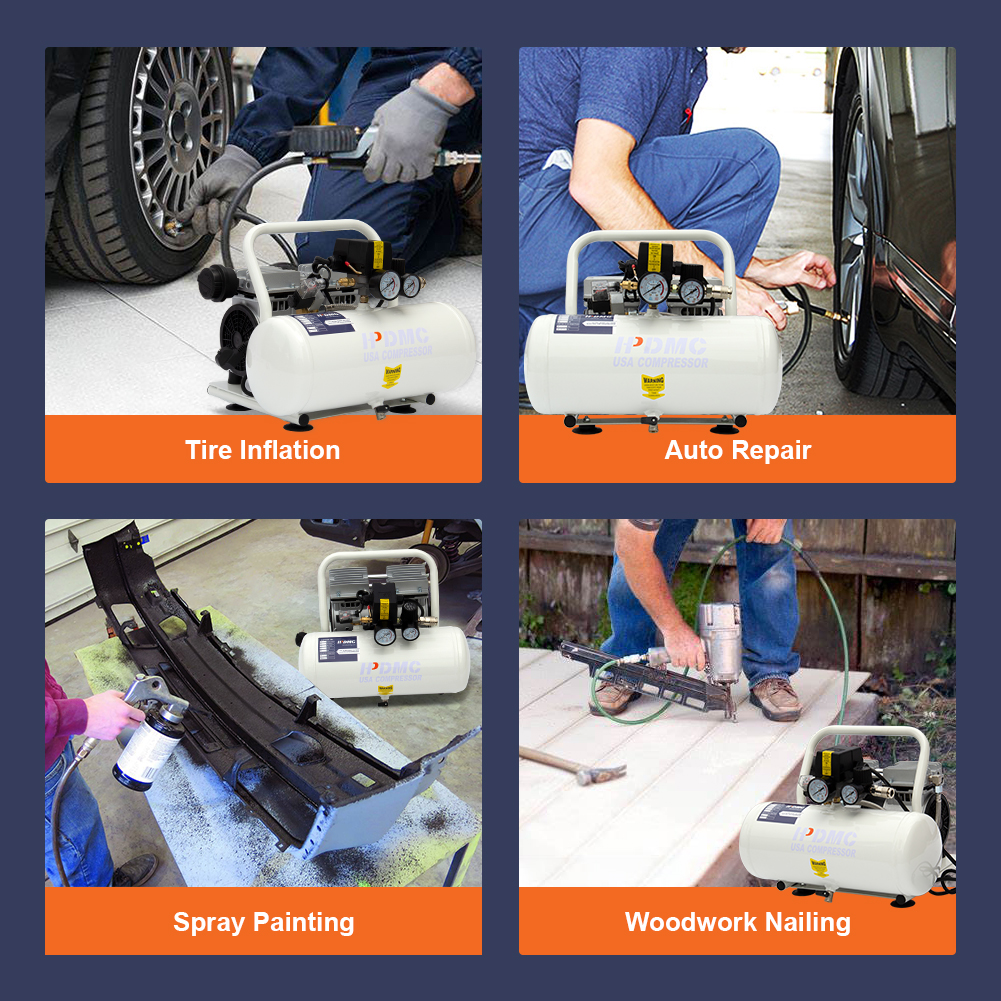
· Painting & Coating: Prevents oil spots on surfaces, ensuring smooth, professional finishes (ideal for auto body shops or furniture manufacturing).
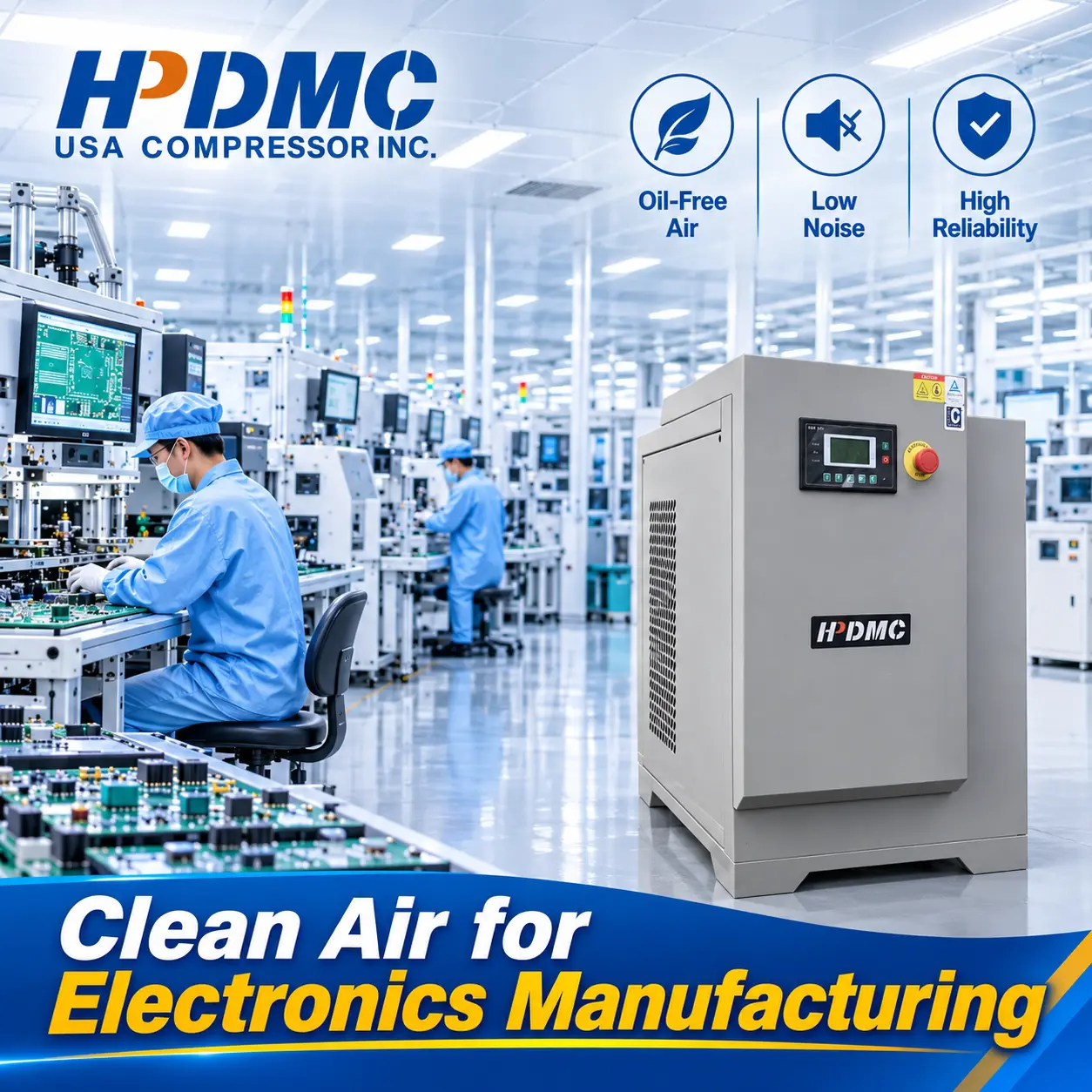
· Electronics Manufacturing: Protects sensitive components (e.g., circuit boards) from oil damage during assembly.
HPDMC’s oil-free compressors are engineered to excel in these sectors, with certifications to meet industry-specific standards (e.g., FDA, ISO 8573-1 Class 0 for oil-free air).
Benefits of Oil-Free Compressors
1. Oil-Free Air: Eliminates the risk of oil contamination, critical for food, medical, and electronics industries.
2. Low Maintenance: No oil changes or oil filter replacements, reducing downtime and operational costs.
3. Compliance: Meets strict regulations (e.g., FDA, EU 10/2011) for clean air in sensitive applications.
4. Versatility: Suitable for both small-scale (DIY) and large-scale (industrial) use, depending on the model.
5. Eco-Friendly: Reduces waste from oil disposal and lowers the carbon footprint compared to oil-lubricated models.
Why Choose HPDMC Oil-Free Compressors?
HPDMC’s oil-free compressors combine reliability, efficiency, and industry-specific design:
· Durable Construction: Heavy-duty cast iron frames and corrosion-resistant components ensure long lifespans, even in harsh environments.
· Consistent Performance: Models like our portable 6.5HP compressor deliver 11–17 CFM at 125 PSI, perfect for powering tools without fluctuations.
· Safety & Compliance: Designed to meet FDA and ISO standards, making them a trusted choice for clean-air applications.
Explore HPDMC’s full range of oil-free compressors to find the right fit for your needs.



Find the Right Compressor for Your Needs
Find the Right Compressor for Your Needs