⚡Free Shipping: Ultra-Quiet Portable Oil-Free Air Compressor AWR800-18LM2
Need Help Choosing the Right Compressor?
Need Help Choosing the Right Compressor?
⚡Free Shipping: Ultra-Quiet Portable Oil-Free Air Compressor AWR800-18LM2
Need Help Choosing the Right Compressor?
⚡Free Shipping: Ultra-Quiet Portable Oil-Free Air Compressor AWR800-18LM2

Air Compressor Maintenance Checklist: Daily, Weekly & Annual Tasks | HPDMC
An air compressor is a workhorse in any shop, garage, or industrial setting—but like any machine, it needs regular care to avoid breakdowns, costly repairs, or safety risks. A well - maintained compressor lasts longer, runs more efficiently, and delivers consistent performance.
Below is a comprehensive air compressor maintenance checklist, organized by frequency, to help you stay on track—plus tips for maximizing your system’s lifespan, including insights for models like HPDMC’s industrial and diving air compressors. We'll also incorporate a detailed maintenance schedule table for a more structured approach.
1. Maintenance Schedule Overview
To make it easier to follow, we've categorized maintenance tasks based on different time intervals: daily, weekly, per 500 hours of operation, per 2,000 hours of operation, and per 5,000 hours of operation. Here's a quick look at the schedule in tabular form (and we'll break down each section later):
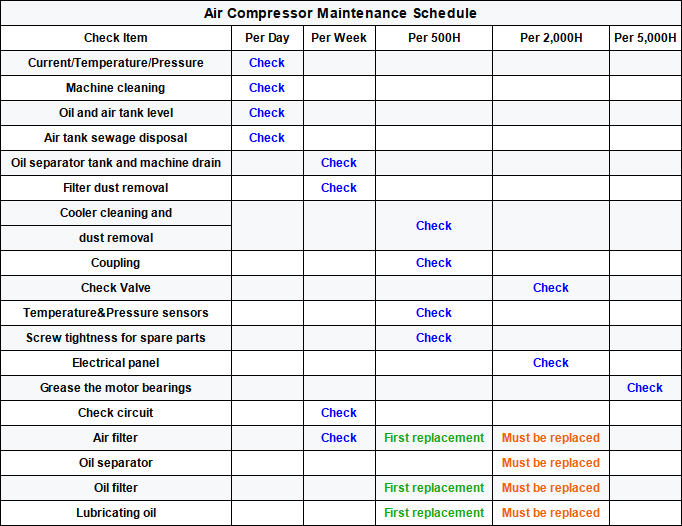
2. Daily Maintenance: 5 - Minute Checks
Start each workday with these quick inspections to catch issues early:
2.1 Current/Temperature/Pressure
What to do: Check the current, temperature, and pressure readings on the compressor’s control panel.
Why it matters: Abnormal readings can indicate underlying problems like electrical issues, overheating, or pressure irregularities. For example, if the temperature gauge shows a sudden spike, it could mean a cooling system malfunction.
2.2 Machine cleaning
What to do: Wipe down the exterior of the air compressor to remove dust, dirt, and any spilled fluids.
Why it matters: A clean machine is easier to inspect for leaks, loose parts, or other issues. Dust buildup can also affect the compressor’s cooling efficiency over time.
2.3 Oil and air tank level
What to do: Check the oil level using the dipstick or sight glass (for oil - lubricated compressors) and the air tank level indicator.
Why it matters: Low oil levels can cause excessive friction and wear in the compressor pump, while an improper air tank level can impact the compressor’s ability to build and maintain pressure.
2.4 Air tank sewage disposal
What to do: Open the air tank drain valve to release any accumulated condensation.
Why it matters: Water buildup inside the air tank can lead to rust, which weakens the tank and can eventually cause leaks or even tank failure.
3. Weekly Maintenance: 15 - Minute Tasks
Set aside time weekly to address wear and prevent long - term damage:
3.1 Oil separator tank and machine drain
What to do: Inspect and clean the oil separator tank and the machine drain. Make sure there are no clogs and that the drain functions properly.
Why it matters: A clogged oil separator or drain can lead to oil buildup in unwanted areas, reducing the efficiency of the compressor and potentially causing damage to other components.
3.2 Filter dust removal
What to do: Remove the air intake filter and clean it to remove dust and debris. For reusable filters, you can use compressed air or a mild soap and water solution (let it dry completely before reinstalling).
Why it matters: A dirty air filter restricts airflow, forcing the compressor to work harder and use more energy. It can also lead to contaminated air being drawn into the compressor, which can cause internal wear.
3.3 Check circuit
What to do: Inspect the electrical circuit for any signs of damage, loose connections, or frayed wires.
Why it matters: Electrical issues can cause the compressor to malfunction, stop working altogether, or even pose a fire hazard.
4. Per 500 Hours of Operation Maintenance
These tasks are crucial for keeping your compressor in good shape as it accumulates hours of use:
4.1 Cooler cleaning and dust removal
What to do: Clean the compressor cooler to remove dust, dirt, and any debris that has accumulated. This may involve using compressed air, a soft brush, or a specialized cleaner depending on the cooler type.
Why it matters: A dirty cooler can't effectively dissipate heat, leading to increased operating temperatures. Overheating can cause premature wear and failure of compressor components.
4.2 Coupling
What to do: Inspect the coupling for signs of wear, damage, or misalignment. Make any necessary adjustments or replacements.
Why it matters: The coupling connects the motor to the compressor pump. A faulty coupling can cause vibration, reduced efficiency, and even damage to the motor or pump.
4.3 Temperature&Pressure sensors
What to do: Calibrate and inspect the temperature and pressure sensors to ensure accurate readings.
Why it matters: Incorrect sensor readings can lead to improper compressor operation, such as over - pressurization or failure to shut off when temperatures are too high.
4.4 Screw tightness for spare parts
What to do: Check the tightness of screws on all spare parts and components. Tighten any loose screws.
Why it matters: Vibration during compressor operation can cause screws to loosen over time. Loose screws can lead to component misalignment, increased vibration, and potential damage.
4.5 Air filter (First replacement)
What to do: Replace the air filter for the first time at the 500 - hour mark.
Why it matters: Even with regular cleaning, the air filter will eventually become too clogged to function effectively. Replacing it ensures proper airflow and protects the compressor.
4.6 Oil filter (First replacement)
What to do: Replace the oil filter.
Why it matters: The oil filter removes contaminants from the lubricating oil. After 500 hours, it's likely to be saturated with debris, and replacing it helps maintain clean oil circulation.
4.7 Lubricating oil (First replacement)
What to do: Drain the old lubricating oil and refill with fresh oil according to the manufacturer's specifications.
Why it matters: Over time, lubricating oil can break down, become contaminated, and lose its ability to properly lubricate the compressor components. Fresh oil ensures smooth operation and reduces wear.
5. Per 2,000 Hours of Operation Maintenance
At this interval, more in - depth checks and replacements are needed:
5.1 Check Valve
What to do: Inspect the check valve for proper operation. Check for leaks, damage, or any signs of wear that may affect its ability to control the flow of compressed air.
Why it matters: A faulty check valve can cause compressed air to flow back into the compressor, leading to inefficiency, increased wear, and potential damage to the pump.
🛒 industrial air compressor check valves
5.2 Electrical panel
What to do: Open the electrical panel and inspect the wiring, circuit breakers, and other components for signs of wear, overheating, or loose connections.
Why it matters: The electrical panel is the heart of the compressor’s electrical system. Any issues here can cause the compressor to malfunction or pose a serious safety risk.
5.3 Air filter (Must be replaced)
What to do: Replace the air filter.
Why it matters: By 2,000 hours of operation, the air filter has likely reached the end of its useful life, even with previous cleanings and the first replacement. A new filter ensures optimal airflow.
🛒OEM replacement intake air filters
5.4 Oil separator (Must be replaced)
What to do: Replace the oil separator.
Why it matters: The oil separator plays a crucial role in removing oil from the compressed air. After 2,000 hours, it may no longer function effectively, leading to oil - contaminated compressed air, which can damage tools and equipment downstream.
🛒High-efficiency oil separator elements
5.5 Oil filter (Must be replaced)
What to do: Replace the oil filter again.
Why it matters: Similar to the air filter, the oil filter needs regular replacement to ensure clean oil circulates through the compressor, protecting its components from wear and damage.
🛒heavy-duty lubricant oil filters
5.6 Lubricating oil (Must be replaced)
What to do: Drain and replace the lubricating oil once more.
Why it matters: Fresh lubricating oil is essential for maintaining the proper lubrication and cooling of the compressor’s internal components, ensuring long - term reliability.
🛒synthetic rotary screw compressor oil
6. Per 5,000 Hours of Operation Maintenance
This is a major maintenance interval that helps ensure the long - term health of your air compressor:
6.1 Grease the motor bearings
What to do: Grease the motor bearings according to the manufacturer's recommendations.
Why it matters: Motor bearings need proper lubrication to reduce friction and wear. After 5,000 hours, the existing grease may have broken down, and re - greasing helps extend the life of the motor.
7. Model - Specific Tips
- Industrial Rotary Screw Compressors (e.g., HPDMC 50HP): Focus on oil analysis (test for contaminants quarterly) and VSD (variable speed drive) calibration to maintain energy efficiency. In addition to the general maintenance tasks, pay close attention to the screw elements during the 2,000 - hour and 5,000 - hour checks.
- Diving Air Compressors: Prioritize air purity checks—test for CO, oil, and moisture monthly (per EN 12021 standards). Clean or replace coalescing filters more frequently (every 50 hours) to protect divers. During the weekly and 500 - hour maintenance, double - check the air filtration system.
- Portable Compressors: Check tire pressure (if wheeled) and inspect fuel lines (for gas/diesel models) for cracks to prevent leaks. For battery - powered portable compressors, check the battery health during the weekly and 500 - hour maintenance.
8. Why Maintenance Matters
Neglecting maintenance can lead to:
- Increased energy costs: A dirty filter or worn belt reduces efficiency by 10–30%. For example, a clogged air filter makes the compressor work harder, consuming more electricity.
- Premature failure: A rusted tank or failed motor can cost thousands to replace. A neglected check valve can lead to pump damage, which is a costly repair.
- Safety risks: Over - pressurized tanks or faulty valves can explode, causing injury. A malfunctioning electrical panel can also pose fire and electrocution hazards.
By following this checklist, you’ll extend your compressor’s lifespan by 5–10 years and avoid unplanned downtime.



Find the Right Compressor for Your Needs
Find the Right Compressor for Your Needs