⚡Free Shipping: Ultra-Quiet Portable Oil-Free Air Compressor AWR800-18LM2
Need Help Choosing the Right Compressor?
Need Help Choosing the Right Compressor?
⚡Free Shipping: Ultra-Quiet Portable Oil-Free Air Compressor AWR800-18LM2
Need Help Choosing the Right Compressor?
⚡Free Shipping: Ultra-Quiet Portable Oil-Free Air Compressor AWR800-18LM2

Rotary air compressor: Your complete guide to industrial compressed air solutions
When your business demands reliable, continuous compressed air supply, choosing the right rotary air compressor becomes a critical decision that impacts productivity, operational costs, and long-term profitability. At hpdmc, we specialize in providing comprehensive compressed air solutions featuring industrial-grade rotary screw compressors built to handle the most demanding applications. Whether you operate a manufacturing facility, automotive workshop, construction site, or any business requiring consistent pneumatic power, understanding rotary air compressor technology will help you make an investment that delivers exceptional value for years to come.
Rotary screw compressors represent the gold standard in industrial compressed air production, offering significant advantages over traditional piston compressors in terms of efficiency, reliability, and maintenance requirements. These positive-displacement machines use two interlocking helical rotors to compress air continuously, delivering smooth, oil-free or oil-flooded air flow that meets the stringent requirements of modern industrial applications. Hpdmc’s complete line of rotary air compressors combines proven engineering with premium components to provide the reliable performance that demanding businesses depend on daily.
1. Understanding rotary air compressors
A rotary air compressor is a type of positive-displacement compressor that uses two counter-rotating helical screws (rotors) to compress air. As the rotors turn, air is drawn into the compression chamber through the intake port and trapped between the screw threads. As the screws continue to rotate, the air is progressively compressed toward the discharge port, where it exits at the desired pressure. This continuous compression process distinguishes rotary screw compressors from piston compressors, which operate on a reciprocating cycle with distinct intake, compression, and discharge phases.
The fundamental design of rotary air compressors offers several inherent advantages that make them ideal for continuous-duty industrial applications. The continuous rotation of the screws creates a smooth, pulse-free air delivery that reduces stress on downstream equipment and piping systems. Without the vibration and mechanical associated with piston compressors, rotary screw units can be mounted closer to point-of-use applications, reducing pressure drop and improving overall system efficiency. The balanced design of the rotor assembly also results in minimal bearing loads, contributing to extended component life and reduced maintenance requirements.
1.1 how rotary screw technology works
The heart of any rotary air compressor consists of a matched pair of male and female rotors contained within a precision-machined housing. The male rotor, typically with four or five lobes, drives the female rotor, which has matching flutes that mesh with the male rotor’s profile. As the rotors turn, air enters at the intake side and becomes trapped in the spaces between the rotor threads and housing. The meshing action progressively reduces the volume of trapped air, accomplishing compression before it reaches the discharge opening.
Modern rotary air compressors often incorporate advanced features such as variable speed drives (vsd), which adjust motor speed to match actual air demand, resulting in significant energy savings. Direct drive and belt drive configurations offer different benefits in terms of efficiency and maintenance accessibility. Oil-injected rotary screw compressors use injected oil to cool, seal, and lubricate the compression chamber, while oil-free designs employ alternative sealing technologies for applications requiring uncontaminated air.
1.2 types of rotary air compressors
📒Oil-flooded rotary screw compressors represent the most common industrial configuration, using injected oil to absorb compression heat and provide sealing between the rotors. These units deliver excellent efficiency and reliability for general industrial applications, with outlet air temperatures manageable through integrated aftercoolers and drying systems.
📒Oil-free rotary screw compressors utilize specialized rotor coatings or water-injection technology to eliminate oil contamination in the compressed air stream. These units meet the strictest purity requirements for food processing, pharmaceutical, electronics, and other sensitive applications where oil-free air is essential.
📒Variable speed rotary compressors feature electronically controlled drives that adjust motor speed to match fluctuating air demand. This technology can reduce energy consumption by 30-50% compared to fixed-speed units in applications with variable demand patterns.
1.3 key components and features
Quality rotary air compressors incorporate sophisticated control systems, filtration components, and cooling mechanisms that ensure reliable operation. Intake air filters protect the compression elements from particulate contamination, while oil separators and coalescing filters deliver clean air to the distribution system. Integrated dryer options, including refrigerated and desiccant dryers, remove moisture that could damage tools or contaminate products.
2. Advantages of rotary air compressors
Rotary air compressors offer compelling advantages that make them the preferred choice for industrial applications requiring continuous, reliable compressed air supply. Understanding these benefits helps facility managers and equipment specifiers make informed decisions when evaluating compressor options for their operations.
The continuous-duty operation capability of rotary screw compressors makes them uniquely suited for industrial environments where compressed air is needed around the clock. Unlike piston compressors that require cooling periods during continuous operation, rotary screw units can run indefinitely without degradation of performance or component life. This characteristic proves particularly valuable in manufacturing environments where production schedules demand uninterrupted pneumatic power.
2.1 superior energy efficiency
Modern rotary air compressors incorporate advanced engineering features that deliver exceptional energy efficiency across the full range of operating conditions. The positive-displacement design ensures that energy input translates directly into compressed air production without the losses associated with reciprocating motion. Variable speed drive technology further enhances efficiency by allowing the compressor to operate at reduced speed during periods of lower demand, avoiding the energy waste inherent in fixed-speed compressors that must cycle on and off.
Energy-efficient rotary air compressors can generate significant savings over their operational lifetime, often offsetting higher initial investment costs within the first few years of service. Hpdmc’s selection of premium rotary compressors includes models with high-efficiency motors, optimized rotor profiles, and intelligent control systems that maximize performance while minimizing energy consumption.
2.2 reliability and durability
Industrial rotary air compressors are engineered for long service life in demanding environments, with robust construction that withstands continuous operation and harsh conditions. Precision-balanced rotors, premium bearings, and sealed housings protect internal components from contamination and wear, ensuring consistent performance over thousands of operating hours. Quality rotary compressors typically achieve 40,000+ hour mean time between major overhauls with proper maintenance.
The simplified mechanical design of rotary screw compressors, with fewer moving parts than piston alternatives, contributes to enhanced reliability and reduced maintenance requirements. Without valves, piston rings, and connecting rods that wear and require replacement in piston compressors, rotary units offer lower lifecycle costs and reduced downtime.
3. Applications and industries
Rotary air compressors serve diverse industrial applications across numerous sectors, delivering reliable compressed air power for tools, equipment, and automated processes. The versatility and reliability of rotary screw technology make these compressors suitable for both continuous-duty applications and operations with variable air demand patterns.
Manufacturing and production facilities rely on rotary air compressors for powering pneumatic tools, automated assembly equipment, packaging machinery, and cnc machine tools. The consistent, oil-free air delivery of modern rotary compressors meets the stringent requirements of precision manufacturing operations.
Automotive and vehicle service applications utilize compressed air for impact wrenches, air ratchets, paint sprayers, and tire inflation equipment. Rotary compressors provide the continuous airflow that busy repair facilities require without the heat and oil contamination associated with piston compressors.
3.1 construction and mining operations
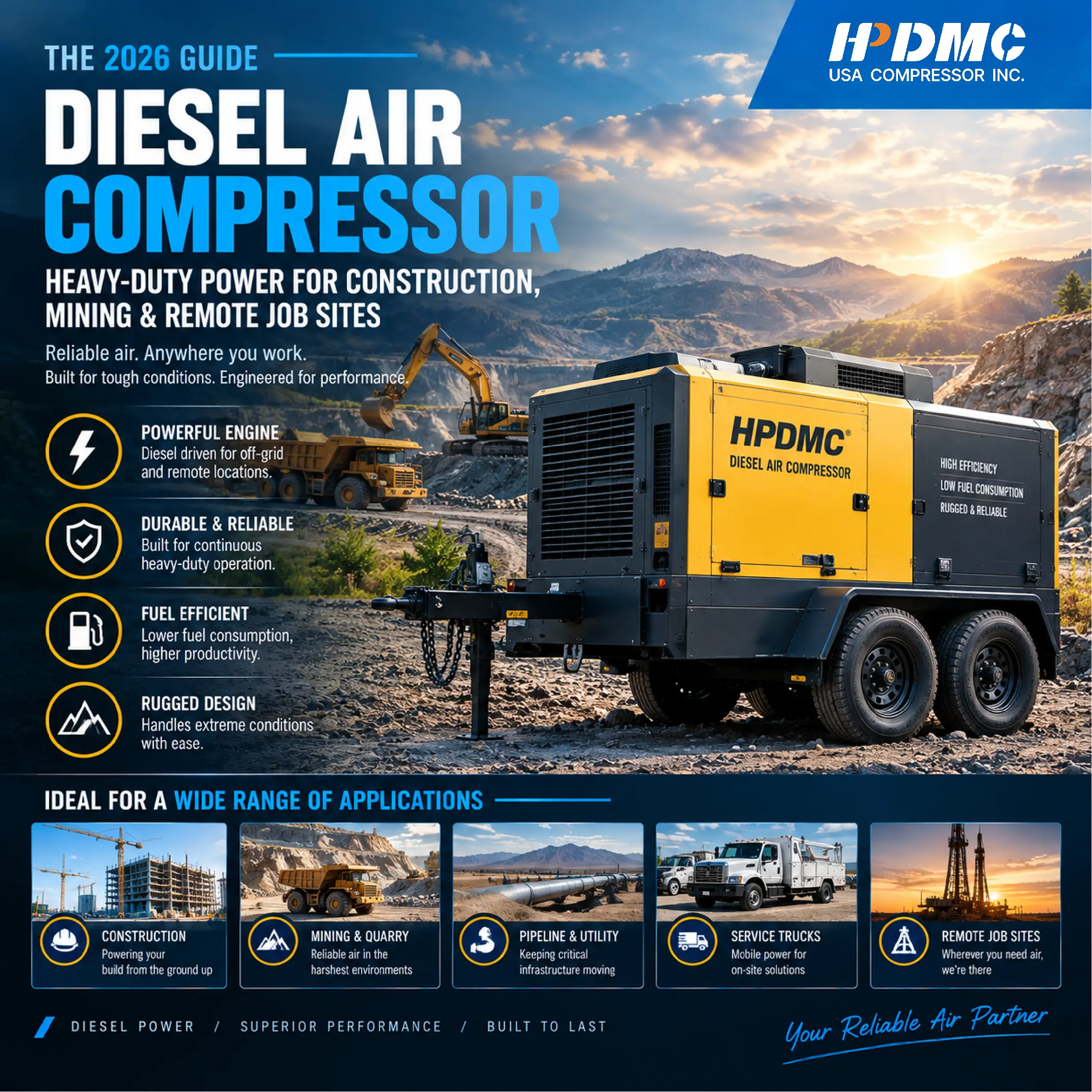
Portable diesel-driven rotary compressors power pneumatic tools at remote construction sites and mining operations where grid power is unavailable. These rugged units deliver reliable performance in challenging outdoor environments, with towable configurations enabling easy mobility between job sites.
3.2 food and beverage processing
Food-grade rotary compressors provide oil-free compressed air for food processing, packaging, and material handling applications. Strict hygiene requirements and contamination concerns make oil-free rotary technology essential for maintaining product safety and regulatory compliance.
3.3 pharmaceutical and healthcare
Critical applications in pharmaceutical manufacturing and healthcare facilities require 100% oil-free compressed air for instrumentation, packaging, and production equipment. Oil-free rotary compressors meet class 0 air purity standards demanded by these sensitive applications.
4. Selecting the right rotary air compressor
Choosing the appropriate rotary air compressor for your facility requires careful evaluation of several key factors to ensure the selected equipment meets your specific operational requirements. From capacity and pressure requirements to efficiency features and installation considerations, each aspect plays a crucial role in determining overall system performance and value.
📌Flow capacity requirements: Determine your facility’s total air demand by accounting for all connected tools and equipment, including peak demand periods and future expansion plans. Rotary compressors are available in capacities ranging from 20 cfm to over 3000 cfm, with multi-unit configurations for larger requirements.
📌Pressure requirements: Most industrial applications require 100-125 psi, though specialized equipment may demand higher pressures up to 200+ psi. Select a compressor that delivers required pressure while maintaining efficient operation within your demand range.
4.1 installation considerations
Proper installation significantly impacts rotary compressor performance and longevity. Ensure adequate ventilation for cooling, with sufficient space around the unit for maintenance access. Floor preparation and vibration isolation prevent structural stress and reduce noise transmission. Electrical service must match compressor requirements, with three-phase power typically needed for industrial rotary units.
4.2 total cost of ownership
Evaluating rotary air compressors requires considering total cost of ownership rather than initial purchase price alone. Energy costs typically represent 70-80% of a compressor’s lifecycle cost, making efficiency features such as variable speed drives and premium motor efficiency essential considerations. Maintenance requirements, spare parts availability, and manufacturer support quality also significantly impact long-term ownership costs.
5. Frequently asked questions
Q1: What is the difference between rotary screw and piston compressors?
Rotary screw compressors use two interlocking helical rotors for continuous air compression, while piston compressors use reciprocating pistons in cylinders for intermittent compression. Rotary screw units offer smoother air delivery, higher efficiency for continuous duty, lower vibration, and reduced maintenance compared to piston compressors.
Q2: How long do rotary air compressors typically last?
With proper maintenance, industrial rotary air compressors can operate reliably for 40,000+ hours before major overhauls. Many units remain productive for 20-30 years when well-maintained, though efficiency may gradually decline as components wear.
Q3: What maintenance does a rotary air compressor require?
Regular maintenance includes oil and filter changes at specified intervals, inspection and replacement of air filters, checking and replacing drive belts (if applicable), cleaning or replacing coolers, and periodic inspection of electrical components. Following manufacturer maintenance schedules ensures optimal performance and longevity.
Q4: Should i choose fixed-speed or variable speed rotary compressor?
Variable speed compressors offer significant energy savings in applications with fluctuating air demand, potentially reducing energy costs by 30-50%. For constant demand applications, fixed-speed units provide excellent reliability with simpler controls. Evaluate your demand pattern to determine the best choice.
6. Shop rotary air compressors at hpdmc
Ready to upgrade your facility with a quality rotary air compressor? Browse hpdmc’s comprehensive selection of industrial rotary compressors and compressed air solutions designed to meet your specific requirements.
🛒Industrial rotary screw compressors
🛒Variable speed rotary compressors
Each compressor in our inventory meets rigorous quality standards and is backed by comprehensive warranty coverage. Our expert team provides personalized recommendations to match your application requirements.
7. Discover more at hpdmc
Learn about our complete range of compressed air solutions and industrial equipment by visiting our website.
From rotary screw compressors to piston compressors, air dryers, filters, and complete compressed air systems, hpdmc is your trusted partner for industrial air solutions. With strategically located warehouses across the united states, we ensure fast delivery and reliable after-sales support for customers nationwide.



Find the Right Compressor for Your Needs
Find the Right Compressor for Your Needs