⚡Free Shipping: Ultra-Quiet Portable Oil-Free Air Compressor AWR800-18LM2
Need Help Choosing the Right Compressor?
Need Help Choosing the Right Compressor?
⚡Free Shipping: Ultra-Quiet Portable Oil-Free Air Compressor AWR800-18LM2
Need Help Choosing the Right Compressor?
⚡Free Shipping: Ultra-Quiet Portable Oil-Free Air Compressor AWR800-18LM2

Smart-Control Air Dryers for Compressors Using R134a Refrigerant
🌬️Understanding Air Dryers for Compressors: Definition & Working Principles
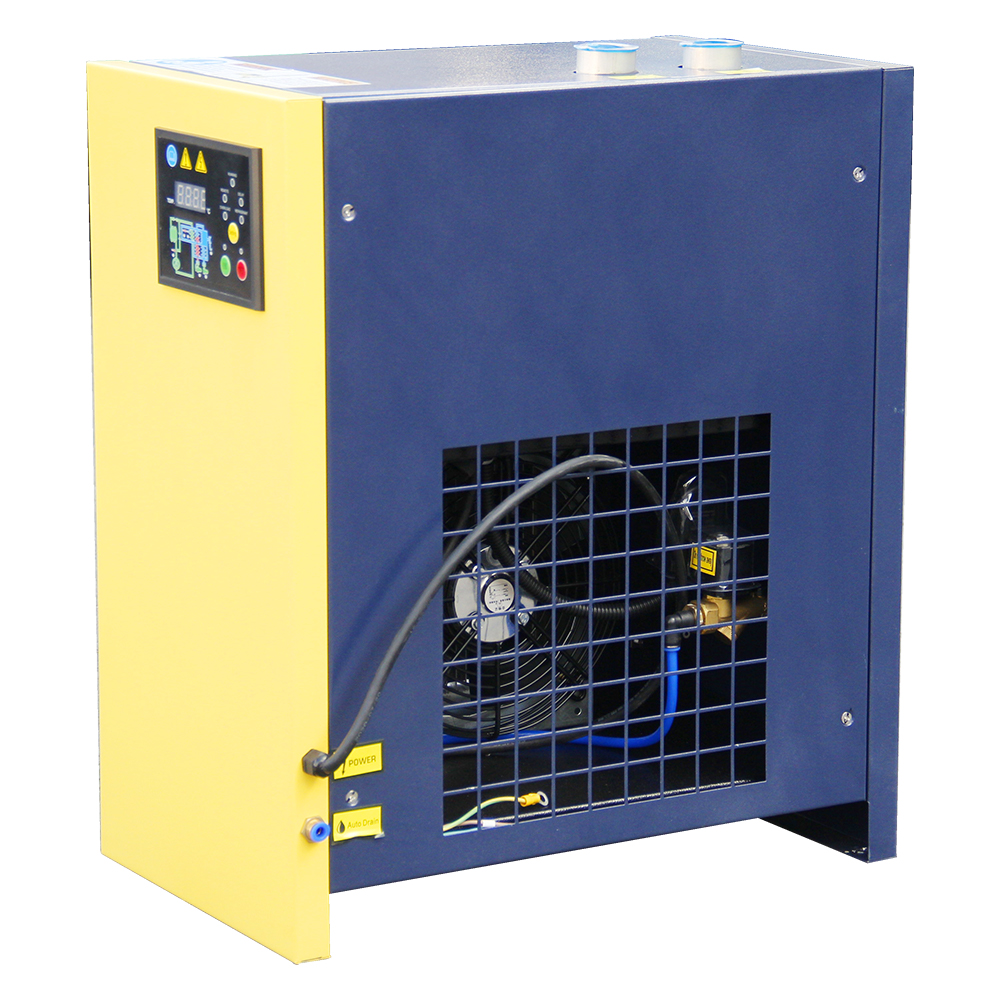
Air dryers for compressors are essential components in any compressed-air system, designed to remove moisture, contaminants, and condensation from the air before it reaches equipment or production lines. Moisture is one of the biggest enemies of pneumatic devices—when left untreated, it can cause corrosion, product defects, clogged valves, and reduced system efficiency.
One of the most reliable types on the market today is the refrigerated air dryer with microprocessor control using eco-friendly R134a refrigerant. Unlike desiccant dryers or membrane systems, refrigerated dryers cool the compressed air to force water vapor to condense, then separate and drain it. The use of R134a ensures minimal environmental impact while maintaining strong cooling performance.
A microprocessor control system takes the efficiency further. It monitors temperature, dew point, run cycles, and refrigeration load to optimize performance and reduce energy consumption. This automation eliminates guesswork, keeping the dryer stable even under fluctuating air-demand conditions.
Modern industrial users expect reliability, energy savings, and operational transparency. Air dryers equipped with intelligent controls and environmentally friendly refrigerants meet these expectations and often surpass traditional models in longevity and consistency.
📌 For a deeper dive into this product category, you may also check out HPDMC’s detailed guide:
High-Performance SE-10A Air Compressor Dryer System
✔️Choosing Air Dryers for Compressors by Key Specifications & Parameters
Selecting the right air dryer for compressors involves evaluating several crucial technical indicators. The following specifications determine whether a unit will perform effectively for your system:
⚙️ 1. Airflow Capacity (CFM or m³/min)
Your dryer must match or exceed your compressor’s airflow output.
● Undersized dryer → water remains in the system
● Oversized dryer → unnecessary energy consumption
A good rule is to choose a dryer rated at 15–20% above your compressor’s maximum airflow.
⚙️ 2. Dew Point Temperature
Refrigerated dryers typically produce a pressure dew point (PDP) of 2–10°C (35–50°F).
For general manufacturing, automotive shops, and packaging, this range is ideal.
⚙️ 3. Operating Pressure
Most dryers operate efficiently between 7–13 bar (100–190 psi). Ensure the dryer’s rating matches your compressor to avoid performance declines.
⚙️ 4. Heat Exchange & Cooling System
A unit using R134a refrigerant offers:
● Lower environmental impact
● High thermal stability
● More consistent cooling in high-load environments
⚙️ 5. Microprocessor Controller
The controller influences:
● Energy optimization
● Auto protection modes
● Fault diagnostics
● Real-time system monitoring
In high-duty cycles, microprocessor-based dryers significantly outperform basic on/off machines.
🔍How to Select Air Dryers for Compressors: Practical Buying Factors
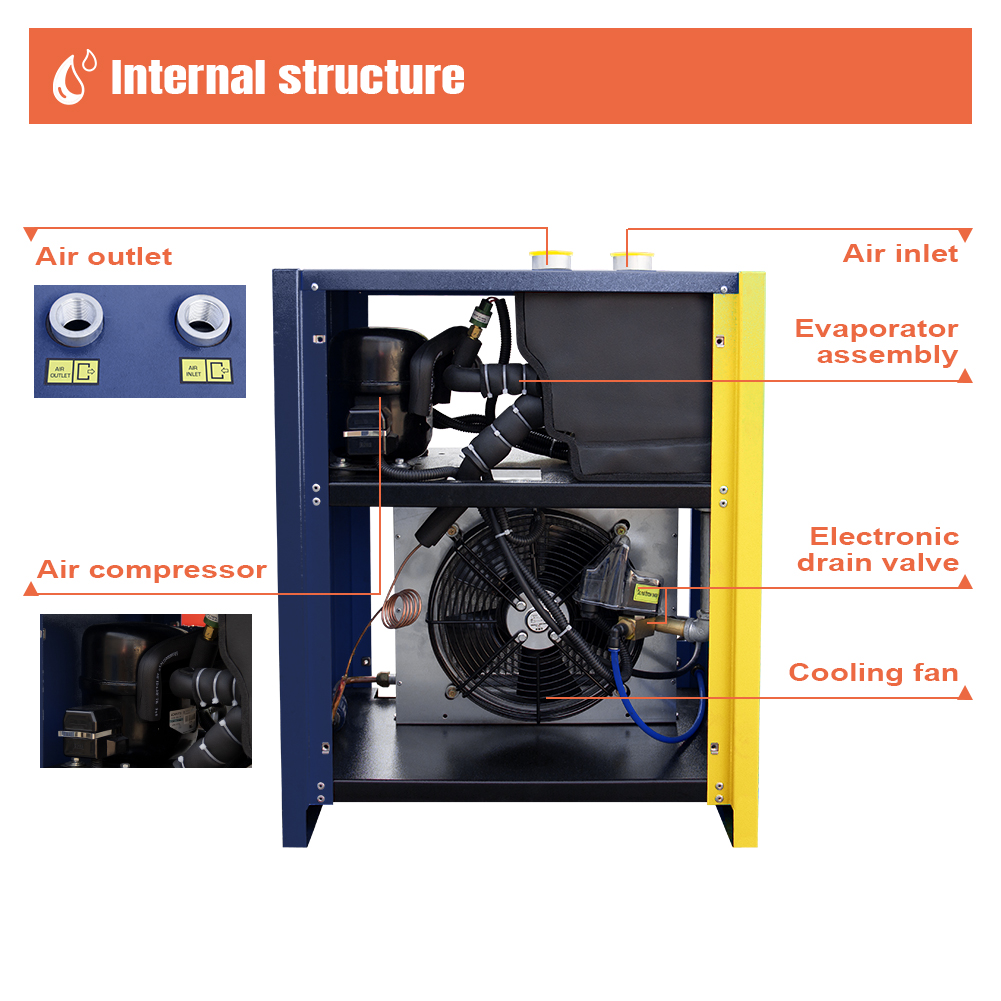
Beyond the technical specifications, real-world purchase considerations determine long-term satisfaction.
📝 1. Evaluate Total Air System Demand
Consider:
● Peak operating hours
● Seasonal humidity changes
● Equipment sensitivity to moisture
Your dryer must handle worst-case moisture loads, not just average conditions.
📝 2. Installation Environment
Heat, dust, and limited ventilation can reduce dryer lifespan. Choose a model with:
● Oversized condensers
● Stainless internal piping
● Smart overload protection
● Drain management system
📝 3. Energy Efficiency
A major advantage of microprocessor-controlled dryers is the ability to adjust refrigeration cycles.
● This reduces:Power usage
● Compressor load
● Operating cost
📝 4. Maintenance Frequency
Choose designs with:
● Easy-access panels
● Automatic drains
● Minimal consumable parts
These features significantly reduce downtime and labor costs.
📝 5. Manufacturer Support
A reputable brand should offer:
● Replacement parts
● After-sales support
● Technical documentation
● Long-term stability
HPDMC is recognized in the industry for supplying robust, easy-service refrigerated air dryers trusted by global users.
🧰Using and Maintaining Air Dryers for Compressors Effectively
Proper operation and maintenance extend the lifespan of your air dryer and ensure stable moisture control.
🔧 1. Start-Up Procedures
● Ensure inlet air temperature is within recommended limits
● Allow the refrigerator circuit to stabilize
● Check that drainage systems function correctly
🔧 2. Routine Maintenance
Regular checks include:
● Cleaning condenser fins
● Inspecting refrigerant pressure
● Verifying microprocessor alarms
● Draining accumulated water
● Checking inlet filters for dust
🔧 3. Dew Point Monitoring
A rising dew point often indicates:
● Refrigerant leak
● Dirty condenser
● Drain blockage
● Overloaded system
Smart dryers with microprocessor controls automatically warn operators about abnormal conditions.
🔧 4. Drain System Upkeep
Automatic drains prevent water accumulation and are crucial for reliability.
● Always ensure:Drain valves open smoothly
● No clogging from debris
● Piping has proper slope
🏭 Application Scenarios for Air Dryers for Compressors Across Industries
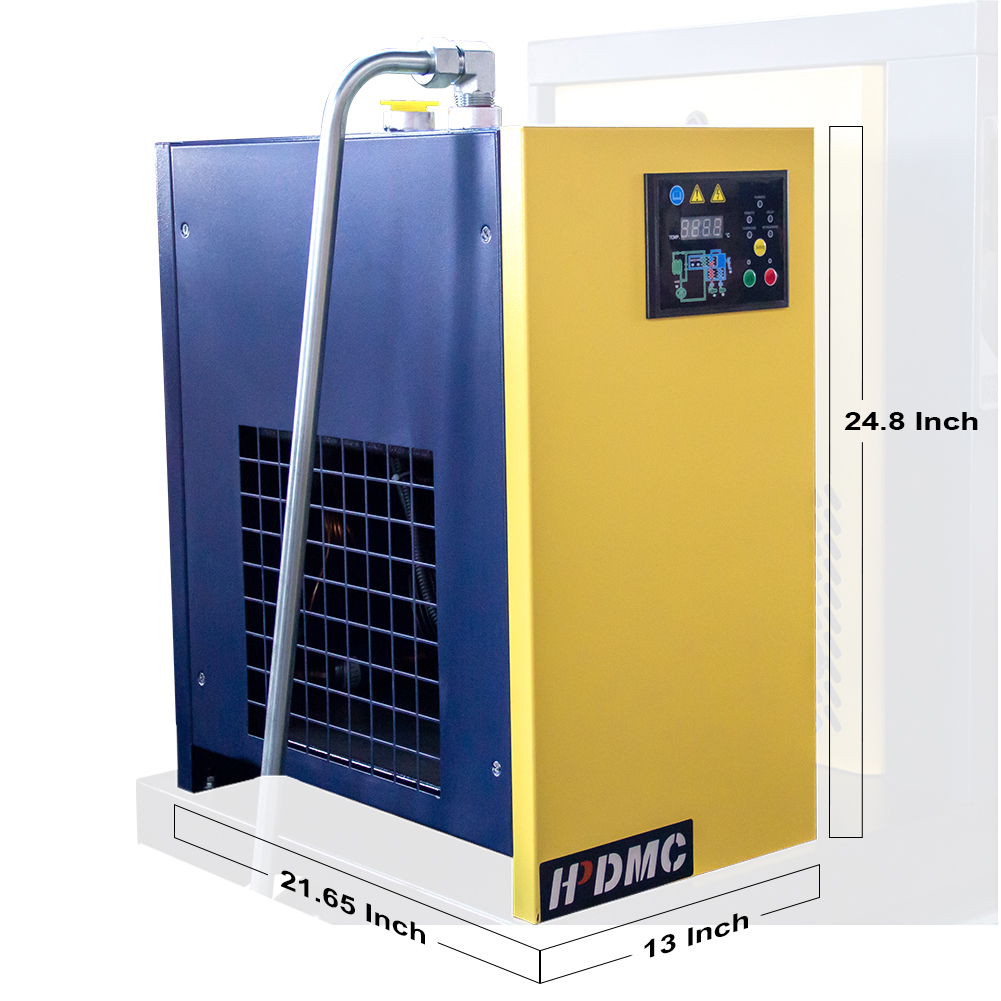
Because water in compressed air can damage sensitive equipment, dryers are used across nearly every industrial sector.
✔ Manufacturing & CNC Machining
Moisture-free air prevents rust, staining, and product defects.
✔ Automotive Maintenance
Tools such as impact guns and spray-painting equipment perform better with dry air.
✔ Electronics Production
Humidity can compromise precision assembly and micro-components.
✔ Food & Beverage Processing
Dryers help maintain hygiene, prevent contamination, and support packaging systems.
✔ Pharmaceutical Production
Protects the purity of compressed air and ensures compliance with cleanroom standards.
✔ Woodworking & Pneumatic Controls
Prevents clogs in pneumatic cylinders, extending machine life.
💡Troubleshooting Common Issues in Air Dryers for Compressors
Even advanced dryers can face problems depending on operating conditions. Here are the most common issues and solutions.
🆘 1. High Dew Point
Possible causes:
● Refrigerant leak
● Dirty condenser
● Inadequate airflow
● Blocked drain
Solution: Perform maintenance and verify refrigerant charge.
🆘 2. Dryer Not Turning On
Reasons include:
● Faulty power supply
● Tripped protection circuit
● Overheating
Solution: Check electrical connections and ensure ventilation.
🆘 3. Excessive Noise or Vibrations
Likely due to:
● Loose piping
● Failing fan motor
● Compressor wear
Solution: Tighten connections and inspect moving parts.
🆘 4. Water Carryover
Causes:
● Undersized dryer
● Sudden air demand spikes
● Drain system malfunction
Solution: Increase dryer capacity or stabilize air flow.
🛠️Why HPDMC Microprocessor-Controlled Refrigerated Air Dryers for Compressors Stand Out
HPDMC offers a new generation of refrigerated air dryers for compressors using R134a refrigerant and advanced microprocessor control. These units are engineered for long-term reliability, energy efficiency, and zero-hassle operation.
Key strengths include:
● Stable dew point under heavy load
● Intelligent monitoring and faults detection
● Durable components built for industrial environments
Whether for daily workshop use or continuous production, HPDMC dryers consistently deliver dry, clean, temperature-controlled compressed air.
📊 HPDMC Refrigerated Air Dryer Comparison Table:
| Feature / Advantage | HPDMC Microprocessor-Controlled Refrigerated Dryer | Other Brands |
| Intelligent control & diagnostics | Advanced microprocessor with self-protection | Basic on/off logic, limited monitoring |
| Refrigerant performance | Eco-friendly R134a, highly stable cooling | Older or mixed refrigerants with lower efficiency |
| Reliability & build quality | Heavy-duty components, industrial-grade durability | More frequent failures, shorter service life |
| 🛒buy now |
❓FAQ — About Air Dryers for Compressors
Q1: Do I always need a refrigerated air dryer for my compressor?
If your tools or equipment require clean, dry air—or if you work in a humid climate—yes. Moisture can cause significant equipment damage and product defects.
Q2: What is the ideal dew point for general industrial use?
A dew point of 2–10°C (35–50°F) is sufficient for most industries.
Q3:Are microprocessor-controlled dryers worth the investment?
Absolutely. They improve stability, reduce power consumption, and help prevent unexpected failures.
Q4: How often should I maintain my dryer?
Basic maintenance every 3–6 months is recommended, depending on operating conditions.
Q5: Is R134a refrigerant safe and environmentally friendly?
Yes, R134a is commonly used and offers lower environmental impact compared to older refrigerants.
💼Ready to Purchase? Discover the Best Air Dryers for Compressors Today!
If you need a reliable, energy-efficient, microprocessor-controlled refrigerated air dryer using R134a refrigerant, HPDMC offers one of the strongest solutions in the industry.
💡💡💡Upgrade your compressed-air system now and enjoy cleaner, safer, moisture-free air for years to come.
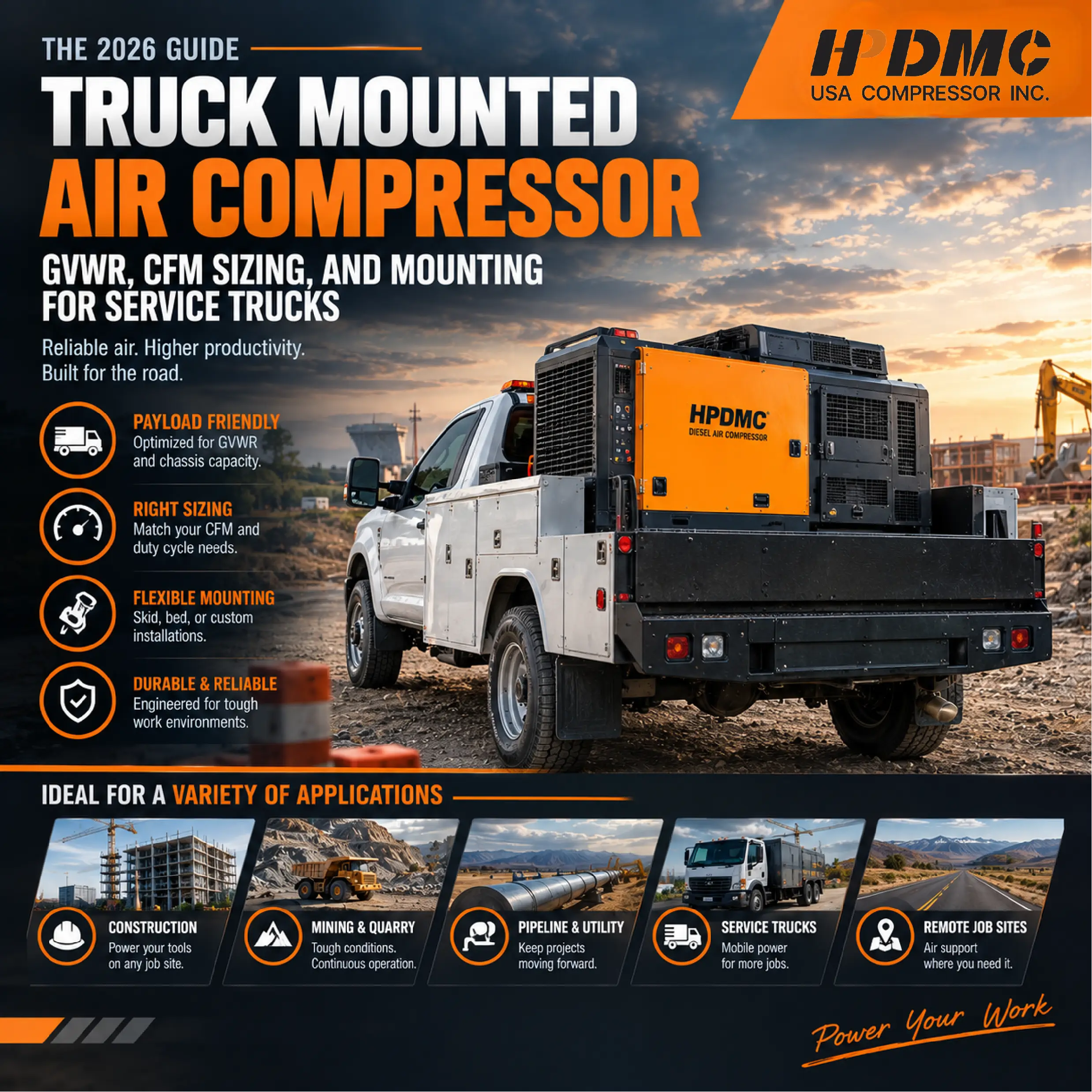



Find the Right Compressor for Your Needs
Find the Right Compressor for Your Needs