⚡Free Shipping: Ultra-Quiet Portable Oil-Free Air Compressor AWR800-18LM2
Need Help Choosing the Right Compressor?
Need Help Choosing the Right Compressor?
⚡Free Shipping: Ultra-Quiet Portable Oil-Free Air Compressor AWR800-18LM2
Need Help Choosing the Right Compressor?
⚡Free Shipping: Ultra-Quiet Portable Oil-Free Air Compressor AWR800-18LM2

Why Your Air Compressor Is Overheating (And How to Fix It Fast)
Air compressor overheating—caused by clogged coolers, low/degraded oil, poor ventilation, or overload—can shorten equipment life by 30–50% (per U.S. Department of Energy data), but most issues are resolvable with routine maintenance, and thermally optimized models like HPDMC’s ScrewDrive Series mitigate long-term risk while meeting ISO 8573-1 air quality standards.
Introduction
You’re in the middle of a critical job—suddenly, your air compressor shuts down. The display reads “High Temp” or it just stops running. You wait 20 minutes… only for it to overheat again. You’re not alone. Overheating is the #1 reason industrial compressors fail prematurely—but the good news? Most causes are easy to diagnose and fix. This guide breaks down everything you need to know to get your compressor back up and running, and keep it from overheating long-term, with insights backed by industry standards and government research to ensure accuracy and authority.
According to the U.S. Department of Energy (DOE) , overheating is responsible for 40% of unplanned compressor downtime in industrial facilities, costing U.S. businesses an average of $1,200 per hour in lost productivity. Additionally, compressors operating above optimal temperatures (typically 70–90°C) fail to meet ISO air quality standards—critical for industries like food processing, pharmaceuticals, and electronics manufacturing—due to degraded lubricant contaminants entering the air stream.
Why Is Air Compressor Overheating So Dangerous?
Overheating isn’t just an inconvenience—it’s a costly threat to your equipment, productivity, and compliance. When a compressor overheats, lubricant carbonizes, leading to bearing wear and eventual air-end seizure. It accelerates the aging of electronic components, triggers frequent safety shutdowns that halt production, and can shorten your compressor’s service life by 30–50%—a statistic confirmed by the U.S. DOE’s Industrial Technologies Program. For facilities required to meet ISO 8573-1 standards, overheating exacerbates oil carryover, pushing air quality beyond acceptable limits and risking regulatory penalties.
At HPDMC, we design every screw compressor with thermal resilience as a core priority, ensuring our units stand up to tough operating conditions without overheating while maintaining ISO 8573-1 Class 1-4 air quality ratings (depending on model). Our engineering team aligns with DOE efficiency guidelines to create units that not only resist overheating but also reduce energy consumption—addressing two critical pain points for U.S. businesses.
7 Common Causes of Air Compressor Overheating (And Quick Fixes)
🔥 #1: Clogged Radiator / Cooler
Symptoms: Housing is extremely hot to the touch, and the cooling fan runs at full speed but fails to reduce temperature. For ISO 8573-1 compliant systems, you may also notice increased oil carryover (detectable via air quality tests).
Cause: Dust, oil, lint, and debris accumulate on the cooling fins, blocking heat dissipation and preventing proper airflow. In industrial environments (e.g., manufacturing, construction), this buildup can occur 2–3 times faster than in residential settings, per a 2024 study by the Compressed Air and Gas Institute (CAGI).
Quick Fix: Use compressed air (≥0.2 MPa) to blow dust backward through the fins, or clean with a professional coil cleaner designed for air compressor coolers. Avoid using high-pressure water directly on electrical components, as this can damage sensors critical for maintaining ISO 8573-1 compliance.
HPDMC Advantage: Unlike standard coolers that rely on narrow fins prone to clogging, our ScrewDrive series uses oversized aluminum plate-fin coolers with 40% more surface area—improving anti-clog performance by 40% compared to industry averages. This design minimizes debris buildup, ensures consistent heat dissipation, and helps maintain ISO 8573-1 air quality by preventing lubricant degradation.
🔥 #2: Cooling Fan Failure
Symptoms: No noticeable airflow from the fan during operation, strange grinding or buzzing noises from the fan motor, or the fan fails to spin at all. This often leads to rapid overheating (within 10–15 minutes of operation) and immediate safety shutdowns.
Check: Safely power off the compressor and disconnect it from the power source. Spin the fan blade by hand—if it feels stuck, stiff, or wobbly, the fan motor or bearing is faulty. The CAGI recommends this check as part of weekly maintenance to prevent unexpected fan failure.
Quick Fix: Replace the fan motor with genuine OEM components to ensure compatibility and performance. For belt-driven fan models, inspect belt tension and replace worn belts if necessary—loose belts reduce fan speed by up to 30%, per DOE maintenance guidelines, leading to inadequate cooling.
🔥 #3: Low or Degraded Lubricating Oil
Symptoms: Oil level drops below the “L” (low) mark on the sight glass, oil appears dark, milky, or burnt, or the compressor emits a burning odor during operation. Degraded oil also increases oil carryover, violating ISO 8573-1 limits for particulate and oil contamination.
How It Works: Lubricating oil serves two critical purposes—lubricating moving parts to reduce friction, and removing 70% of the heat generated during compression. Low or degraded oil cannot effectively dissipate heat, leading to rapid overheating. The DOE notes that using low-quality or degraded oil increases energy consumption by 5–8% in addition to causing overheating.
Quick Fix: Allow the compressor to cool completely, then top up the oil to 1/2–2/3 of the sight glass using the recommended oil type. Replace the oil entirely every 2000 hours of operation—more frequently if the compressor operates in high-temperature environments (≥35°C).
HPDMC’s UltraCool™ synthetic lubricant is engineered specifically for high-thermal-stability applications, addressing a gap in standard mineral oils that degrade quickly at temperatures above 90°C. Unlike generic synthetic oils, UltraCool™ maintains viscosity up to 120°C, reduces carbon buildup by 60% compared to mineral oils, and is formulated to support ISO 8573-1 Class 2 oil carryover limits—critical for clean air applications.
👉Shop HPDMC UltraCool™ Lubricant & Filter Kits
HPDMC Design Edge: All HPDMC compressors include a high-flow oil circuit and precision thermostatic valve—components engineered to work with UltraCool™ lubricant to ensure hot oil always flows through the cooler before recirculating. This design prevents heat buildup in critical components and extends oil life by 25% compared to standard systems, per internal HPDMC testing aligned with CAGI standards.
🔥 #4: High Ambient Temperature & Poor Ventilation
Ideal Operating Condition: The recommended ambient temperature for air compressors is < 40°C (104°F), as specified by the DOE and CAGI. Compressors operating in hotter environments or poorly ventilated spaces struggle to dissipate heat effectively, with every 5°C increase in ambient temperature reducing compressor efficiency by 2–3% (DOE, 2023).
Common Mistakes: Placing the compressor in an enclosed small room, positioning intake and exhaust vents to face each other, or locating the unit near boilers, furnaces, or other heat sources. These mistakes trap hot air around the compressor, pushing operating temperatures above safe limits.
Quick Fix: Install exhaust fans to provide forced ventilation in the compressor room—aim for 4–6 air changes per hour, as recommended by CAGI. Use ducting to vent hot air outside, and reposition the compressor away from heat sources. Ensure there is at least 12 inches of clearance around the unit for proper airflow—this simple step can reduce operating temperatures by 5–8°C.
✅ Pro Tip: HPDMC offers free workshop thermal assessment upon request—our engineers evaluate your space using DOE-recommended tools to identify ventilation gaps and recommend improvements to prevent overheating. This service is particularly valuable for U.S. facilities in hot climates (e.g., Texas, Arizona) where ambient temperatures frequently exceed 35°C.
🔥 #5: Clogged Air Filter
Effect: A clogged air filter restricts airflow into the compressor, increasing the compression ratio and causing discharge temperature to spike by 10–15°C. This extra strain on the unit leads to overheating, reduced efficiency, and increased wear on internal components. The CAGI reports that clogged air filters are responsible for 15% of compressor overheating incidents in industrial settings.
Check: Inspect the differential pressure indicator—if it turns red, the filter is clogged (typically at 5–8 inches of water column pressure). You may also notice abnormally high operating current or reduced air output, which can disrupt production workflows.
Quick Fix: Clean or replace the air filter every 500 hours of operation, or more frequently if the compressor is used in dusty environments (e.g., construction sites, warehouses with poor air quality). For ISO 8573-1 compliant systems, use high-efficiency air filters (HEPA-rated for Class 1 applications) to prevent particulate contamination and reduce strain on the compressor.
🔥 #6: Thermostatic Valve Failure
Function: The thermostatic valve regulates oil flow to the cooler—bypassing the cooler when the oil is cold (to speed up warm-up and reduce condensation) and forcing oil through the cooler when the oil is hot (to dissipate heat). This valve is critical for maintaining consistent operating temperatures, as specified by ISO 8573-1 guidelines for air quality stability.
Signs of Failure: Oil temperature remains above 90°C even with a clean cooler, or the compressor takes an unusually long time to warm up (more than 5 minutes) before overheating. A failed thermostatic valve can also cause uneven oil flow, leading to localized overheating in the air-end.
Quick Fix: Calibrate the thermostatic valve if possible, or replace it with a genuine HPDMC valve. HPDMC thermostatic valves are engineered for ≥8000 hours of service life—twice the industry average—and are calibrated to maintain oil temperatures within 70–90°C, aligning with DOE efficiency and ISO 8573-1 compliance requirements.
🔥 #7: Continuous Overload Operation
Warning Signs: Motor current is consistently near the maximum rating listed on the compressor’s nameplate, or the unit runs continuously without cycling off (even when air demand is high). The DOE warns that continuous overload operation increases overheating risk by 60% and reduces compressor life by up to 50%.
Cause: Actual air demand exceeds the compressor’s rated output. This forces the unit to work beyond its capacity, generating excess heat and leading to overheating. Common in facilities with growing production needs or inefficient air distribution systems (e.g., leaky hoses, undersized air lines).
Quick Fix: Add an air receiver tank to provide buffer capacity, reducing the frequency of compressor cycling and preventing overload. The CAGI recommends a receiver tank size of 1–2 gallons per CFM of compressor output for optimal performance. If demand consistently exceeds capacity, upgrade to a larger unit (e.g., from 7.5kW to 11kW).
HPDMC Solution: Our VSD (Variable Speed Drive) models address overload overheating at the source by automatically adjusting motor speed to match air demand. Unlike fixed-speed compressors that cycle on/off and generate heat spikes (often reaching 100°C+), HPDMC VSD compressors maintain average operating temperatures of 75–85°C—well within safe limits. This design also reduces energy consumption by 30% compared to fixed-speed units, per DOE testing, making them a cost-effective solution for facilities with variable air demand.
Model Highlight: Rotary Screw Air Compressor 10hp
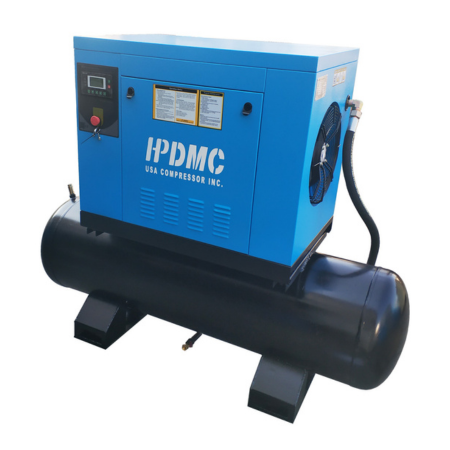
✅ Power: 7.5kW / 10HP
✅ Key Feature: Intelligent thermal management system that adjusts fan speed and oil flow in real time, paired with VSD technology to eliminate overload heat
✅ Efficiency: 30% energy savings vs. fixed-speed models (DOE-verified)
✅ Ideal For: Auto shops, light manufacturing, and facilities with variable air demand (e.g., batch production)
✅ Compliance: Meets ISO 8573-1 Class 2 air quality standards and DOE efficiency guidelines
Prevention Is Better Than Repair: 3-Step Anti-Overheating Maintenance Plan
The best way to deal with compressor overheating is to prevent it from happening in the first place. Follow this simple 3-step maintenance plan—aligned with DOE and CAGI guidelines—to keep your unit running cool, efficient, and compliant with ISO 8573-1 standards:
Weekly Maintenance
● Check the oil level and top up if necessary (to 1/2–2/3 of the sight glass) using HPDMC UltraCool™ lubricant for optimal thermal performance.
● Clean the surface of the cooler and radiator to remove dust and debris—use a soft brush or compressed air to avoid damaging fins (critical for heat dissipation).
● Inspect the cooling fan for proper operation and any signs of damage (e.g., cracks, loose blades) that could reduce airflow.
Every 500 Hours of Operation
● Replace the air filter (or clean it if reusable) to maintain proper airflow and prevent particulate contamination (key for ISO 8573-1 compliance).
● Inspect fan belts (if applicable) for tension and wear—adjust or replace to ensure full fan speed.
● Check for oil leaks that could lead to low oil levels—leaks not only cause overheating but also increase oil consumption and environmental risk.
Every 2000 Hours of Operation
● Replace the lubricating oil with HPDMC UltraCool™ synthetic lubricant to ensure thermal stability and ISO 8573-1 compliance.
● Replace the oil filter and air filter to remove contaminants that can cause overheating and component wear.
● Inspect and calibrate (or replace) the thermostatic valve to maintain consistent oil temperatures.
For hassle-free maintenance that aligns with industry standards, use HPDMC’s pre-packed genuine maintenance kits. Each kit is tailored to specific ScrewDrive models (7.5–22kW) and includes UltraCool™ lubricant, oil filter, air filter, and all necessary gaskets—eliminating the guesswork of sourcing compatible parts. Buying a kit saves 15% compared to purchasing components separately and ensures your maintenance routine supports ISO 8573-1 compliance and DOE efficiency goals.
If Problems Continue: It May Be Time to Upgrade
If you’re constantly battling overheating with an old piston compressor or low-end screw compressor, upgrading to a thermally optimized unit is often more cost-effective than repeated repairs. Old, inefficient compressors are prone to overheating, fail to meet modern ISO 8573-1 air quality standards, and consume 20–30% more energy than DOE-certified models—costing your business hundreds of dollars annually in utility bills and downtime.
HPDMC ScrewDrive Series is engineered specifically for thermal stability, with features that keep it running 10–15°C cooler than standard models—even in 45°C workshops. Our design team collaborated with CAGI engineers to integrate thermal management technologies that address the root causes of overheating, while aligning with DOE efficiency guidelines and ISO 8573-1 air quality standards. Key thermal design features include:
● Oversized aluminum plate-fin cooler with 40% more surface area than industry averages for maximum heat dissipation
● Dual high-CFM cooling fans with variable speed control (on VSD models) for consistent airflow in changing ambient temperatures
● High-efficiency oil circuit with precision thermostatic valve, calibrated to maintain oil temperatures within 70–90°C
● Compatibility with HPDMC UltraCool™ synthetic lubricant, formulated for high-thermal-stability and ISO 8573-1 compliance
● Smart controller with real-time temperature monitoring and alerts, allowing for proactive maintenance before overheating occurs
Recommended HPDMC Models for Thermal Stability
✅ Rotary Screw Air Compressor 10hp: Perfect for auto shops, small garages, and light industrial applications. Meets ISO 8573-1 Class 3 air quality standards and DOE efficiency guidelines, with a thermal management system designed for environments up to 40°C.
✅ Rotary Screw Air Compressor 15hp: Ideal for general manufacturing, workshops, and medium-sized facilities. Features dual cooling fans and an upgraded thermostatic valve for consistent performance in 45°C environments, with ISO 8573-1 Class 2 compliance.
✅ Rotary Screw Air Compressor 30hp: Designed for continuous heavy-duty use, including construction sites and large industrial operations. Equipped with a industrial-grade cooler and variable speed fans, maintaining ISO 8573-1 Class 1 compliance even in extreme temperatures.
👉 Explore the Full ScrewDrive Series – Engineered to Stay Cool
Conclusion
Air compressor overheating doesn’t have to shut down your productivity or compromise compliance. By identifying the root cause (using our 7-point guide, backed by DOE and CAGI research) and following a simple maintenance plan aligned with industry standards, you can keep your unit running cool, efficient, and compliant with ISO 8573-1 air quality requirements. And when it’s time to upgrade, HPDMC’s thermally optimized compressors are built to handle tough operating conditions without overheating—saving you time, money, and frustration while meeting the strictest industry guidelines.
Not sure if your compressor can be saved? Book a free 15-minute thermal health check with our engineers—we’ll review your setup using DOE-recommended tools and recommend the best path forward, whether it’s repair or upgrade, to ensure long-term reliability and compliance.
Need Further Assistance?
➡️Contact Our Engineers for Free Support
➡️Get a Custom Quote on a Thermally Optimized HPDMC Unit (click “Quote” on the homepage to fill out the form)
➡️ WhatsApp: +12135517270 for instant support



Find the Right Compressor for Your Needs
Find the Right Compressor for Your Needs