⚡Free Shipping: Ultra-Quiet Portable Oil-Free Air Compressor AWR800-18LM2
Need Help Choosing the Right Compressor?
Need Help Choosing the Right Compressor?
⚡Free Shipping: Ultra-Quiet Portable Oil-Free Air Compressor AWR800-18LM2
Need Help Choosing the Right Compressor?
⚡Free Shipping: Ultra-Quiet Portable Oil-Free Air Compressor AWR800-18LM2

Air Compressor Tank: Ultimate Guide – What It Is, Why You Need It & How to Choose One
An air compressor tank (also called an air receiver tank or air storage tank) is a critical component of any compressed air system—acting as a reservoir for pressurized air, stabilizing pressure fluctuations, and reducing the frequency of your air compressor’s start-stop cycles. While some small portable compressors skip a dedicated tank, most commercial, industrial, and even serious DIY setups rely on it to unlock efficiency, longevity, and consistent performance.
This guide breaks down everything you need to know about air compressor tanks: their purpose, key features to compare, sizing methods, and how HPDMC’s ASME-certified tanks fit your needs.
What Is an Air Compressor Tank? (Definition & Aliases)
An air compressor tank is a pressure vessel designed to store compressed air produced by an air compressor. It acts as a buffer between the compressor and your pneumatic tools/equipment, solving the inherent problem of "on-demand" air supply vs. the compressor’s cyclic operation.
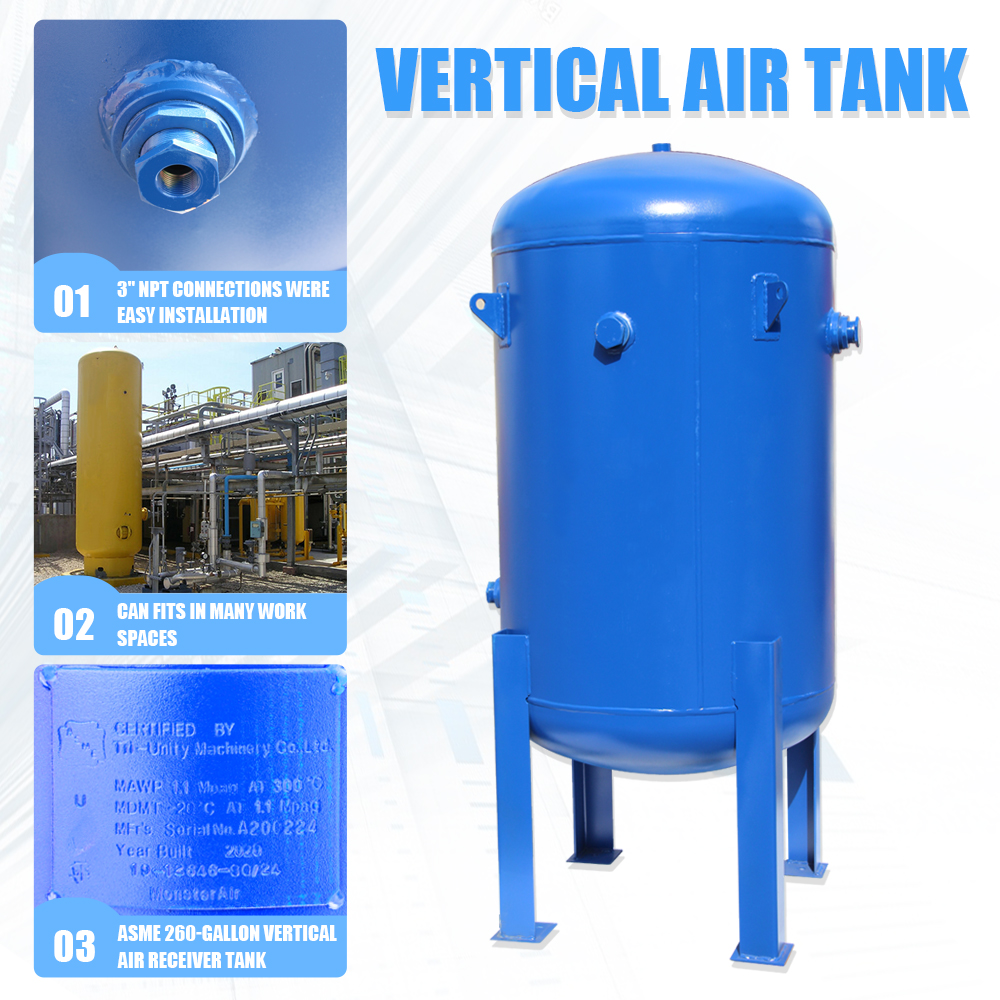
Common Aliases:
💡Air receiver tank (industry standard term)
💡Air storage tank (DIY/consumer-friendly label)
💡Compressor reservoir (less common, but interchangeable)
Core Function:
When your air compressor runs, it fills the tank with compressed air until the tank reaches a preset pressure (e.g., 120 PSI). When you use tools, air is drawn from the tank—allowing the compressor to stay off until the pressure drops to a lower threshold (e.g., 90 PSI). This cycle eliminates the need for the compressor to run constantly, transforming intermittent air production into a steady supply.
Why Do You Need an Air Compressor Tank? (5 Key Benefits)
You might wonder if an air compressor tank is optional—but for any setup beyond occasional tire inflation, it’s a must-have. Here’s why it’s non-negotiable:
✅ Stabilizes Air Pressure for Consistent Tool Performance
Pneumatic tools (e.g., impact wrenches, paint sprayers, sanders) require steady pressure to operate effectively. Without a tank, pressure fluctuates as the compressor cycles on/off—causing tools to stall, sputter, or deliver uneven results (e.g., paint runs, incomplete fastener installation). A tank smooths these fluctuations, ensuring tools get the consistent airflow they need.
✅ Extends Air Compressor Lifespan
Frequent start-stop cycles are the #1 cause of premature compressor wear. Every time the compressor starts, it undergoes "load shock"—stress on the motor, pump, and electrical components. An air compressor tank reduces cycling by storing excess air, cutting the number of starts by 50–70%. This extends the compressor’s lifespan by 30–50%, according to data from the Compressed Air Challenge (CAC).
✅ Improves Energy Efficiency
Compressors use the most energy during startup. By reducing cycle frequency, a tank lowers your electricity bill: a 10 HP compressor with a properly sized tank uses 15–20% less energy than the same compressor without a tank (U.S. Department of Energy, DOE). For a shop running 2,000 hours/year, that’s 300–500 in annual savings.
✅ Removes Condensed Moisture 💧
As air is compressed, it heats up and holds moisture. When the air cools inside the tank, moisture condenses into liquid—collecting at the bottom. This allows you to drain the water (via a drain valve) before it reaches your tools or pipes, preventing corrosion, rust, and tool damage.
✅ Enables Intermittent High-Demand Use
Some tools (e.g., sandblasters, large air drills) require short bursts of high airflow that exceed the compressor’s continuous output. A tank acts as a "backup"—delivering the extra air needed for these tasks without overloading the compressor.
Key Features to Consider When Buying an Air Compressor Tank
Not all air compressor tanks are equal. Focus on these critical features to match the tank to your setup, space, and safety requirements:
| Key Feature | Details & Options | User Considerations |
|---|---|---|
| Capacity (Gallons/Liters) | 20gal (76L), 30gal (114L), 60gal (227L), 80gal (303L), 270gal (1,022L) | - Small DIY/Home Garage (≤5 HP): 20–30gal - Auto Shop/Small Business (5–10 HP): 60–80gal - Industrial (10+ HP): 120–270gal |
| Orientation | Vertical (tall, narrow) vs. Horizontal (short, wide) | - Vertical: Saves floor space (ideal for small workshops); requires 8–10ft ceiling height - Horizontal: Easier to transport; better for mobile setups (e.g., construction sites) |
| Material | Steel (carbon steel) vs. Stainless Steel | - Steel: Cost-effective for dry environments - Stainless Steel: Essential for humid, coastal, or chemical environments |
| Certification | ASME-Certified vs. Non-Code | - ASME: Mandatory for commercial/industrial use in the U.S. - Non-Code: Only for small DIY compressors (not safe for high pressure) |
| Max Pressure (PSI) | 150–200 PSI | Must equal or exceed your compressor’s max pressure |
| Drain Valve | Manual vs. Automatic | - Manual: Lower cost (requires daily draining) - Automatic: Saves time (critical for busy shops) |
How to Size Your Air Compressor Tank (Practical Rules & Examples)
Sizing correctly ensures harmony between tank and compressor—too small = no benefit; too large = wasted space/money.
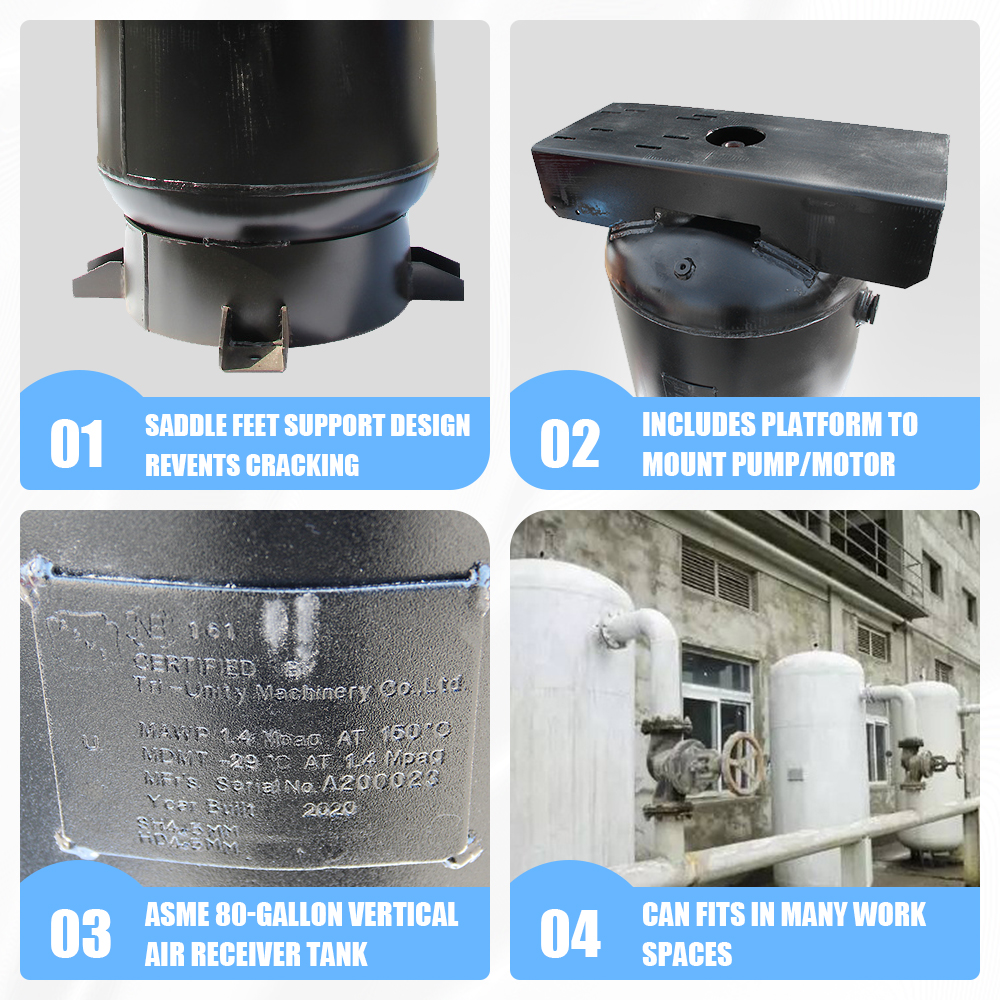
5.1 Basic Rule of Thumb (Most Common)
✅ 3–5 gallons per 1 HP of compressor power
- Example 1: 5 HP home compressor → 15–25gal → opt for 30gal (safety margin)
- Example 2: 7.5 HP rotary screw → 22.5–37.5gal → recommend 60–80gal for commercial peak demand
- Example 3: 10 HP industrial → 30–50gal → choose 120gal for continuous use
5.2 Advanced Sizing (For Specific Demand)
Use this formula:
Tank Capacity (gal) = (Total CFM × 60) ÷ (Compressor Output CFM × 10)
- Example: Total tool demand = 15 CFM; Compressor output = 10 CFM
→ (15 × 60) ÷ (10 × 10) = 900 ÷ 100 = 9gal → Round up to 20gal minimum for real-world use
5.3 Sizing Table for Common Compressor Sizes
| Compressor HP | Recommended Tank Capacity (Gal) | Ideal Use Case |
|---|---|---|
| 2–5 HP (DIY/Home) | 20–30 | Tire inflation, nail guns, hobby projects |
| 5–7.5 HP (Small Shop) | 60–80 | Auto repair, woodworking, 1–2 tools |
| 7.5–10 HP (Mid-Size Business) | 80–120 | Fleet maintenance, light manufacturing |
| 10+ HP (Industrial) | 120–270 | Continuous production, multiple users |
Common Mistakes to Avoid with Air Compressor Tanks
Even the best tank will underperform or pose risks if you make these errors:
⚠️ Using a Non-ASME-Certified Tank
Non-code tanks lack safety testing—they can rupture under pressure. In the U.S., commercial use is illegal, and insurance claims will be denied.
💧 Ignoring the Drain Valve
Moisture causes rust and tool damage. Drain daily (manual) or inspect monthly (automatic).
🌬️ Installing in a Confined Space Without Ventilation
Leave ≥12 inches clearance for airflow and safety in case of failure.
⚖️ Oversizing or Undersizing the Tank
- Undersized: No reduction in cycling → wasted energy
- Oversized: Wastes space, longer fill times → no efficiency gain
⚡ Mismatched Pressure Ratings
Never pair a 200 PSI compressor with a 150 PSI tank—it forces premature shutoff and frequent cycling.
HPDMC’s ASME-Certified Air Compressor Tanks (Product Spotlight)
HPDMC offers a range of ASME-certified air compressor tanks designed to pair seamlessly with our rotary screw, reciprocating, and portable compressors. Built for safety, durability, and efficiency—with options for every application.
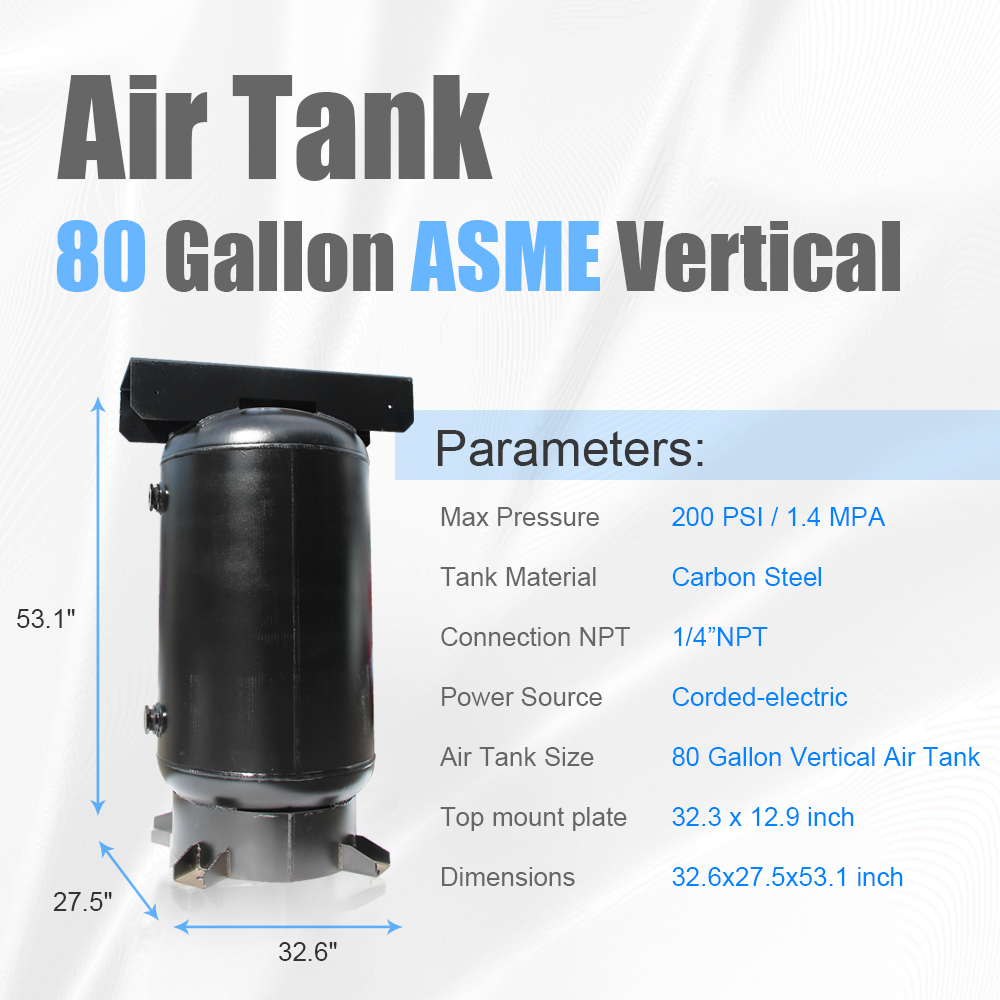
Key Product Features
- ✅ ASME-Certified: Meets strict U.S. safety standards
- 🔩 Steel Construction: Heavy-gauge carbon steel with rust-resistant primer
- 💧 Drain Valve: Manual (standard) or optional automatic
- 📏 Orientation Options: Vertical or horizontal to fit your space
Popular Models & Bundles
30gal Vertical Air Compressor Tank — [Shop Now]
✅ Ideal for: 2–5 HP portable compressors, construction sites, mobile trucks
✅ Pair with: HPDMC 6.5 HP Gas Compressor → Perfect for on-site repairs
60gal Vertical Air Compressor Tank — [Shop Now]
✅ Ideal for: 5–7.5 HP rotary screw compressors, small auto shops
✅ Pair with: HPDMC 7.5 HP Screw Compressor → Handles impact wrenches, spray guns
80gal Vertical Air Compressor Tank — [Shop Now]
✅ Ideal for: 7.5–10 HP compressors, fleet maintenance
✅ Pair with: HPDMC 10 HP Screw Compressor + Air Dryer (TAS Bundle) → Complete system
270gal Vertical Air Compressor Tank — [Shop Now]
✅ Ideal for: Industrial facilities, heavy-duty manufacturing, 10+ HP compressors
Bundle Advantage
HPDMC’s “T” (Tank) and “TAS” (Tank + Air Dryer + Compressor) bundles are pre-engineered for compatibility—saving setup time and ensuring optimal performance.
- 7.5 HP Screw + 80gal Tank → 15% savings vs. separate purchase
- 10 HP Screw + 120gal Tank + Refrigerated Dryer → All-in-one system for clean, dry, stable air
❓ FAQ: Expert Answers About Air Compressor Tanks
Q1: Can I add a larger tank to my existing air compressor?
Yes—as long as the tank’s max pressure matches or exceeds the compressor’s output. A larger tank reduces cycling, but ensure your compressor’s duty cycle supports longer fill times.
Q2: Are ASME air compressor tanks required by law?
In the U.S., yes—for any tank >15 PSI in commercial/industrial settings. DIY/home use of non-ASME tanks is allowed for ≤2 HP compressors, but ASME is still recommended for safety.
Q3: How often should I inspect my air compressor tank?
- Commercial: Annually (OSHA requirement)
- Home: Every 2–3 years
→ Check for rust, dents, leaks, and pressure relief valve function
Q4: Can I mount a vertical air compressor tank outdoors?
Yes—with protection from rain/snow and a weatherproof cover. Stainless steel is better for humid climates. Ensure drain valve remains accessible.
Q5: What’s the difference between an air compressor tank and an air receiver?
None—they’re the same thing. “Air receiver tank” is the industry term; “air compressor tank” is consumer-friendly.
Q6: Do I need a tank if my compressor is oil-free?
Yes—oil-free compressors still produce moisture, and a tank stabilizes pressure and reduces cycling. The only difference is no oil separation needed.
🛠️ Upgrade Your Compressed Air System with Confidence
HPDMC’s ASME-certified air compressor tanks are engineered for safety, durability, and peak performance—whether you’re a weekend DIYer or a full-scale industrial operator.
🔗 Build a smarter compressed air system today—with HPDMC.
🔍 Learn More
- Next-Gen Air Dryer Solutions for Smarter Industrial Air Systems
- How to Choose the Right Rotary Screw Air Compressor
- Ultimate Guide to Air Compressor Filters for HPDMC Screw Compressors
- Air Compressor Pump: HPDMC's Top Models for Reliable Airflow & Repairs
- Top-Rated Air Compressor Oil: Piston 4L 100-Grade Review
- Explore Current Promotions & Limited-Time Offers



Find the Right Compressor for Your Needs
Find the Right Compressor for Your Needs