
Ultra-Quiet Electric Air Compressor Buying Guide
🔌Understanding the Electric Air Compressor
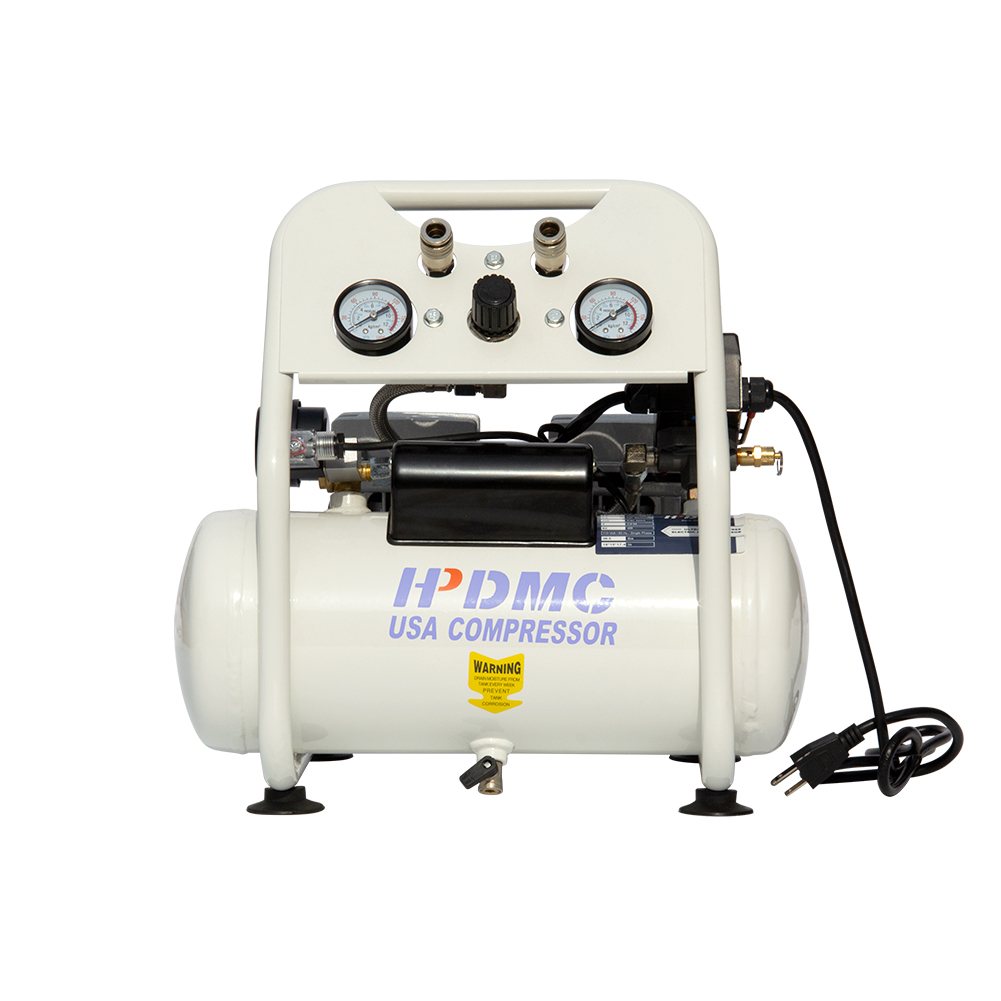
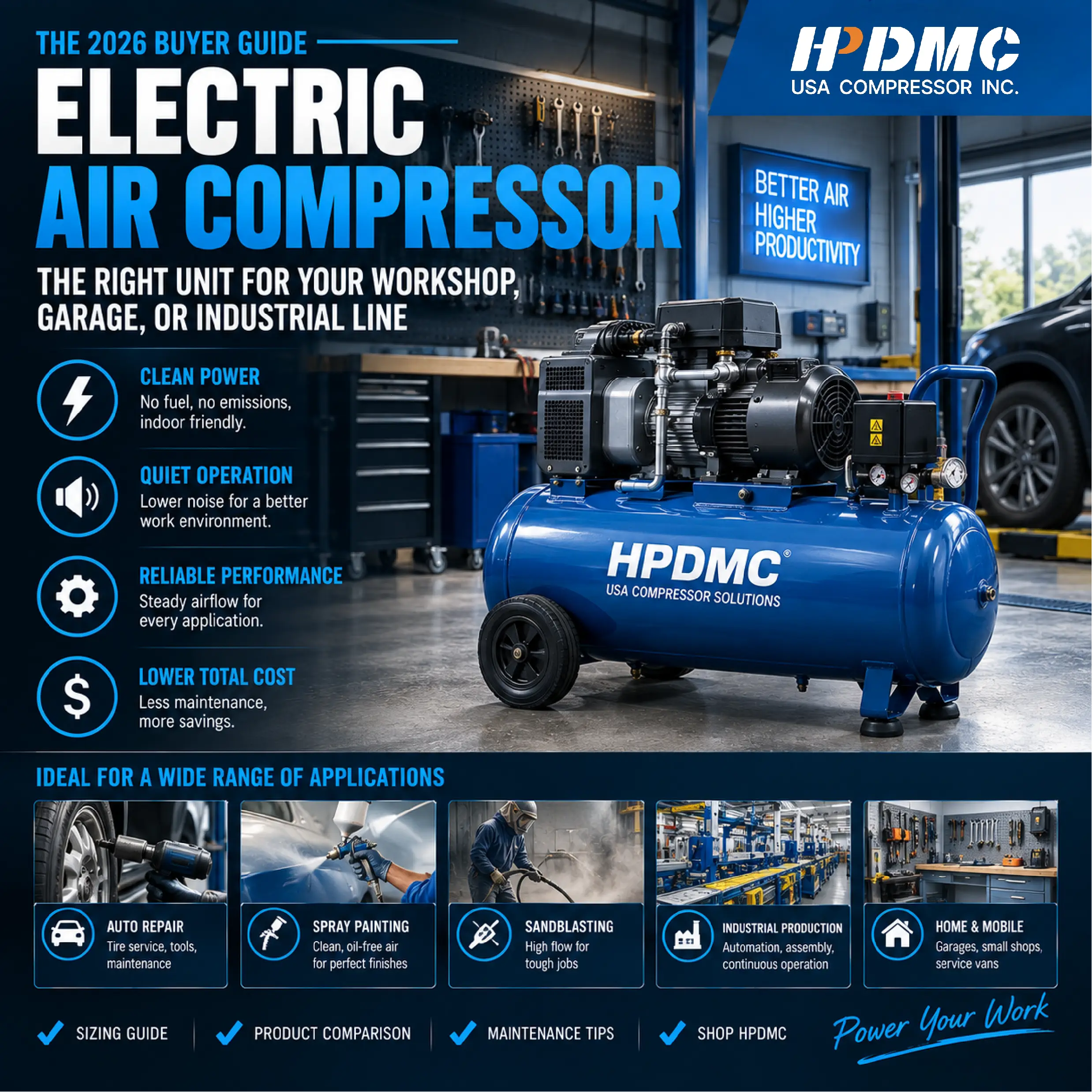
An electric air compressor has become an indispensable tool for both professionals and hobbyists. Unlike gas-powered units, electric compressors offer clean, efficient, low-maintenance operation. When combined with ultra-quiet, portable, and oil-free designs, they become ideal for workshops, homes, garages, studios, and mobile job sites.
This article takes a different angle from common product reviews: instead of simply comparing models or listing specs, it focuses on how to choose, how to troubleshoot, and how to avoid common mistakes when selecting an electric air compressor.
🔍What “Ultra-Quiet Oil-Free” Really Means
The "ultra-quiet" label usually means sound levels below 60–70 dB. A quiet compressor is essential in indoor environments, especially where there are noise restrictions or shared working spaces.
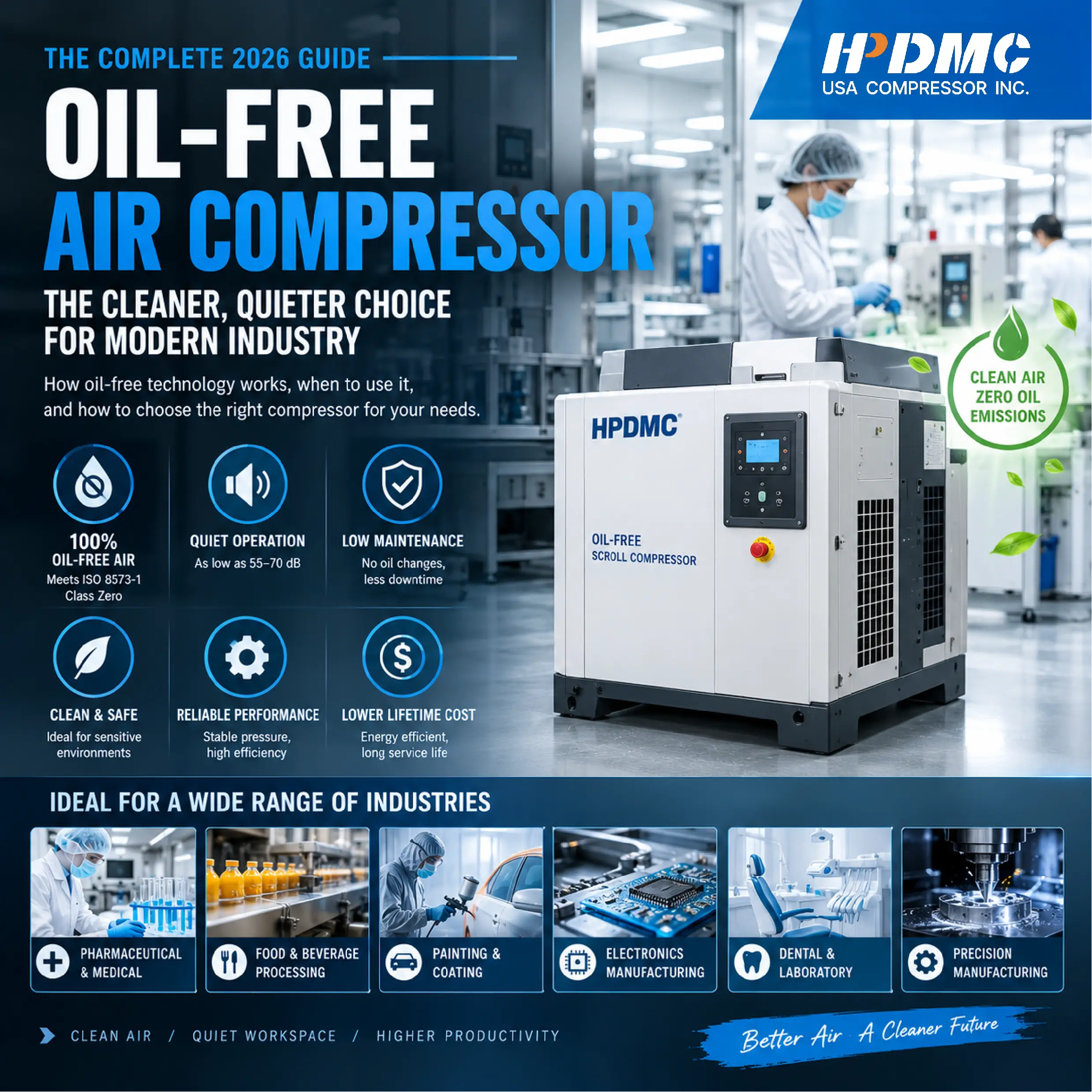
"Oil-free" means the pump uses self-lubricating components rather than requiring oil. This reduces maintenance, eliminates contamination risk, and keeps the unit lightweight. It also makes the compressor far more portable.
🪛Typical Uses and Benefits
Electric air compressors support:
● Nail guns and staplers
● Airbrush art
● Tire and ball inflation
● Cleaning delicate areas
● Light automotive work
● DIY repairs and woodworking tools
The portable, quiet nature of modern models makes them ideal for indoor projects where noise and fumes would otherwise be a problem.
⚡Key Specifications of an Electric Air Compressor
To choose the right electric air compressor, you must first understand the key performance data. Misinterpreting specifications often leads to buying a model that is too weak—or wasting money on an overpowered unit.
📏CFM, PSI, Tank Size—How to Choose
CFM (Cubic Feet per Minute)
● CFM measures airflow and determines what tools the compressor can run.Airbrush: 0.5–1.0 CFM
● Brad nailer: 1–2 CFM
● Impact wrench: 3–6 CFM
Always pick a compressor with 20–30% more CFM than your highest-demand tool.
PSI (Pounds per Square Inch)
Most electric compressors deliver 90–120 PSI, more than enough for general use.
Tank Size
Small portable units often use 1–6 gallon tanks, balancing portability and usable air volume.
● Choose:1–3 gallons for indoor DIY
● 4–6 gallons for pneumatic tools or continuous tasks
🔊Noise Rating and Why It Matters
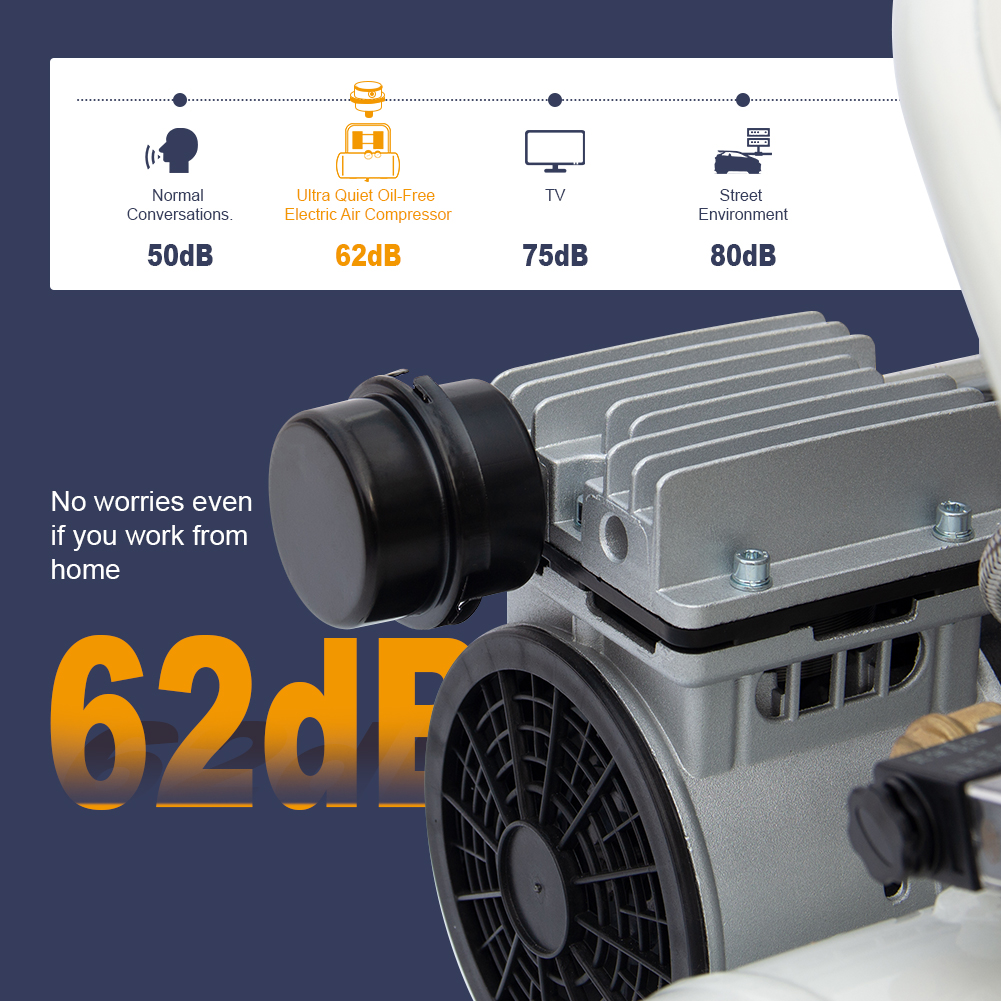
Noise ratings below 70 dB allow indoor work without disturbing family members, coworkers, or neighbors. For comparison:
● 60 dB ≈ normal conversation
● 80 dB ≈ loud traffic
Ultra-quiet models also reduce operator fatigue, making them perfect for long sessions in enclosed areas.
🧰How to Choose the Right Electric Air Compressor
Buying a electric air compressor is not about choosing the biggest or the cheapest model. It’s about matching the machine to your use case.
🧮Assessing Your Actual Workload
Ask yourself:
● How often will you use it?
● Indoors or outdoors?
● Continuous tools or short bursts?
● Do you need mobility?
A portable oil-free compressor is ideal for intermittent use, studio work, and mobile projects.
⚠️Factors to Avoid Overpaying or Underperforming
1. Don’t buy purely on horsepower. HP numbers can be misleading.
2. Avoid overly heavy units if you need portability.
3. Beware of low-quality pumps that get louder over time.
4. Check duty cycle. A low duty cycle causes overheating and premature wear.
5. Know your power limits. Standard 110–120V outlets must be compatible with the motor draw.
Choosing wisely prevents frustration and unnecessary upgrades later.
👉For readers who want a deeper dive into this product family, HPDMC also provides a full article with pricing and additional models here:
Oil Free Air Compressor: HPDMC’s Ultra Quiet Portable Model for Home & Workshop Use
🔧Troubleshooting Common Electric Air Compressor Issues
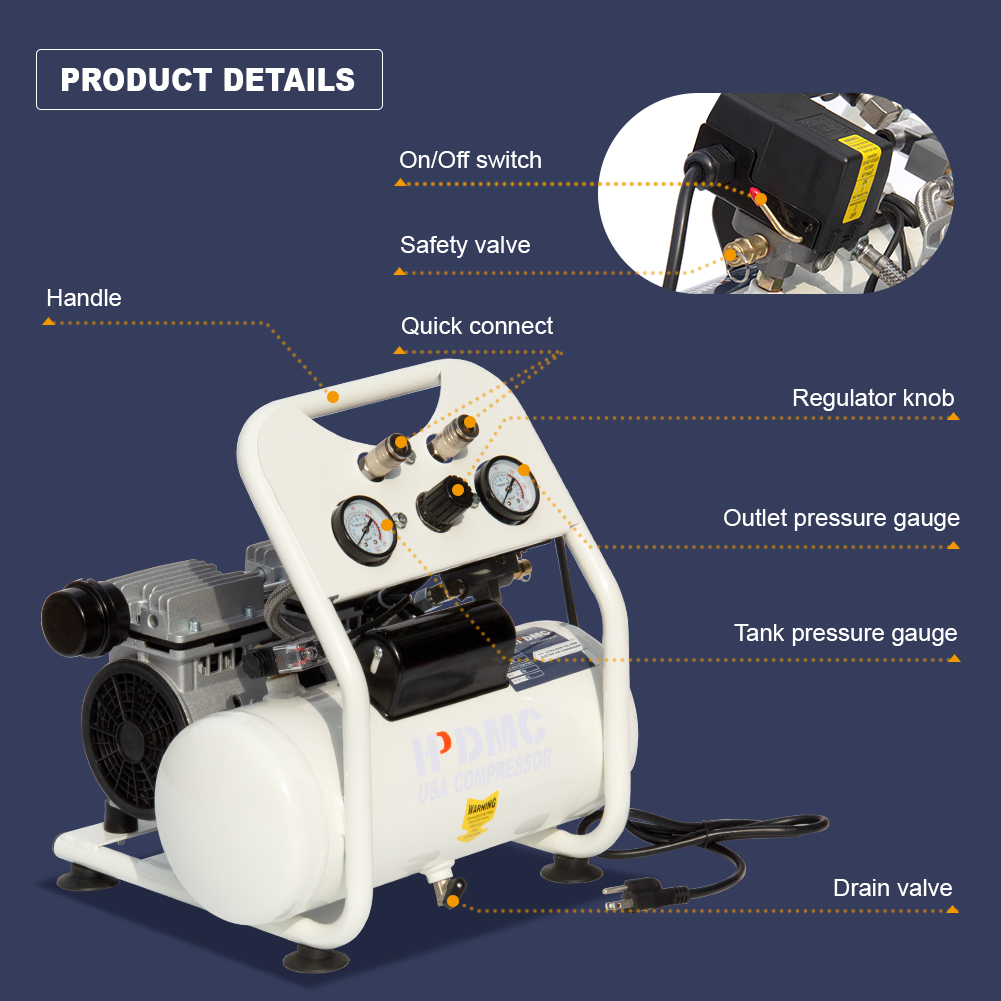
Even high-quality compressors sometimes experience minor problems. Here’s how to solve the most common ones without needing professional repair.
📉Pressure Problems
If pressure won’t build:
● Check for leaks around connections.
● Ensure the drain valve is fully closed.
● Inspect the pressure switch for debris.
● Replace worn O-rings.
If pressure drops too quickly:
● Tighten fittings.
● Clean or replace check valves.
● Examine hoses for pinholes or cracks.
🔈Noise or Vibration Troubles
Ultra-quiet models should stay quiet. If noise increases:
● Make sure the compressor sits on a level surface.
● Check rubber feet or vibration pads.
● Tighten loose screws and housing bolts.
● Clean the air intake filter—clogs can strain the motor.
🛠️Maintenance Tips for Any Electric Air Compressor
📅Daily care:
● Drain condensation from the tank
● Inspect hoses
📅Weekly care:
● Clean the intake filter
● Check for leaks
📅Monthly care:
● Inspect electrical connections
● Examine safety relief valve
● Clean the exterior and cooling fins
Oil-free compressors require less maintenance, but regular cleaning extends lifespan significantly.
🚀Application Scenarios for Modern Electric Air Compressor Models
Electric air compressors are extremely adaptable. Common usage scenarios include:
● Home workshops: powering nail guns, blowing dust, inflating items
● Studios: for airbrushing art or precision modeling
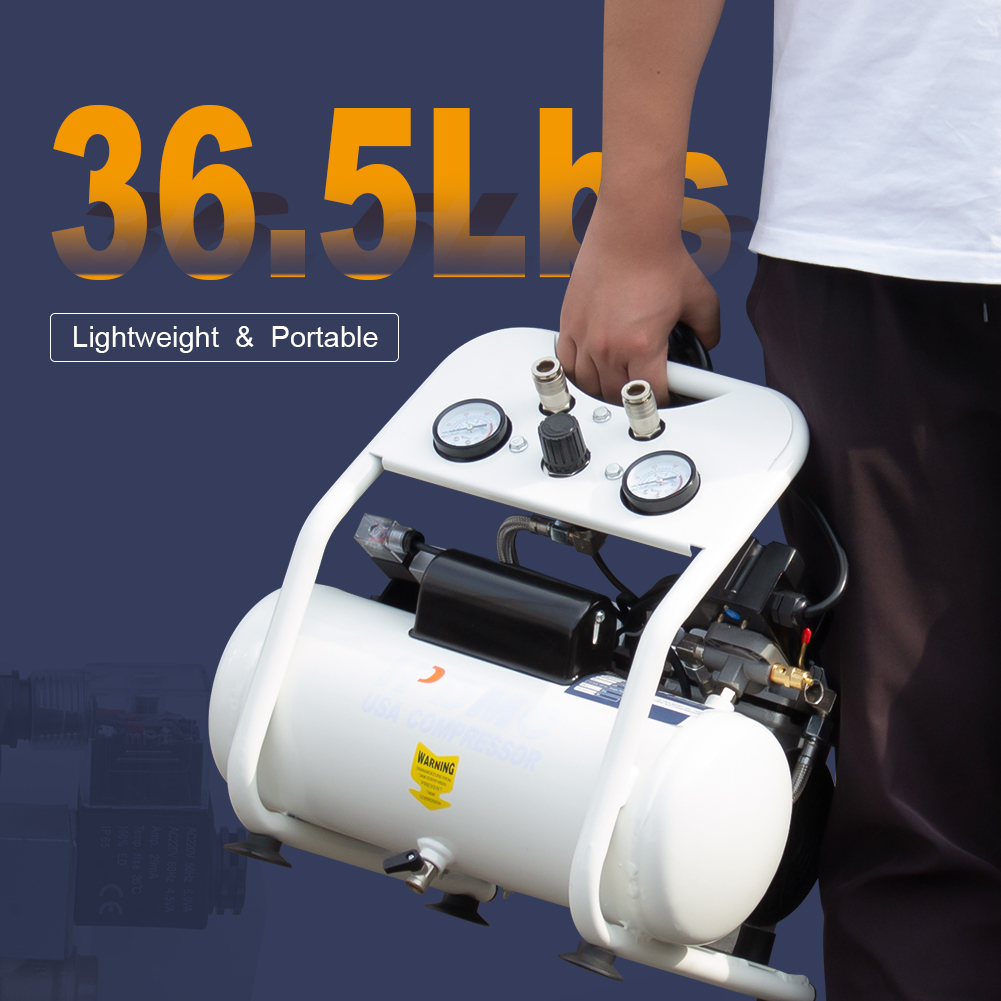
● Mobile repair vans: lightweight, quiet operation
● Construction finishing: trim work, cabinetry, and molding
● Medical and laboratory environments: oil-free designs reduce contamination risk
Their combination of quiet performance and clean output makes them ideal for indoor and professional environments that demand reliability and low sound.
⭐Why the HPDMC Ultra-Quiet Portable Oil-Free Electric Air Compressor Stands Out
Among the many electric air compressors available, HPDMC’s ultra-quiet portable oil-free series offers a unique balance of noise reduction, performance, and durability.
Below is a clear comparison of why this HPDMC model outperforms typical competitors:
| Feature / Advantage | HPDMC Ultra-Quiet Portable Oil-Free Compressor | Typical Competing Models |
| Noise Level | Significantly lower dB, ideal for indoor use | Louder, often above 70–80 dB |
| Pump Quality | Durable oil-free pump with long service life | Cheaper pumps require earlier replacement |
| Portability | Lightweight build, easy to move and store | Bulkier designs, limited mobility |
| 🛒buy now |
❓FAQ
Q1: Is an electric air compressor better than gas-powered?
Yes—electric units are cleaner, quieter, and require less maintenance. They are ideal for indoor use.
Q2: What size tank should I choose?
1–3 gallons for DIY and light tools, 4–6 gallons for finishing tools or more frequent jobs.
Q3: Are oil-free compressors durable?
Modern oil-free pumps use advanced materials and can last for years with proper maintenance.
Q4: Why does CFM matter?
CFM determines which tools your compressor can run. Always choose slightly above your tool’s CFM requirement.
Q5: How often should I clean the air filter?
Weekly if used frequently. Dust-free airflow ensures optimal motor performance.
🛒Act Now—Get the Electric Air Compressor You Actually Need
If you’ve been searching for an electric air compressor that’s truly quiet, reliable, and easy to maintain, now is the perfect time to upgrade. The HPDMC ultra-quiet portable oil-free model delivers professional power without the noise, weight, or upkeep of traditional compressors. Whether for home, work, or professional settings, this is a tool that saves time, reduces stress, and ensures consistent performance.
⚡⚡⚡There're having a promotion right now, so click to buy if you're interested!🛒buy now
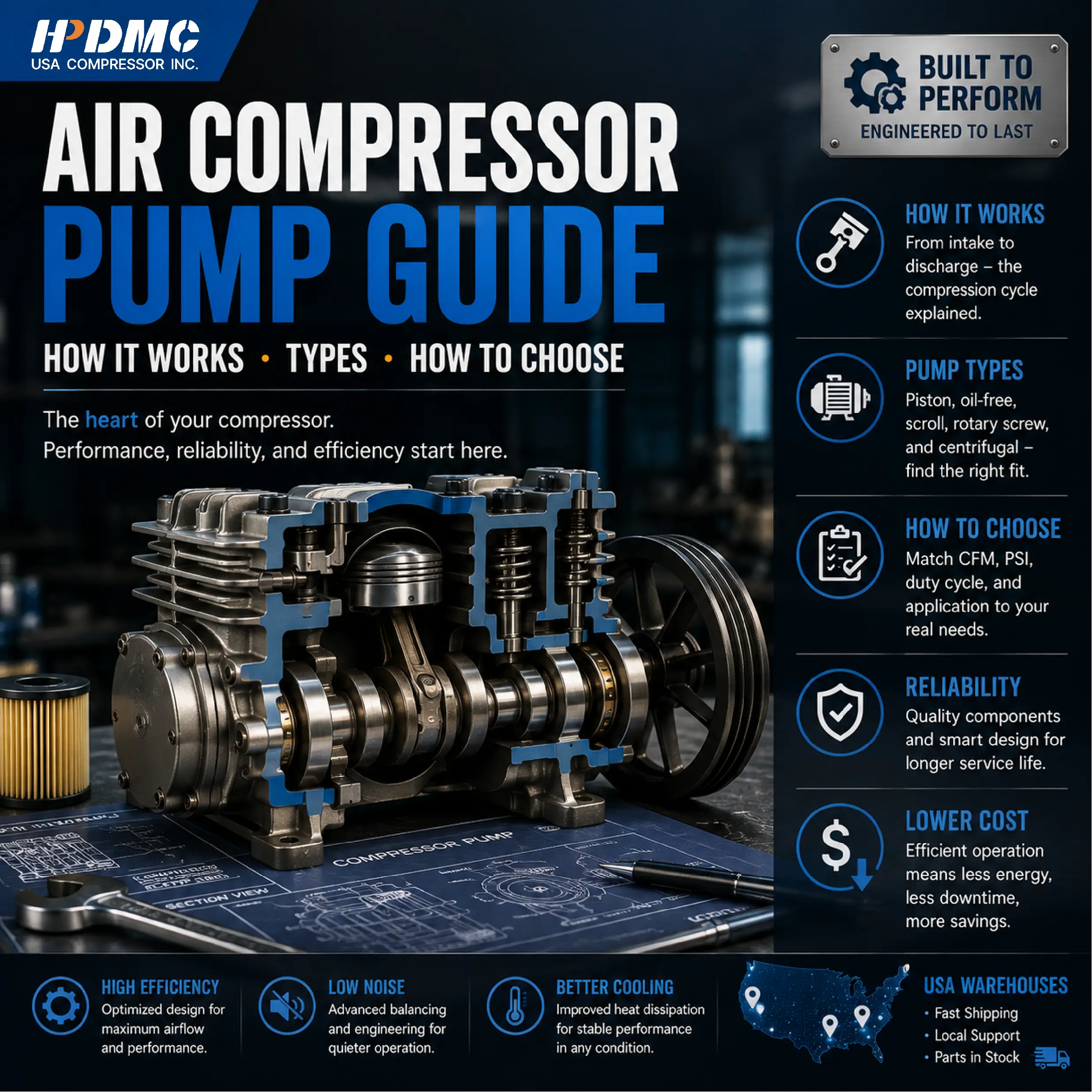



Find the Right Compressor for Your Needs
Find the Right Compressor for Your Needs