⚡Free Shipping: Ultra-Quiet Portable Oil-Free Air Compressor AWR800-18LM2
Need Help Choosing the Right Compressor?
Need Help Choosing the Right Compressor?
⚡Free Shipping: Ultra-Quiet Portable Oil-Free Air Compressor AWR800-18LM2
Need Help Choosing the Right Compressor?
⚡Free Shipping: Ultra-Quiet Portable Oil-Free Air Compressor AWR800-18LM2

Do You Really Need a Desiccant Air Dryer? (Most Shops Don’t)
If you’re here searching for a desiccant air dryer or asking “do I need a desiccant dryer,” you’re already prioritizing the quality of your compressed air—and that’s a smart move. But here’s a reality most suppliers won’t share: 95% of auto shops, garages, and small manufacturing facilities don’t actually need a desiccant air dryer.
A high-quality refrigerated air dryer (like HPDMC’s model) delivers the dry air you need at a fraction of the cost, hassle, and energy waste.
This guide will break down how desiccant dryers work, their hidden costs, and when (if ever) you should invest in one—plus why a refrigerated dryer is the better choice for most businesses.
🔍 1. What Is a Desiccant Air Dryer?
A desiccant air dryer is a type of compressed air dryer designed to remove moisture by adsorbing it into a porous material (called “desiccant”), rather than cooling the air like a refrigerated dryer. It’s engineered for ultra-dry air needs—but those needs are far less common than you might think.
⚙️ 1.1 How Does a Desiccant Air Dryer Work? (Dual-Tower, Desiccant & Regeneration)
The core of a desiccant air dryer is its dual-tower design, which enables continuous operation through two key phases:
✅Drying Phase: Compressed air flows into one tower filled with desiccant material (common options: activated alumina, silica gel). The desiccant acts like a sponge, adsorbing moisture from the air as it passes through.
✅Regeneration Phase: Once one tower’s desiccant is saturated, the air flow switches to the second tower. The saturated tower then “regenerates”—removing trapped moisture so it’s ready to use again.
Regeneration happens in two ways:
✅Heatless Regeneration: The most common type—uses 15–20% of your facility’s compressed air to purge moisture from the desiccant (this air is wasted, not used for tools or processes).
✅Heated Regeneration: Uses external heat to dry the desiccant, wasting less air but costing more upfront.
This dual-tower process ensures the dryer can produce dry air 24/7—but it comes with significant tradeoffs.
🌡️ 1.2 Typical Dew Point of a Desiccant Air Dryer
The biggest selling point of a desiccant air dryer is its ability to achieve extremely low dew points:
● Typically -40°F (-40°C)
● Some industrial models reach -100°F (-73°C)
💡Dew point is the temperature at which moisture in air condenses into liquid—lower dew points mean drier air.
For context, a refrigerated air dryer typically achieves a dew point of 39°F (4°C)—more than enough for most applications.
🏭 1.3 Desiccant Dryer Applications (Where It’s Designed for)
A desiccant air dryer is not a one-size-fits-all solution—it’s built for niche scenarios where ultra-dry air is non-negotiable. These include:
✅Automotive Paint Booths: Moisture causes “fish eyes” (small bubbles) in paint finishes.
✅Medical Device Manufacturing: Strict regulations require sterile, moisture-free air.
✅Cold Environments: Below-freezing temps cause ice in pipes/tools if moisture remains.
✅Electronics Production: Sensitive components (e.g., circuit boards) can be damaged by trace moisture.
✅ISO 8573 Class 2 or Higher Compliance: Mandates a dew point of -40°F (-40°C) or lower.
💸 2. The Hidden Costs of Desiccant Air Dryers (Most Shops Underestimate)
While a desiccant air dryer sounds impressive on paper, its true cost goes far beyond the sticker price. Most shops regret buying one because they overlook these hidden expenses:
💰 2.1 Upfront Purchase Cost of a Desiccant Air Dryer
● Entry-level models: 3,000–5,000
● Industrial-grade (medium/large facilities): 8,000–10,000+
● Refrigerated dryer comparison: Starts at just $1,299—less than half the cost.
⚡ 2.2 Operating Cost: Compressed Air Waste
Heatless desiccant dryers waste 15–20% of your compressed air during regeneration. Let’s break it down:
● A 10 HP compressor uses ~7.5 kWh/hour
● Wasted air adds 0.168–0.225/hour in unnecessary energy
● Over 2,000 operating hours/year: 336–450 in wasted electricity
💡Refrigerated dryers have no regeneration waste—annual operating cost: just 100–300.
🔧 2.3 Maintenance Cost: Desiccant Replacement & Upkeep
● Desiccant degrades every 2–5 years
● Cartridge cost: 300–800
● Professional installation: 150–300
● Total every few years: 450–1,100
🔁 Refrigerated dryers only need filter changes (50–100/year) and occasional coil cleaning—no cartridge replacements.
📏 2.4 Space & Noise: Overlooked Drawbacks
● Bulkier design: Takes 2–3x more floor space than refrigerated dryers
● Noisier operation: Loud “whoosh” during tower switching
● Refrigerated dryers run quietly with only a soft fan hum—ideal for shared workspaces.
3. When You DON’T Need a Desiccant Air Dryer (vs.Refrigerated Dryer)
For 95% of businesses, a refrigerated air dryer delivers all the dry air you need—without the high costs and hassle.
3.1 Refrigerated Dryer vs Desiccant Dryer: Side-by-Side Comparison
| Feature | Desiccant Air Dryer | Refrigerated Air Dryer (Buy HPDMC Model now!) |
| Dew Point | -40°F to -100°F (ultra-dry) | 39°F (4°C) (sufficient for most uses) |
| Upfront Cost | 3,000–10,000+ | 1,299–2,999 |
| Annual Operating Cost | 336–450 (air waste) | 100–300 (no waste) |
| Maintenance Cost | 450–1,100 every 2–5 years | 50–100 per year |
| Space Requirement | Large (dual towers) | Compact (single unit) |
| Noise Level | Loud (regeneration whoosh) | Quiet (soft fan hum) |
| Best For | Niche ultra-dry air needs | Auto shops, garages, small factories |
🛠️ 3.2 Scenarios Where Refrigerated Dryer Meets Your Needs
A refrigerated air dryer is perfect for:
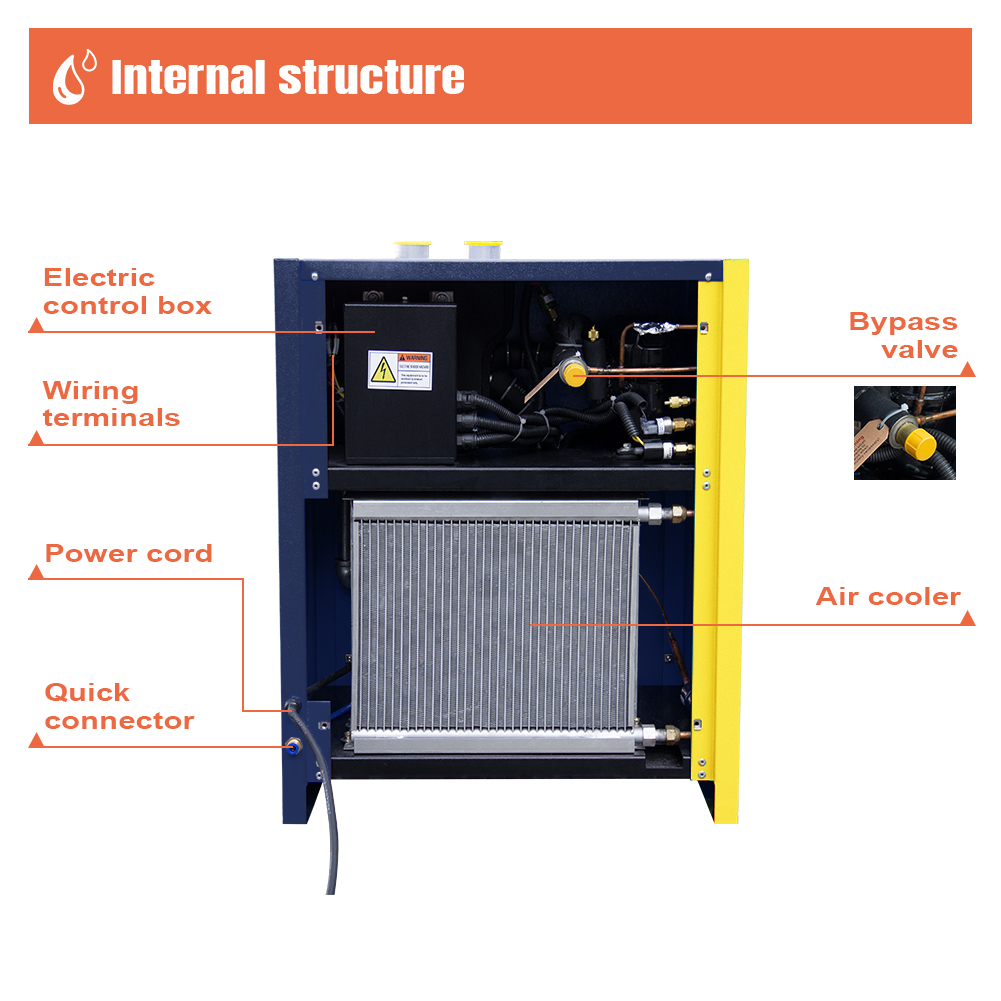
✅Auto Repair Shops: Oil changes, brake work, tire inflation, pneumatic tools (impact wrenches, nail guns)
✅Small Manufacturing: Fabrication, assembly, packaging (no moisture issues with metal parts)
✅Home Garages & Hobbyists: DIY projects, woodworking, car restoration
✅Warehouses: Pneumatic conveyors, lifts, material handling equipment
In all these cases, 39°F dew point air is more than enough to prevent corrosion, tool damage, and moisture buildup. You’ll never notice the difference—except in your bank account.
🎯 4. When You ACTUALLY Need a Desiccant Air Dryer (Honest Truth)
To build trust, we’ll be transparent: there are rare scenarios where a desiccant air dryer is the only viable option. You need one if (and only if):
✅ You operate a paint booth (“fish eyes” ruin finishes)
✅ Your facility is consistently below freezing (risk of icing pipes/tools)
✅ You must meet ISO 8573 Class 2 or higher (medical, pharma, electronics)
✅ You make moisture-sensitive products (e.g., semiconductors, sterile devices)
If none of these apply—a refrigerated dryer is the smarter, more cost-effective choice.
❓ 5. FAQ: Answers to Your Desiccant Air Dryer Questions
Q1. What’s the average desiccant air dryer price?
Entry-level models for small shops start at 3,000–5,000. Industrial models (for high airflow) cost 8,000–10,000+. This is 2–3x the price of a refrigerated air dryer.
Q2. How does refrigerated vs desiccant cost compare long-term?
Over 5 years, a desiccant air dryer costs 4,836–13,600 (purchase + operating + maintenance). A refrigerated air dryer costs 1,949–4,499 total—saving you 2,887–9,101.
Q3. Can a refrigerated dryer replace a desiccant dryer for most shops?
Absolutely! For auto shops, garages, and small businesses, a refrigerated dryer’s 39°F dew point is more than sufficient to prevent moisture damage. The only exception is niche applications like paint booths.
Q4. How often do you replace desiccant dryer?
Desiccant cartridges need replacement every 2–5 years, depending on usage and humidity levels. This costs 300–800 per cartridge plus labor.
Q5. Do desiccant dryers waste compressed air?
Yes—heatless desiccant dryers (the most common type) waste 15–20% of your compressed air during regeneration. This is a major ongoing cost that most shops don’t anticipate.
🏆 6. Our Recommendation: High-Efficiency Refrigerated Dryers (For Most Shops)
For 95% of businesses, a refrigerated air dryer is the perfect alternative. HPDMC’s high-efficiency refrigerated air dryer offers:
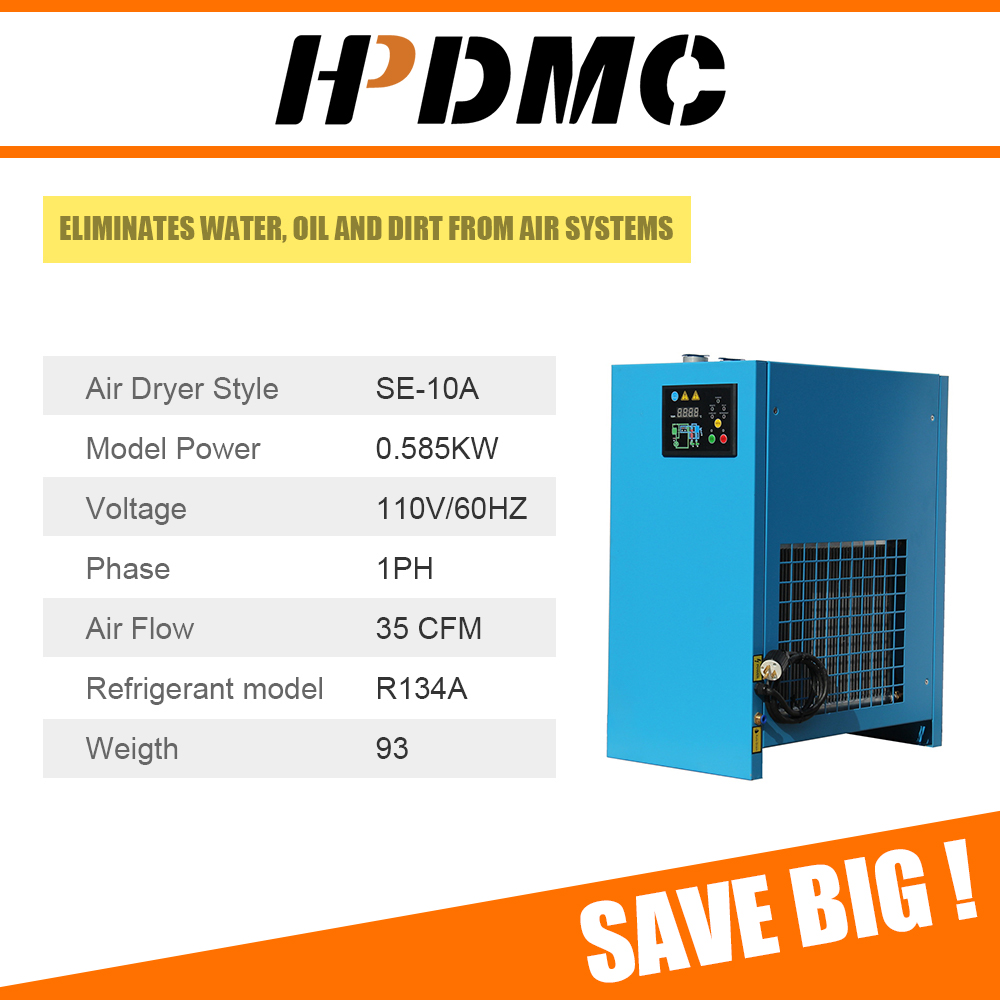
✅ Energy-Efficient Refrigeration: Minimal electricity, zero compressed air waste
✅ Auto-Drain System: Automatically removes condensed moisture
✅ Low Maintenance: No desiccant—just filter changes & coil cleaning
✅ Compact Design: Fits small garages (1/3 the space of desiccant dryers)
✅ Affordable Price: Starts at **1,299∗∗vs.3,000+ for desiccant
✅ Reliable Performance: CE certified, ASME-compliant, 1-year warranty
📘 To learn more: Refrigerated Air Dryer: Complete Guide
🛒✨ 7. Shop HPDMC’s Refrigerated Air Dryer Today – Save Big Without Compromise!
Ready to get reliable, dry compressed air without the high cost, noise, and waste of a desiccant air dryer?
HPDMC’s high-efficiency refrigerated air dryer is engineered for shops like yours—affordable, quiet, compact, and built to last.
🌐 Shop now: 👉 HPDMC Refrigerated Air Dryer



Find the Right Compressor for Your Needs
Find the Right Compressor for Your Needs