⚡Free Shipping: Ultra-Quiet Portable Oil-Free Air Compressor AWR800-18LM2
Need Help Choosing the Right Compressor?
Need Help Choosing the Right Compressor?
⚡Free Shipping: Ultra-Quiet Portable Oil-Free Air Compressor AWR800-18LM2
Need Help Choosing the Right Compressor?
⚡Free Shipping: Ultra-Quiet Portable Oil-Free Air Compressor AWR800-18LM2

Next-Gen Air Dryer Solutions for Smarter Industrial Air Systems
❄️Understanding What an Air Dryer Is & Why It Matters
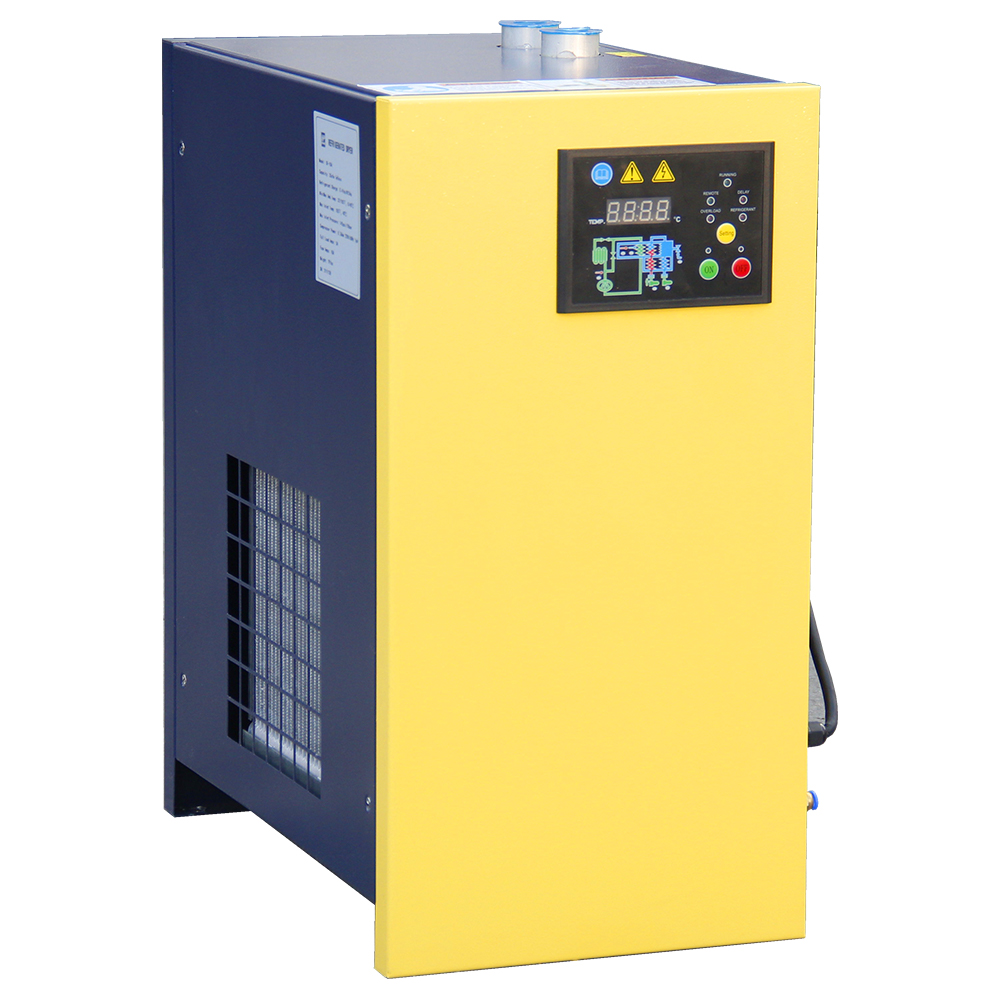
Selecting the right air dryer is a crucial step in building a dependable compressed air system. Moisture is an unavoidable by-product of air compression, and if left untreated, it can cause corrosion, system failure, and production downtime. A high-quality refrigerated air dryer—especially one using microprocessor control and environmentally friendly R134a refrigerant—ensures stable performance and long-term efficiency.
🌬️Core Purpose in Compressed Air Systems
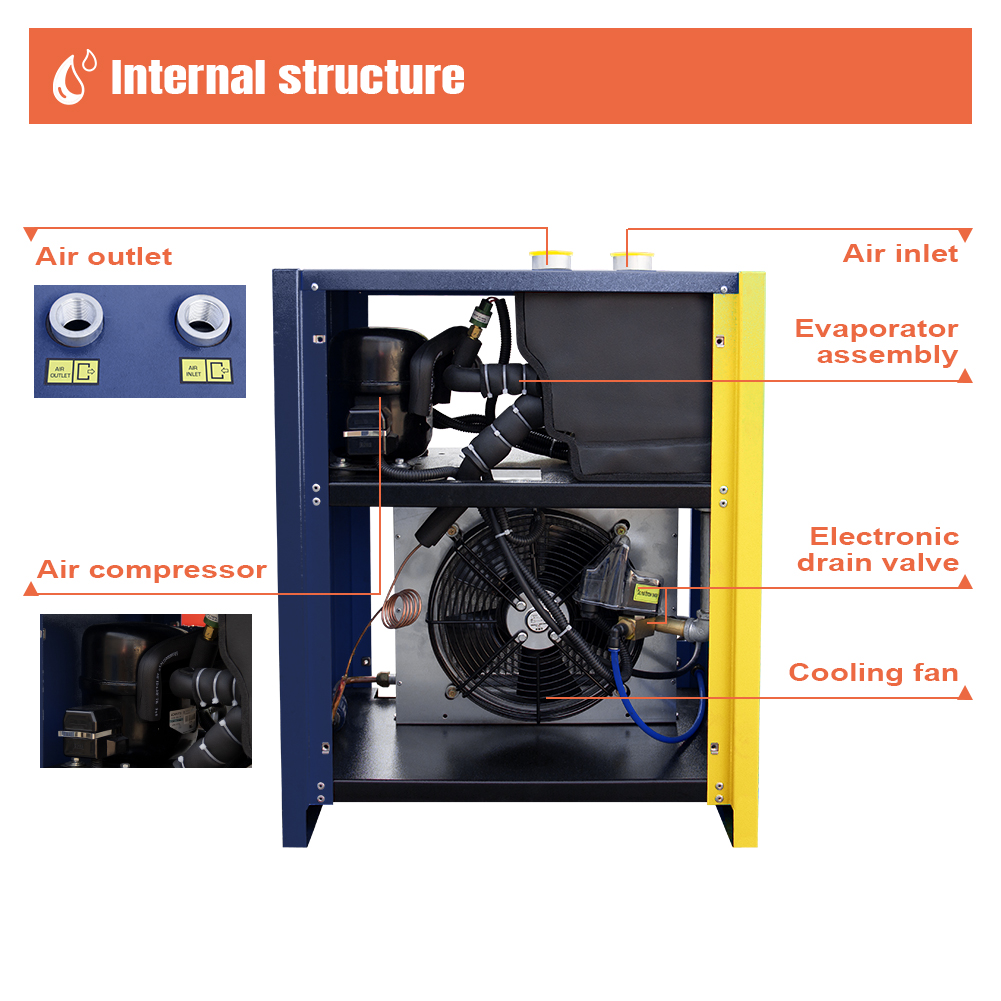
When air is compressed, its temperature rises and humidity condenses into liquid water as it cools. This moisture can infiltrate pneumatic tools, valves, and automation equipment, causing rust, lubrication breakdown, and contamination. An air dryer removes this water through cooling, condensation, and separation, ensuring your equipment remains protected.
🧊Why Refrigerated Air Dryers Dominate
Refrigerated dryers are the industry standard because they deliver a stable dew point, require minimal maintenance, and operate cost-effectively. Those using 134a refrigerant deliver strong cooling efficiency while meeting environmental regulations. The addition of microprocessor control elevates reliability, providing real-time monitoring, automated cycle optimization, and consistent dew point control.
🔍We also have more air dryer products available; please click to view if you are interested——more air dryer
⚙️Key Specifications of an Air Dryer (Microprocessor & R134a Included)
Understanding air dryer specifications allows you to select the ideal model for your application.
📏Capacity, Pressure & Dew Point
The three most important specifications include:
● Flow capacity (CFM/Nm³/min)
This must match or exceed the total compressor output. Undersized dryers lead to moisture breakthrough; oversized dryers waste energy.
● Pressure rating
Many industrial systems run between 7–13 bar. The dryer must be compatible with your system to avoid pressure drop.
● Dew point performance
Refrigerated dryers typically deliver a dew point of 2–10°C, adequate for general industrial use.
🧠Microprocessor Logic & Performance Benefits
Microprocessor-controlled dryers provide several advantages:
● Real-time dew point regulation
● Automated compressor cycling
● Self-diagnostics and alerts
● Optimization for fluctuating loads
● Energy-efficient refrigeration control
When paired with R134a refrigerant, these systems deliver high cooling efficiency while maintaining a smaller environmental footprint.
🔍Choosing the Right Air Dryer: Essential Buying Factors
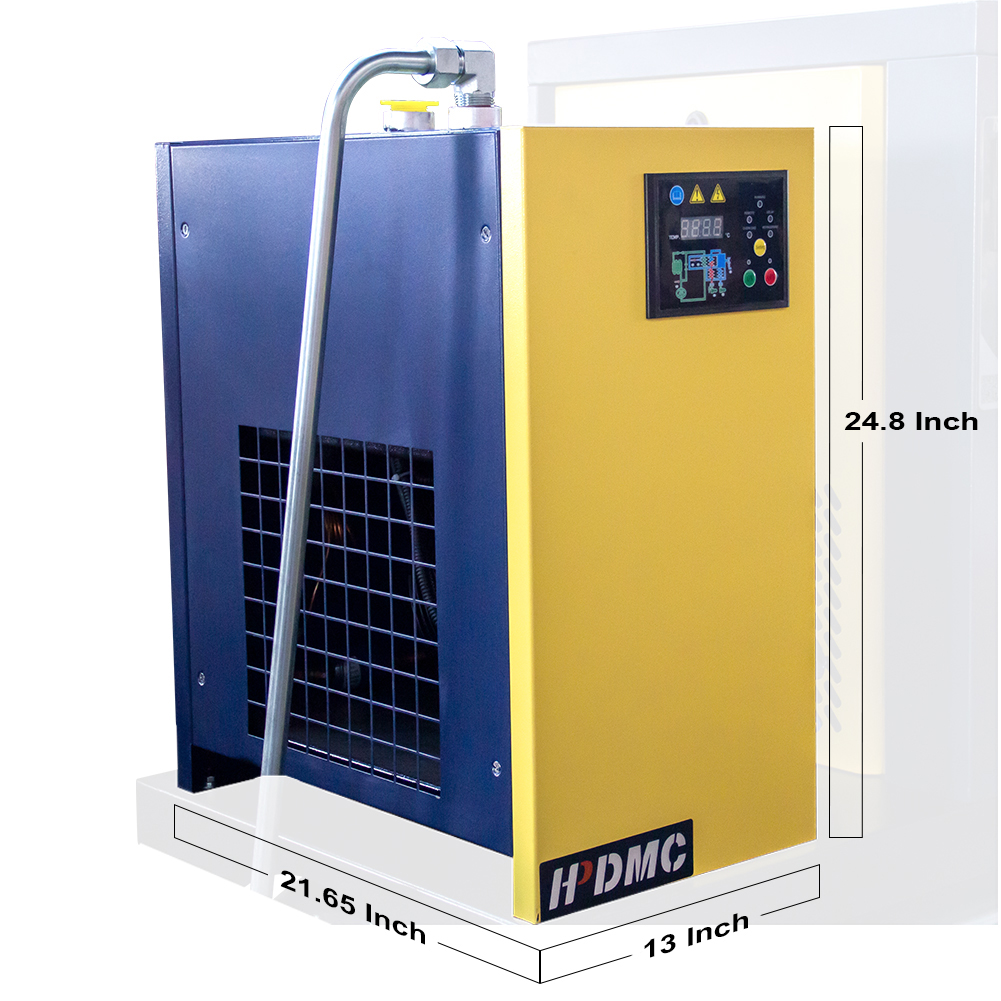
Selecting the correct air dryer requires evaluating your environment, system design, and usage conditions.
📊Matching Size to Air Demand
Carefully assess:
● Compressor flow rating
● Peak load vs average load
● Future expansion plans
Oversizing slightly is fine, but large oversizing wastes energy. Undersizing leads to moisture problems and reduced dryer lifespan.
🌡️Considering Ambient Temperature & Energy Use
Ambient temperature affects dryer efficiency. If placed in a hot compressor room, the dryer must have sufficient cooling capacity.
Energy consumption is another key factor—models with smart microprocessor control reduce power use by adjusting refrigeration cycles to real demand.
For more insights about air dryer options and pricing, see the related guide:
👉 Smart-Control Air Dryers for Compressors Using R134a Refrigerant
🛠️Air Dryer Troubleshooting & Practical Use Tips
Even the best dryers require occasional troubleshooting.
🔧Common Issues & How to Fix Them
1. High dew point
● Usually caused by:Dirty condenser
● Poor ventilation
● Refrigerant loss
● Overload from excessive moisture
2. High pressure drop
Reasons include clogged filters or undersized pipes.
3. Dryer not cooling properly
● Possible causes:Failed fan motor
● Refrigerant valve issues
● Control board malfunction (microprocessor alarms help detect this)
🗓️Preventive Maintenance Schedule
● Clean condenser monthly
● Check refrigerant pressure quarterly
● Inspect electrical connections
● Verify dew point readings
● Replace filters as recommended
Microprocessor systems simplify this by providing maintenance alerts.
🏭Air Dryer Applications Across Multiple Industries
🏗️Manufacturing
Machining, packaging, robotics, and CNC applications rely on dry air to prevent tool corrosion and maintain precision.
🚗Automotive & Garage Environments
Body shops, tire services, and pneumatic lifts—such as 4-post garage lifts—depend on moisture-free air for safe and consistent operation.
🧪Food, Pharma & Electronics
Sensitive industries require consistent, contamination-free compressed air to protect product quality.
⭐Why HPDMC’s Microprocessor-Controlled Air Dryer Stands Out
Below is a comparison highlighting why HPDMC’s model—featuring microprocessor control and eco-friendly R134a refrigerant—is superior to competing products:
| Feature / Advantage | HPDMC Microprocessor Refrigerated Air Dryer | Typical Competing Products |
| Precision Control | Intelligent microprocessor ensures stable dew point & efficient energy use | Basic mechanical control with inconsistent performance |
| Eco-Friendly Cooling | Uses R134a refrigerant with strong cooling performance & reduced environmental impact | Older refrigerants with lower efficiency or higher environmental cost |
| Reliability & Build | Industrial-grade components, robust airflow design, and self-diagnostics | Less durable, fewer monitoring features |
| 🛒buy now |
📘FAQ About Air Dryer Selection & Performance
Q1: How do I know what size air dryer I need?
Match the dryer flow rating to the compressor output, and add 10–20% for peak fluctuations.
Q2: Is R134a refrigerant environmentally safe?
R134a is widely accepted, stable, and efficient, with lower environmental impact than legacy refrigerants.
Q3: Why choose a microprocessor-controlled model?
It offers smarter regulation, energy savings, diagnostics, and consistent dew point management.
Q4: Can an air dryer fix water already in my tank or pipes?
No. Drains and filters remove existing liquid. The dryer prevents new moisture from forming downstream.
Q5: Does placement affect performance?
Yes—air dryers should be installed in a cool, ventilated area away from dust and heat sources.
🛒Ready to Upgrade? Choose a High-Efficiency Air Dryer Today!
A reliable air dryer is a long-term investment in productivity, equipment protection, and energy savings. Whether you're managing a manufacturing plant, a garage workshop, or a precision facility, choosing a microprocessor-controlled refrigerated air dryer ensures consistent performance and reduced downtime.
Now is the perfect time to upgrade to an HPDMC air dryer and experience unmatched efficiency and durability. 🛒buy now





Find the Right Compressor for Your Needs
Find the Right Compressor for Your Needs