⚡Free Shipping: Ultra-Quiet Portable Oil-Free Air Compressor AWR800-18LM2
Need Help Choosing the Right Compressor?
Need Help Choosing the Right Compressor?
⚡Free Shipping: Ultra-Quiet Portable Oil-Free Air Compressor AWR800-18LM2
Need Help Choosing the Right Compressor?
⚡Free Shipping: Ultra-Quiet Portable Oil-Free Air Compressor AWR800-18LM2

How to Maintain a Rotary Screw Compressor: A Complete Guide for 2026
Learning how to maintain a rotary screw compressor—from daily checks to annual overhauls, following proper oil change intervals, and caring for key components like air separator filters—prevents costly downtime, extends equipment life, and ensures energy efficiency for industrial and commercial U.S. operations.
1. Introduction
For U.S. industrial operators, manufacturing plants, and commercial shops, a rotary screw compressor is the workhorse of compressed air systems—delivering continuous, reliable airflow for tools, production lines, and critical operations. But here’s the hard truth: unplanned compressor downtime costs U.S. businesses an average of $1,000 per hour in lost productivity, repairs, and missed deadlines. The solution? Consistent, preventive maintenance that addresses small issues before they escalate into major failures.
In this guide, we’ll break down exactly how to maintain a rotary screw compressor, including a actionable maintenance checklist, clear oil change intervals, air separator filter replacement steps, and tailored care tips for both diesel and electric models. Whether you’re a facility manager, maintenance technician, or small business owner, this guide will help you keep your compressor running efficiently for 10,000+ hours—saving you time, money, and headaches. For those using HPDMC’s industrial-grade rotary screw compressors, we’ve included model-specific tips to maximize performance.
2. Why Maintenance Matters for Rotary Screw Compressors
Neglecting rotary screw compressor maintenance isn’t just a risk—it’s a guaranteed way to shorten equipment life, waste energy, and compromise safety. Here’s why consistent care is non-negotiable:
Extend Equipment Lifespan
A well-maintained rotary screw compressor can last 12–15+ years, compared to 5–7 years for neglected units. HPDMC’s heavy-duty models, with cast-iron pump heads and durable components, can reach 10,000+ service hours when properly maintained—doubling or tripling your return on investment. Our rotary screw lineup is engineered for easy maintenance access, making routine tasks faster and more efficient.
Reduce Energy Costs
According to the U.S. Department of Energy (DOE), poorly maintained compressors use 30% more energy than well-maintained ones. Simple tasks like cleaning air filters, changing oil, and fixing air leaks can cut your monthly energy bills significantly—critical for U.S. businesses facing rising utility costs.
Ensure Safety & Compliance
Rotary screw compressors operate under high pressure, making safety a top priority. Regular maintenance prevents pressure buildup, oil leaks, and component failures that could lead to workplace accidents. Additionally, OSHA requires commercial U.S. facilities to maintain equipment logs and ensure compliance with safety standards—something proper maintenance helps you achieve.
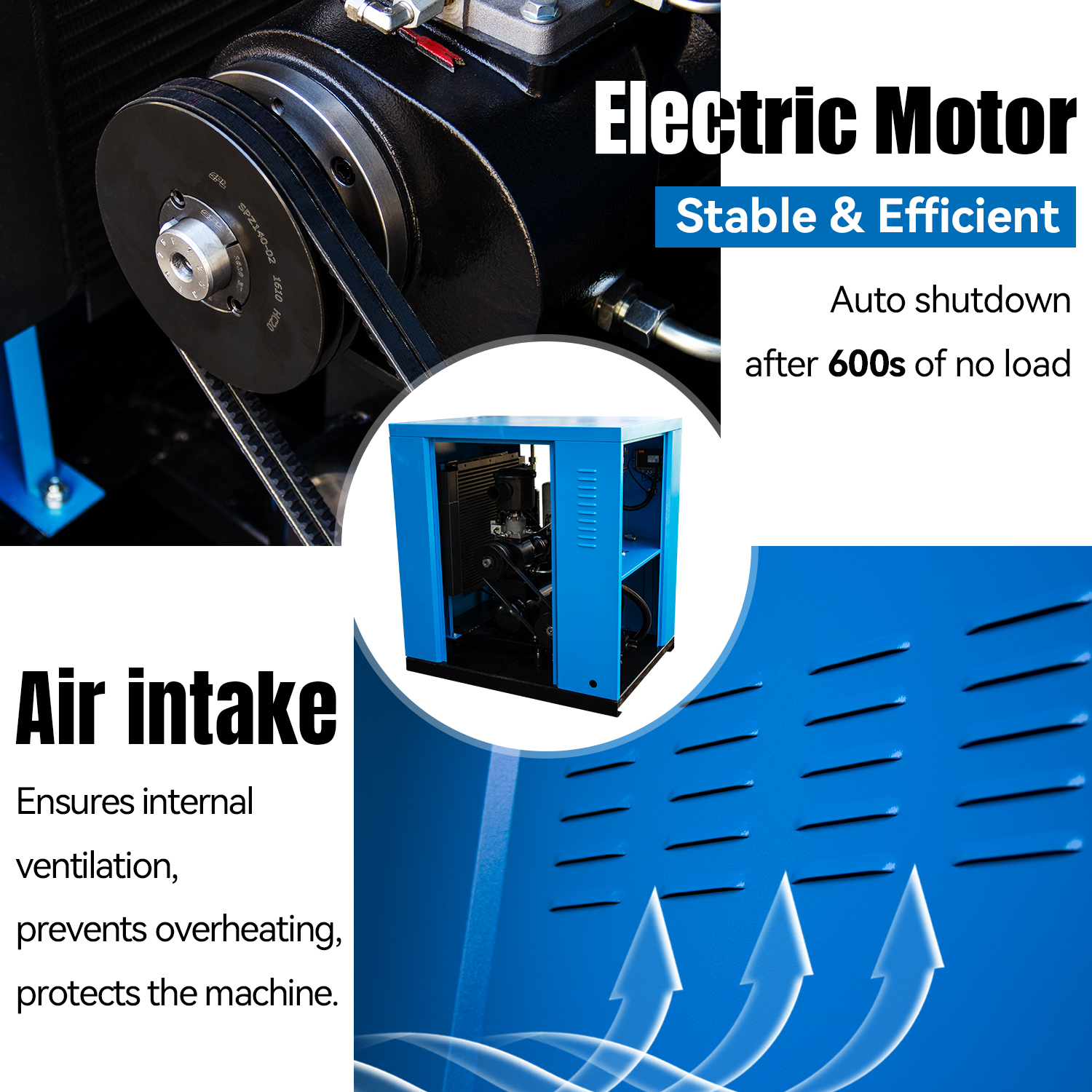
3. Daily Checks Checklist (Operator-Friendly)
Every operator should perform these quick, 5–10 minute checks at the start of each shift to catch issues early. This is the foundation of preventive maintenance for industrial compressors:
✅Oil Level & Quality: Check the oil sight glass—ensure oil is between the “MIN” and “MAX” marks. Oil should be clear/amber; dark, milky, or gritty oil indicates contamination (water or debris). HPDMC recommends using our ISO 100 Synthetic Compressor Oil for optimal performance and extended component life.
✅Air Filter Condition: Inspect the intake air filter for dust or clogs. A dirty filter reduces airflow and increases energy use—clean reusable filters or replace disposable ones immediately if clogged. Explore HPDMC’s high-efficiency air filters designed to trap more debris and last longer in industrial environments.
✅Pressure & Temperature: Verify the compressor maintains 125–150 PSI (standard for U.S. tools) and operates at 160–200°F (70–95°C). Low pressure signals air leaks; high temperature points to cooling system issues.
✅Leaks: Walk the unit and check hoses, fittings, and seals for air or oil leaks. Even small leaks waste 10–15% of compressed air—tighten connections or replace worn seals immediately.
✅Unusual Noises/Vibration: Listen for grinding, squealing, or rattling, and feel for excessive vibration. These signs indicate loose parts, worn bearings, or misalignment—address immediately to avoid further damage.
✅Condensate Drain: Open the condensate drain valve to release accumulated water (critical in humid U.S. states like Florida or Texas—skip if your unit has an automatic drain).
4. Scheduled Maintenance Plan (By Hours/Interval)
Preventive maintenance for industrial compressors requires a structured schedule, based on operating hours or time intervals (whichever comes first). Below is a breakdown tailored to U.S. commercial and industrial use:
Every 500 Hours / Monthly Maintenance
This mid-level maintenance focuses on replacing consumables and preventing buildup:
✅Replace Oil Filter: A dirty oil filter traps debris that damages rotors and bearings. Use genuine HPDMC replacement filters (available in our maintenance parts category) to maintain warranty coverage.
✅Inspect Air/Oil Separator Filter: Check for signs of wear or oil carryover (a key part of air separator filter replacement preparation). If oil is escaping into the air line, the separator is failing. HPDMC’s separator filters are engineered for long life and are included in our maintenance kits.
✅Clean Cooling System: Blow out condenser coils with compressed air to remove dust and debris—critical in dusty environments like construction sites or manufacturing plants.
✅Tighten Connections: Inspect and tighten all bolts, hose clamps, and electrical terminals—vibration from continuous operation loosens parts over time.
✅Check Belt Tension (Belt-Drive Models): Press the belt firmly—1/2 inch of deflection is ideal. Tighten or replace if loose, cracked, or frayed.
Every 2000 Hours / Quarterly Maintenance
This maintenance level addresses more critical components to prevent mid-term failures:
✅Air Separator Filter Replacement: Replace the air/oil separator filter—this component removes oil from compressed air, preventing tool damage and oil waste. HPDMC’s replacement separators are available in our air filter category for easy ordering.
✅Replace Intake Air Filter: Even if cleaned regularly, disposable air filters should be replaced every 2000 hours to ensure optimal airflow. Choose from HPDMC’s range of high-efficiency air filters designed for industrial conditions.
✅Inspect Check Valve: Test the check valve to ensure it prevents backflow into the compressor. A faulty check valve causes the unit to work harder and fail to build pressure.
✅Calibrate Pressure Switches: Ensure the compressor starts and stops at the correct PSI settings (typically 125–150 PSI) to avoid unnecessary cycling.
✅Inspect Motor Bearings: Check for overheating or noise—lubricate if necessary (follow manufacturer specs).
Every 4000–8000 Hours / Annual Maintenance (Major Service)
This comprehensive overhaul is critical for long-term reliability—we recommend scheduling professional service from HPDMC’s U.S.-based technicians for this step:
✅Full Oil Change: Drain all old oil, flush the system, and refill with HPDMC-approved synthetic compressor oil (follow screw compressor oil change interval guidelines—never exceed 8000 hours between oil changes). Our ISO 100 Synthetic Oil 4L is formulated to withstand high temperatures and reduce wear, extending oil change intervals.
✅Replace All Filters: Oil filter, air/oil separator filter, and intake air filter—use genuine HPDMC parts from our air filters categories for warranty compliance.
✅Inspect Rotors & Bearings: Remove the end cover to check for scoring, wear, or misalignment. Replace bearings if worn to prevent rotor damage. HPDMC’s rotary screw compressors feature precision-machined rotors for long life with proper maintenance.
✅Test Safety Valves: Verify pressure relief valves activate at the correct pressure (OSHA requirement) to prevent overpressurization.
✅Clean Air Receiver Tank: Drain and clean the tank to remove rust, sludge, and condensate buildup.
✅Lubricate All Moving Parts: Grease bearings, pivot points, and other moving components to reduce friction and wear.
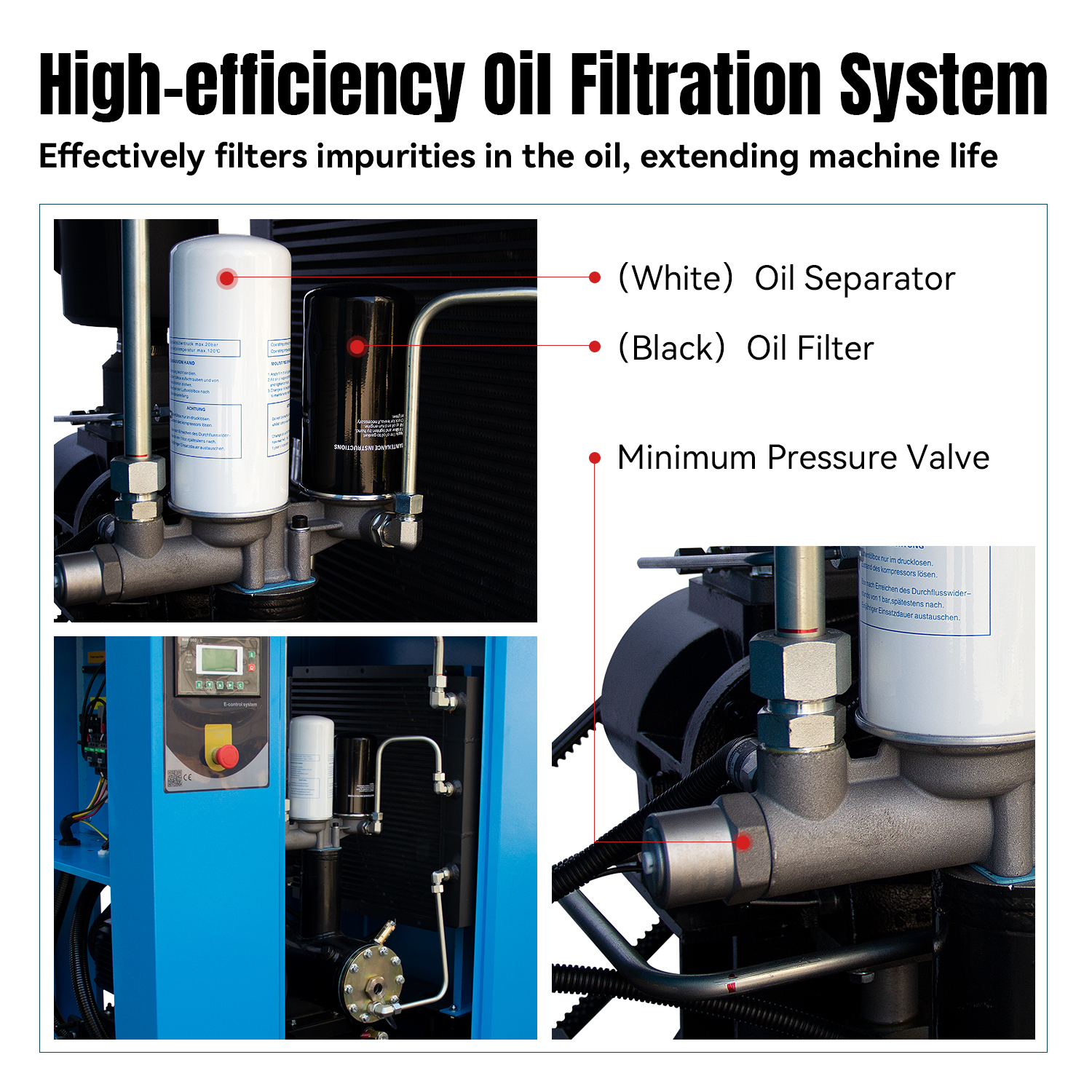
5. Key Components to Watch (Critical for Maintenance)
Understanding the role of each component helps you spot issues early and perform targeted maintenance. Here are the most critical parts of your rotary screw compressor:
Lubricating Oil
Oil is the lifeblood of your compressor—it lubricates rotors, cools components, and seals gaps. Follow these tips:
● Use only synthetic compressor oil specified in your manual (HPDMC’s U.S.-made ISO 100 Synthetic Compressor Oil is recommended for all our rotary screw models).
● Adhere to the screw compressor oil change interval: maximum 8000 hours, or 6–12 months (whichever comes first).
● Never mix oil brands or types—this causes contamination and component damage.
Air/Oil Separator Filter
This filter removes oil droplets from compressed air, ensuring clean air for tools and preventing oil waste. Air separator filter replacement is critical every 2000 hours (or sooner if oil carryover is detected). Signs of a failing separator include:
● Oil in the air line or on tools
● Reduced airflowHigh oil consumption
HPDMC’s separator filters are available in our air filter category and are engineered to meet the high demands of industrial use.
Air Intake Filter
The air filter prevents dust, dirt, and debris from entering the compressor, which can scratch rotors and damage bearings.
Clean reusable filters weekly and replace disposable ones every 2000 hours (or more often in dusty environments).
HPDMC’s air filters feature durable construction and high filtration efficiency, protecting your compressor from harmful contaminants.
Cooling System
The cooling system (air or water-cooled) prevents overheating, which is one of the leading causes of compressor failure. Keep condenser coils clean, check coolant levels (for water-cooled models), and ensure fans are working properly—especially in hot U.S. states like Texas or Arizona.
6. Special Note for Diesel-Powered Rotary Screw Compressors
Diesel-powered rotary screw compressors are common in remote U.S. jobsites (construction, road work, rural facilities) where electricity is unavailable. They require additional care compared to electric models—here’s what to focus on for diesel vs electric screw compressor care:
✅Diesel Engine Maintenance: Follow the engine manufacturer’s guidelines for oil changes (every 250–500 hours), fuel filter replacement, and glow plug inspection (critical for cold U.S. winters).
✅Fuel Quality: Use clean, high-quality diesel fuel to prevent injector clogs. Add a fuel stabilizer if the compressor is stored for more than 30 days.
✅Exhaust System: Inspect the exhaust for leaks, rust, or damage—diesel exhaust can be hazardous in enclosed spaces.
✅Cold-Weather Care: Use winter-grade diesel fuel and engine oil in states like Minnesota or Michigan. Install a block heater to ensure easy starting in sub-freezing temperatures.
✅Emissions Compliance: Ensure your diesel compressor meets EPA Tier 4 standards (all HPDMC diesel models do) to stay legal in all 50 U.S. states.
7. Common Mistakes to Avoid When Maintaining a Rotary Screw Compressor
Even well-intentioned maintenance can go wrong if you make these common errors—avoid them to keep your compressor running smoothly:
❌Ignoring Condensate: Allowing condensate to build up in the tank causes rust, corrosion, and water contamination in the oil. Drain daily (or use an automatic drain) to prevent this.
❌Using Low-Quality Oil or Parts: Generic oil and non-genuine parts may save money upfront, but they cause premature wear and void your HPDMC warranty. Always use HPDMC-approved oil and genuine parts from our air filters and maintenance categories.
❌Skipping Air Separator Filter Replacement: A worn separator leads to oil carryover, tool damage, and higher oil costs. Don’t delay replacement beyond 2000 hours.
❌Overlooking Air Leaks: Small leaks are easy to miss but waste energy and force the compressor to work harder. Use a soapy water solution to detect leaks (bubbles indicate a leak).
❌Neglecting Cooling System Maintenance: Clogged coils or low coolant cause overheating, which can seize the compressor. Clean coils regularly and check coolant levels (for water-cooled models).
❌Not Keeping Maintenance Logs: OSHA requires U.S. commercial facilities to document maintenance. A log helps you track service intervals, spot patterns, and maintain warranty coverage.
8. Conclusion
Learning how to maintain a rotary screw compressor isn’t just a task—it’s an investment in your equipment, your team, and your bottom line. By following the daily checks, scheduled maintenance plan, and component care tips outlined in this guide, you’ll extend your compressor’s life, reduce energy costs, and avoid costly downtime.
Ready to take your compressor maintenance to the next level?
👉Schedule Professional Service:
Let HPDMC’s certified U.S. technicians handle your annual overhaul—contact us.



Find the Right Compressor for Your Needs
Find the Right Compressor for Your Needs