
Top-Rated Air Compressor Oil: Piston 4L 100-Grade Review
🌬️What Makes Air Compressor Oil Essential for Your Equipment
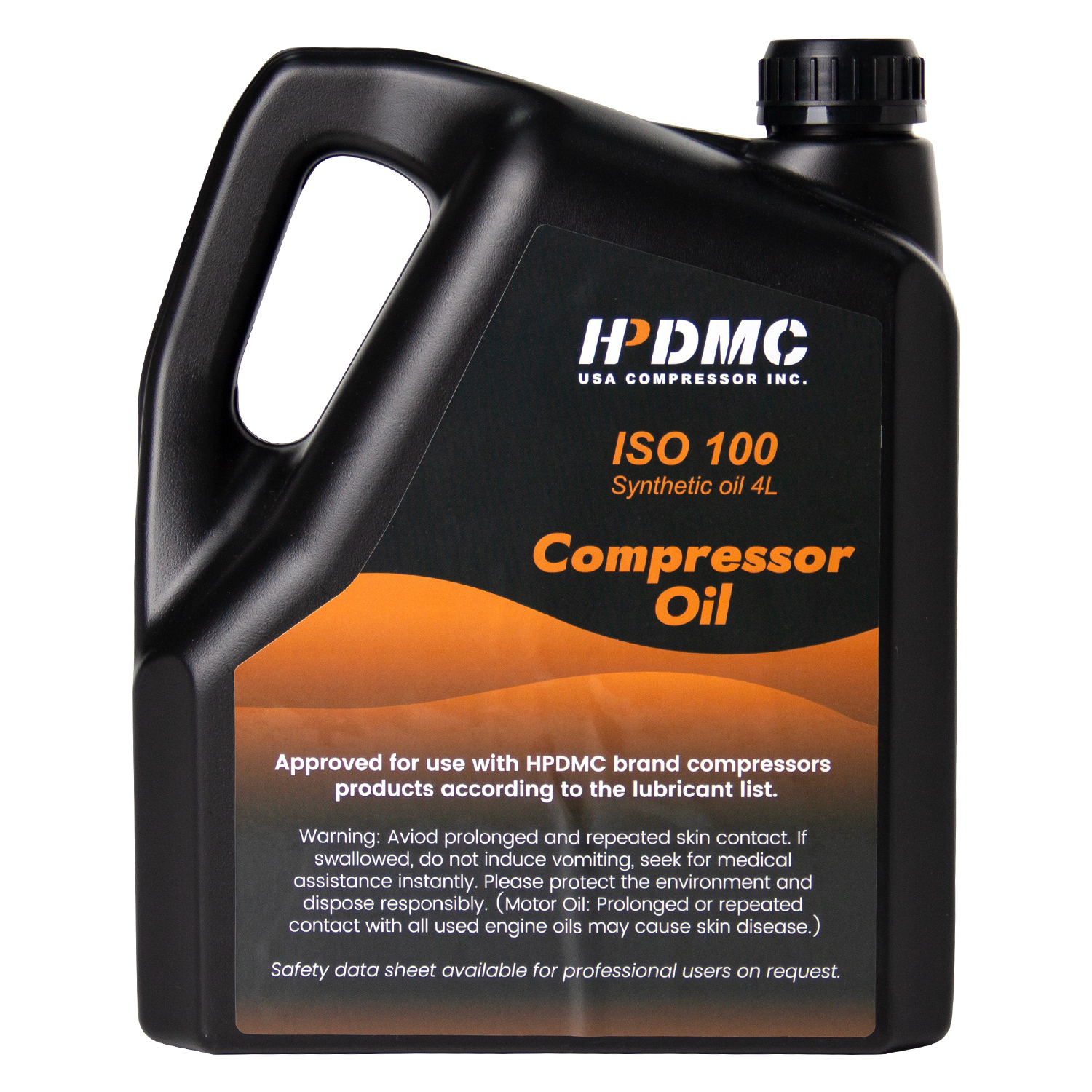
Air compressor oil is a critical maintenance element that keeps your compressor running efficiently, smoothly, and reliably. It acts as a lubricant, coolant, and protective barrier against wear and corrosion. For piston compressors in particular, the right oil dramatically extends service life and reduces maintenance costs.
🔧 Lubrication That Reduces Wear
Piston compressors contain multiple high-friction components—crankshafts, bearings, pistons, and rings—that require strong lubrication. Air compressor oil forms a protective film that reduces friction and prevents metal-on-metal contact. This helps extend the life of your equipment and stabilizes its performance even under frequent load.
❄️ Cooling and Sealing for Better Compression
Beyond lubrication, compressor oil absorbs heat produced during compression, preventing overheating and thermal breakdown. It also assists in sealing the piston chamber, improving compression efficiency and reducing air leakage—especially important in high-pressure systems.
🛢️Understanding Air Compressor Oil Types and 100-Viscosity Specifications
Choosing the right oil requires understanding viscosity ratings and formulation types. Air compressor oils can be synthetic, semi-synthetic, or mineral-based, each suited for different environments and workloads.
📏 Why Viscosity Matters in Air Compressor Oil
Viscosity defines the oil’s thickness and flow characteristics. A 100 viscosity grade ensures that:
● It maintains a stable oil film at high temperatures
● Flow remains adequate during startup
● Internal parts remain protected during peak operation
This makes 100-viscosity oil especially suitable for heavy-duty piston compressors.
🧪 Choosing 100-Grade Oil for Piston Compressors
The Piston Air Compressor Oil 4L @ 100 Viscosity is optimized for compressors that experience:
● Moderate-to-high workloads
● Extended operation periods
● High ambient temperature conditions
Its balanced thickness ensures both thermal stability and long-lasting protection.
🧰How to Select the Right Air Compressor Oil for Piston Compressors
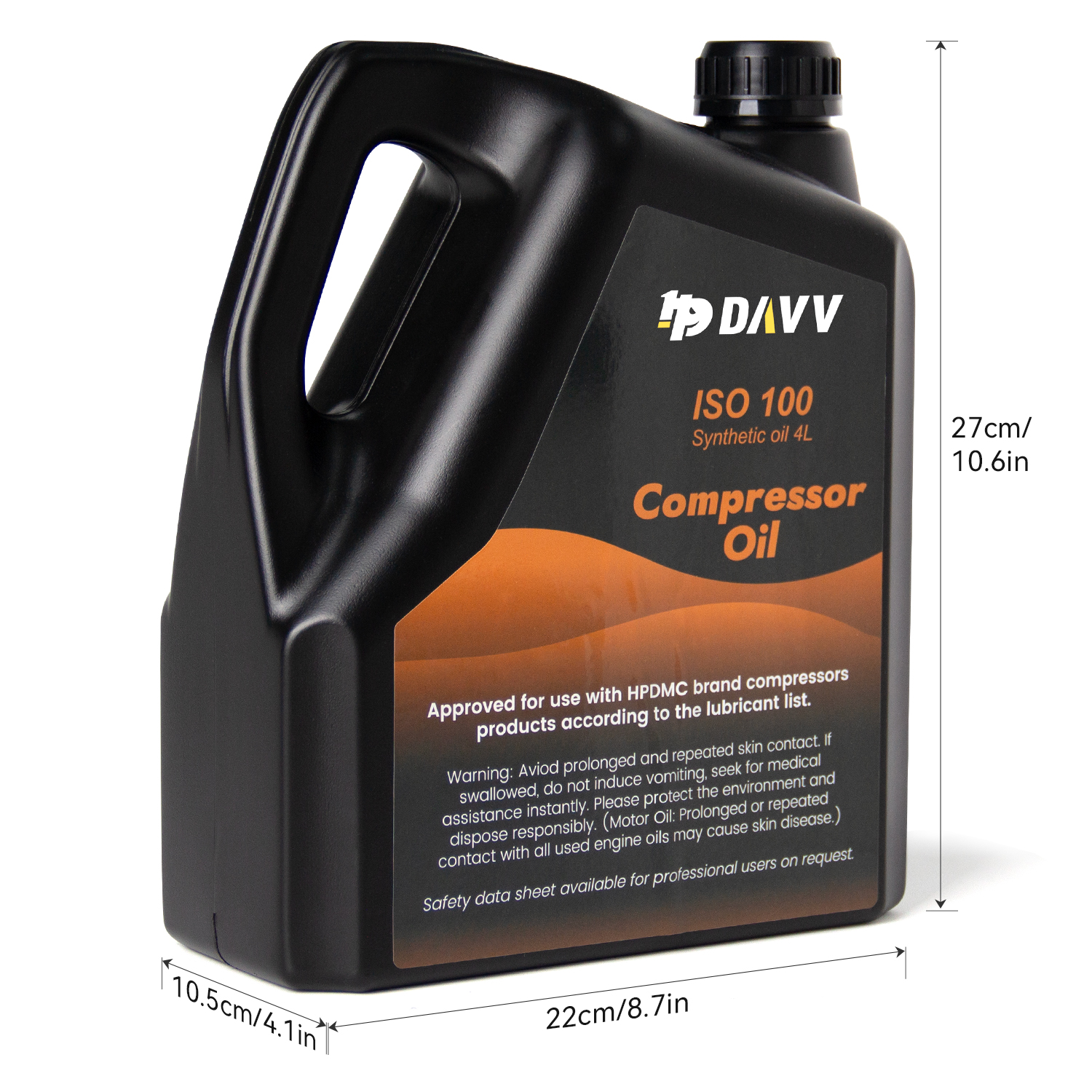
Selecting the proper air compressor oil is essential for optimizing performance and extending equipment life.
🏭 Match Oil to Compressor Type
Different compressors require different oil types. Piston compressors need:
● Higher viscosity oils
● Oils with strong anti-wear additives
● Thermal-stable formulas
If your compressor manual recommends ISO 100 or SAE-grade equivalents, this 4L 100-viscosity product is the right fit.
🌡️ Factor in Operating Environment
Conditions that influence oil choice include:
● Temperature: Hot climates require oils that resist thinning
● Duty cycle: Frequent startups or continuous operation demand more durable oils
● Air conditions: Dusty or humid environments require stronger anti-corrosion protection
The 100-viscosity grade is ideal for such scenarios.
⭐Key Features of a High-Quality Piston Air Compressor Oil
High-performing compressor oils deliver benefits beyond basic lubrication.
🛡️ Superior Oxidation Resistance
Oxidation leads to sludge, varnish, and oil degradation. Premium 100-viscosity piston compressor oil includes antioxidant formulations that prevent breakdown and extend oil life.
⚙️ Enhanced Wear & Corrosion Protection
Anti-wear agents protect pistons, bearings, and ring assemblies from abrasion. Anti-rust additives help prevent corrosion caused by moisture inside the compressor tank or in humid environments.
🧴Air Compressor Oil Usage, Maintenance, and Best Practices
Proper usage ensures consistent compressor performance and prevents operational issues.
🕒 Recommended Oil-Change Intervals
General guidelines for piston compressors include:
● First oil change after 50–100 hours
● Routine changes every 300–500 hours
● More frequent changes in harsh environments
Tracking oil color and viscosity can also indicate when replacement is needed.
📦 Storage & Handling Tips
Ensure oil remains free of contamination:
● Store in a sealed container
● Keep oils in dry, shaded environments
● Avoid mixing different oil types
These practices maintain oil purity and performance.
🧱Where Air Compressor Oil Performs Best — Application Scenarios
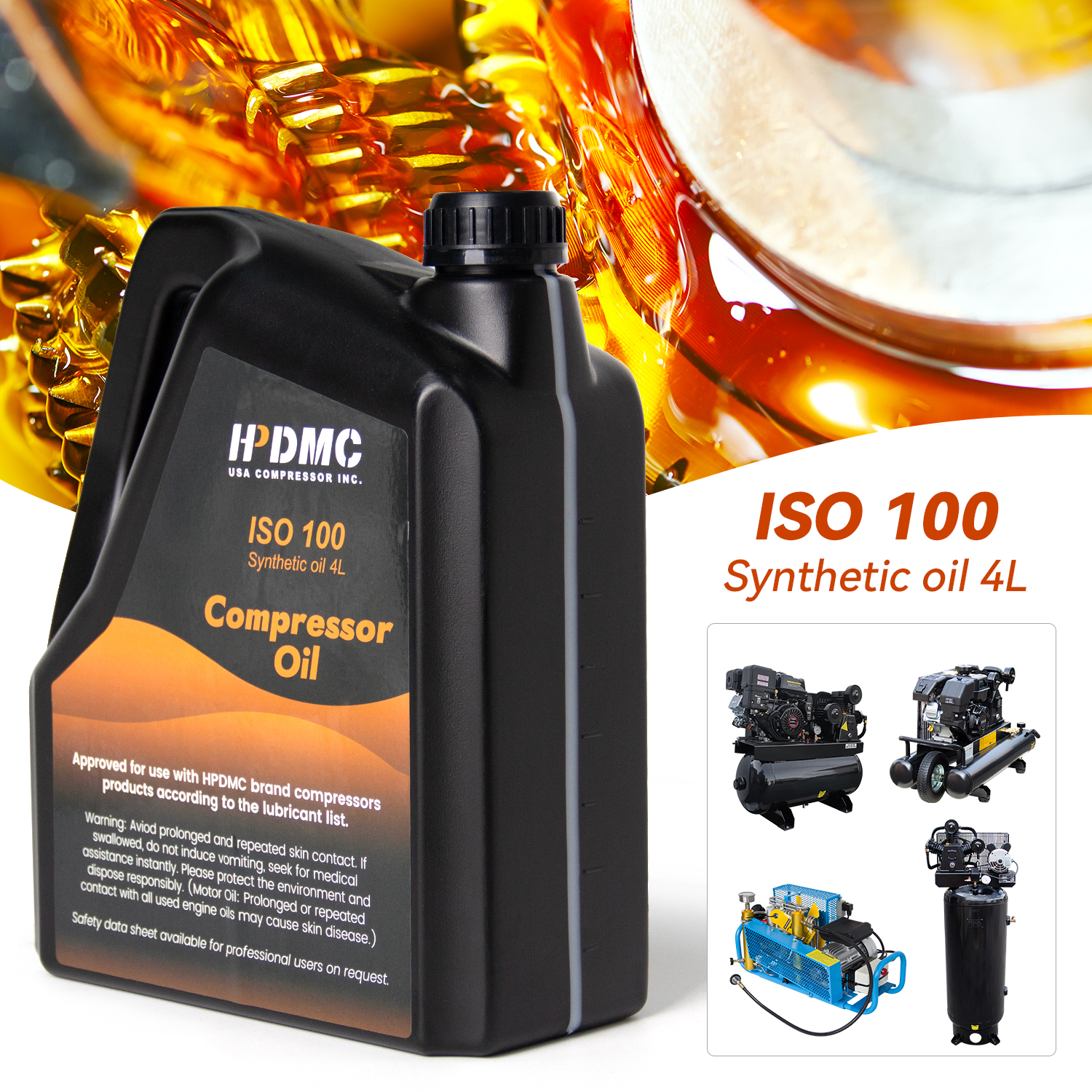
Air compressor oil is vital in both home and industrial applications.
🛠️ Home Workshops and DIY Projects
If you operate pneumatic tools—such as nail guns, blow guns, or grinders—your compressor needs stable lubrication for consistent airflow. A 100-viscosity air compressor oil maintains smooth operation even when switching frequently between tools.
🏗️ Industrial & Heavy-Duty Operations
Factories, automotive shops, and construction sites often use compressors continuously for long hours. This requires oil with:
● High thermal stability
● Anti-wear enhancement
● Resistance to oxidation
The 4L 100-viscosity formulation excels in these demanding environments.
🔗Want to explore lubrication technologies further? See our related article:How Compressor Lubrication Technologies Are Revolutionizing Efficiency and Lifespan
❓FAQ: Air Compressor Oil Use & Selection
1. Can I use car engine oil in a compressor?
No. Engine oils contain detergents that may damage compressor components.
2. What is ISO 100 oil?
This refers to the viscosity level—ideal for piston compressors.
3. When should I change compressor oil?
Typically every 300–500 hours, depending on load and environment.
4. Is synthetic compressor oil better?
Synthetics offer greater thermal stability but aren’t always necessary for piston units.
5. What happens with incorrect viscosity?
Wrong viscosity causes poor lubrication, overheating, or reduced efficiency.
⭐Why HPDMC’s Piston Air Compressor Oil Stands Out
| Feature / Advantage | HPDMC Piston Air Compressor Oil | Other Brands |
| High thermal & oxidation resistance | Designed for extended heat exposure | May degrade faster |
| Superior anti-wear & anti-corrosion protection | Protects pistons, rings & bearings | Basic additive packages |
| Tailored for piston compressors | Optimized ISO 100 formulation | Often generic and less compatible |
| 🛒buy now |
🛒Buy Air Compressor Oil Now — Maximize Your Compressor’s Performance!
Don’t wait for performance drops or costly repairs. The HPDMC Piston Air Compressor Oil is engineered to deliver consistent lubrication, superior protection, and long-term reliability. Upgrade your equipment today and experience smoother, quieter, and more efficient compressor operation.
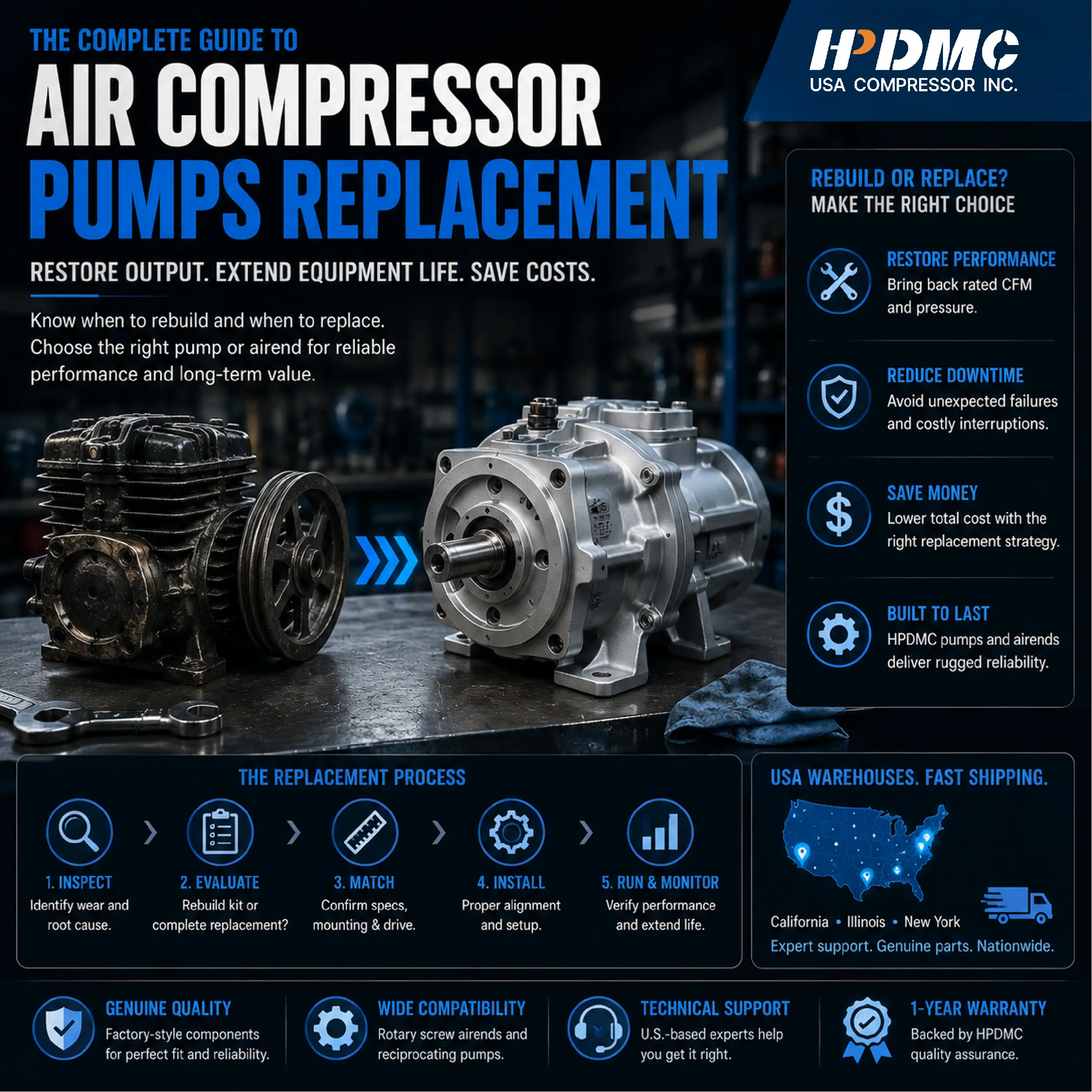



Find the Right Compressor for Your Needs
Find the Right Compressor for Your Needs